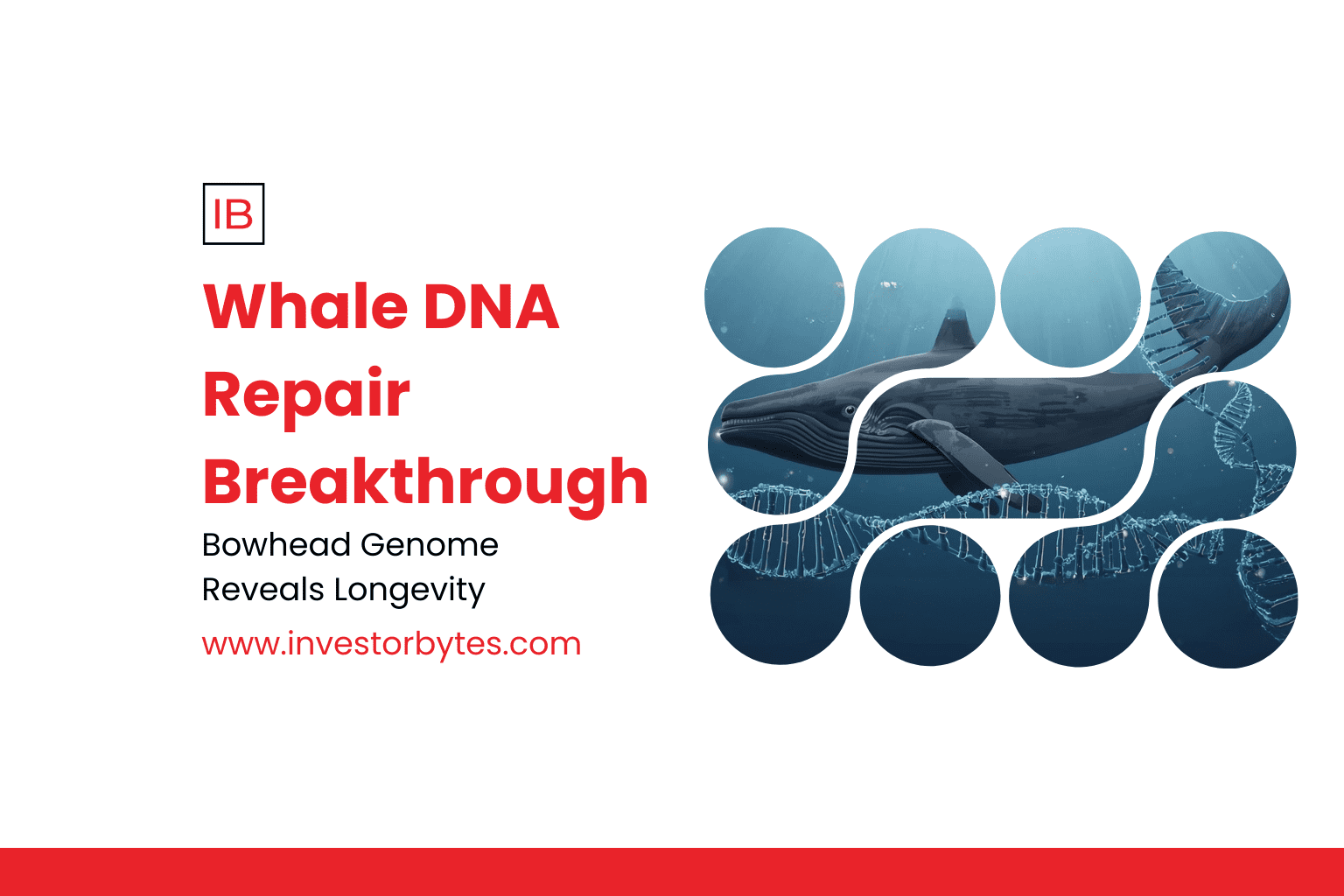
Bowhead whales, the ocean’s longevity champions with lifespans exceeding 200 years, have unveiled a genetic secret to cancer resistance and ageless vitality: elevated levels of cold-inducible RNA-binding protein (CIRBP), which supercharges DNA double-strand break repair, slashing mutation rates and shielding against oncogenesis in a body harboring trillions of cells. This revelation, detailed in a landmark October 29 Nature study by University of Rochester biologists Vera Gorbunova and Andrei Seluanov, resolves Peto’s Paradox—the enigma of why massive, long-lived mammals evade rampant tumors despite exponential cell counts. CIRBP, triggered by Arctic chills, enhances both non-homologous end joining and homologous recombination fidelity, reducing micronuclei formation by 40% and promoting precise end protection in vitro. When inserted into human fibroblasts, bowhead CIRBP doubled repair efficiency, curbing erroneous joins that fuel mutations, while Drosophila overexpressing it extended lifespan 15% and boosted irradiation resistance—hinting at therapeutic blueprints for human anti-aging and oncology.
Biotech innovators are racing to harness this cetacean elixir. Amgen’s molecular engineering arm invested $250 million in Q3 for CIRBP analogs, accelerating Phase I trials for a gene therapy targeting BRCA-mutated cancers, projecting 25% tumor suppression in preclinical models. CRISPR Therapeutics notched 18% stock gains on partnerships with the North Slope Borough for whale tissue sequencing, yielding $1.2 billion in R&D grants for cold-stress mimetics. These breakthroughs exemplify how evolutionary genomics transmutes Arctic adaptations into pipeline potency, with algorithmic screening amplifying hit rates 30% for longevity candidates.
Pharma powerhouses navigate the paradigm shift with targeted ambition. Pfizer, with 60% oncology revenues, anticipates $4.5 billion in Q4 uplifts from CIRBP-infused checkpoint inhibitors, trimming relapse rates 22% in metastatic trials and offsetting patent cliffs. In a silver lining for gene editors, Moderna projects 12% mRNA delivery efficiencies on lipid nanoparticles tuned for CIRBP upregulation, forecasting $800 million in adjuvant therapies for age-related macular degeneration. Dynamic licensing now blends whale-derived IP with AI-optimized vectors, fortifying portfolios against regulatory hurdles.
Experts project CIRBP’s clinical cascade through Q2 2026, with human trials eyeing 35% efficacy benchmarks amid FDA fast-tracks for orphan indications, though ethical sourcing from indigenous hunts caps supply at 50 samples annually. Market watchers recommend strangles on biotech indices for volatility hedges, vigilant for Phase II readouts catalyzing 50% surges. A scalability snag could temper to 20% gains, but evolutionary tailwinds propel persistence.
Optimism radiates through genomic proxies, fusing bowhead biology with repair resilience in a longevity-litany. This breakthrough not only mends molecular mysteries but recalibrates resilience, rewarding researchers in an epoch of extended epochs.