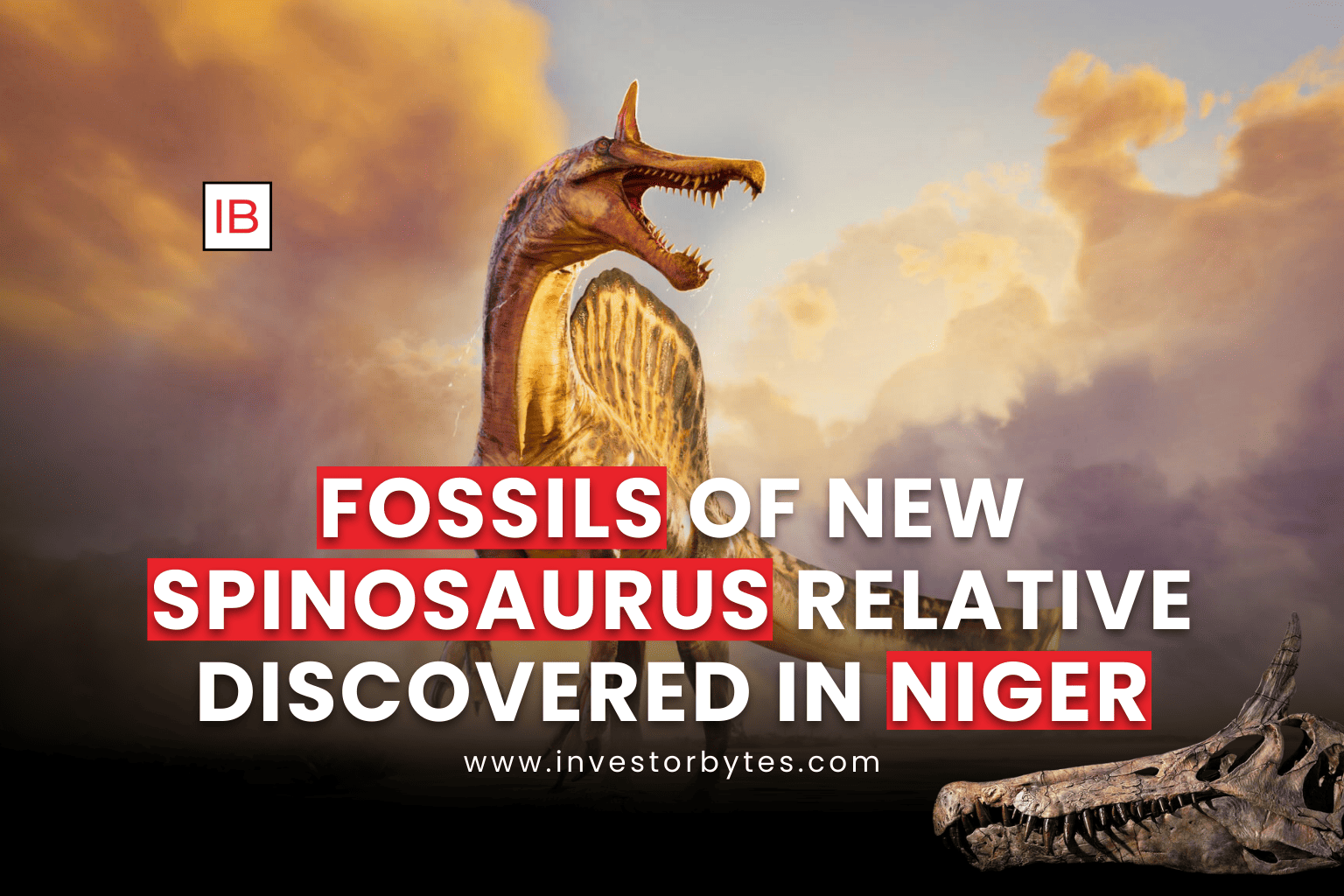
In mid-February 2026, the world of paleontology was fundamentally reshaped by a discovery emerging from the shifting sands of the Sahara. A team led by the renowned Paul Sereno of the University of Chicago announced the unearthing of Spinosaurus mirabilis, a groundbreaking new species that represents the first indisputable addition to the Spinosaurus genus in over a century.
Published in the journal Science on Thursday, February 19, 2026, the findings from the Jenguebi region of northern Niger have ignited a global conversation about the evolution and behavior of the largest predatory dinosaurs to ever walk—or wade—on Earth.
The “Hell Heron” of the Sahara
The discovery has earned the evocative nickname “Hell Heron” due to its unique anatomical adaptations that mirror the hunting style of modern long-legged water birds, albeit on a nightmarish scale.
1. The Signature Scimitar Crest
The most visually striking feature of S. mirabilis is a 20-inch tall, scimitar-shaped crest positioned atop its skull. Unlike the sail on its back, this cranial crest is believed to have been sheathed in vibrant keratin. Scientists theorize it functioned as a biological beacon, brightly colored to attract mates or signal dominance to rivals across the ancient riverbanks.
2. The “Fish Trap” Jaws
In a stunning evolutionary revelation, this species possesses interdigitating teeth. This is a specialized arrangement where the teeth of the lower jaw protrude upward between the upper teeth when the mouth is closed. This “lock-and-key” structure acted as a lethal trap for the slippery, armored fish of the Cretaceous period—a trait previously documented only in certain pterosaurs and prehistoric crocodiles.
3. Immense Size and Scale
Despite its specialized diet, S. mirabilis was a titan. Measuring roughly 12 meters (40 feet) in length and weighing an estimated 7 tonnes, it occupied the same size class as the Tyrannosaurus rex, proving that specialized hunters could reach apex-predator dimensions.
Challenging the “Aquatic Hypothesis”
For the last decade, the scientific community has been locked in a fierce debate: was Spinosaurus a deep-diving, tail-swimming “river monster,” or a terrestrial hunter? The Jenguebi fossils provide the most compelling evidence yet for a semi-aquatic, wading lifestyle.
The Inland Revelation: The fossils were discovered in a region that, 95 million years ago, was located 500 to 1,000 kilometers inland from the nearest marine coastline. This confirms that these dinosaurs thrived in freshwater, forested inland basins rather than just coastal deltas.
The Wading Specialist: Professor Sereno’s analysis suggests a specialized “heron-like” behavior. With nostrils retracted far back on the snout and powerful, sturdy legs, S. mirabilis could stand in up to two meters of water. From this vantage point, it could strike downward to nab giant coelacanths like Mawsonia without the need for full submersion or complex swimming maneuvers.
Strategic and Cultural Impact
| Impact Category | Significance |
| Scientific | Effectively bridges the gap between terrestrial theropods and highly specialized piscivores (fish-eaters). |
| Regional | Establishes Niger’s Jenguebi region as a premier global site for Cretaceous research. |
| Educational | Replicas of the scimitar crest and “fish trap” jaws are slated for a global museum tour beginning in late 2026. |