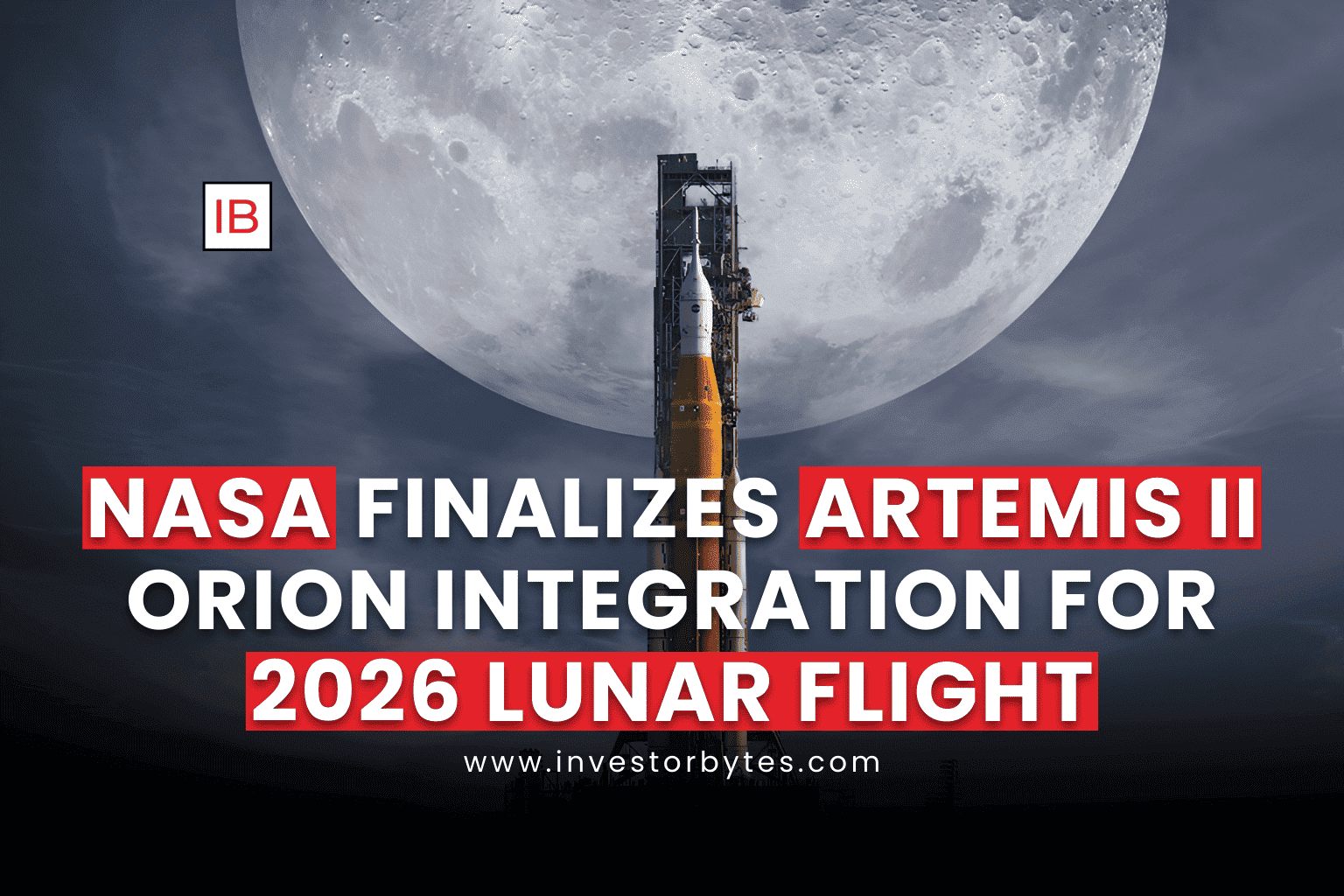
On Monday, February 23, 2026, NASA stands at a critical juncture in the final countdown for Artemis II, the first crewed mission to the lunar vicinity in over 50 years. While the mission recently cleared a major milestone with a successful “Wet Dress Rehearsal,” a fresh technical hurdle has forced a strategic retreat to the hangar.
Engineers are currently preparing to roll the Space Launch System (SLS) rocket and Orion spacecraft back to the Vehicle Assembly Building (VAB) at Kennedy Space Center as early as Tuesday, February 24. This move follows the discovery of an interrupted flow of helium to the rocket’s upper stage, a vital component for pressurizing propellant tanks during flight.
Artemis II: Mission Dashboard (Feb 2026)
The mission will carry a crew of four—Reid Wiseman, Victor Glover, Christina Koch, and Jeremy Hansen—on a 10-day “free-return” trajectory that will swing them 7,600 km beyond the far side of the Moon.
| Status Metric | Update as of Feb 23, 2026 |
| Launch Target | No Earlier Than (NET) April 1, 2026 |
| Rocket Status | Prepping for rollback to VAB for helium system repairs. |
| Crew Status | Released from quarantine in Houston; re-entry planned for late March. |
| Mission Duration | 10 Days |
| Milestone Reached | Successful fueling test completed on Feb 19. |
Technical Challenges: The Road to the Moon
Despite the high stakes, NASA leadership remains focused on safety-first protocols. The decision to move the 322-foot-tall rocket stack back to the VAB was made to protect the April launch window and avoid the high winds forecast for the Florida coast this week.
The Helium Issue: Helium is used to maintain pressure in the upper stage as fuel is consumed. An “interrupted flow” detected on Feb 21 means the system cannot currently guarantee the performance needed for deep-space maneuvers.
The “Skip Reentry” Test: A primary goal of Artemis II is testing Orion’s new heat shield and its “skip reentry” maneuver—dipping into the atmosphere, skipping out, and then re-entering—to manage the intense heat of a 25,000 mph return.
Life Support Validation: This is the first time humans will rely on Orion’s internal systems for carbon dioxide scrubbing and oxygen regulation in the vacuum of deep space.