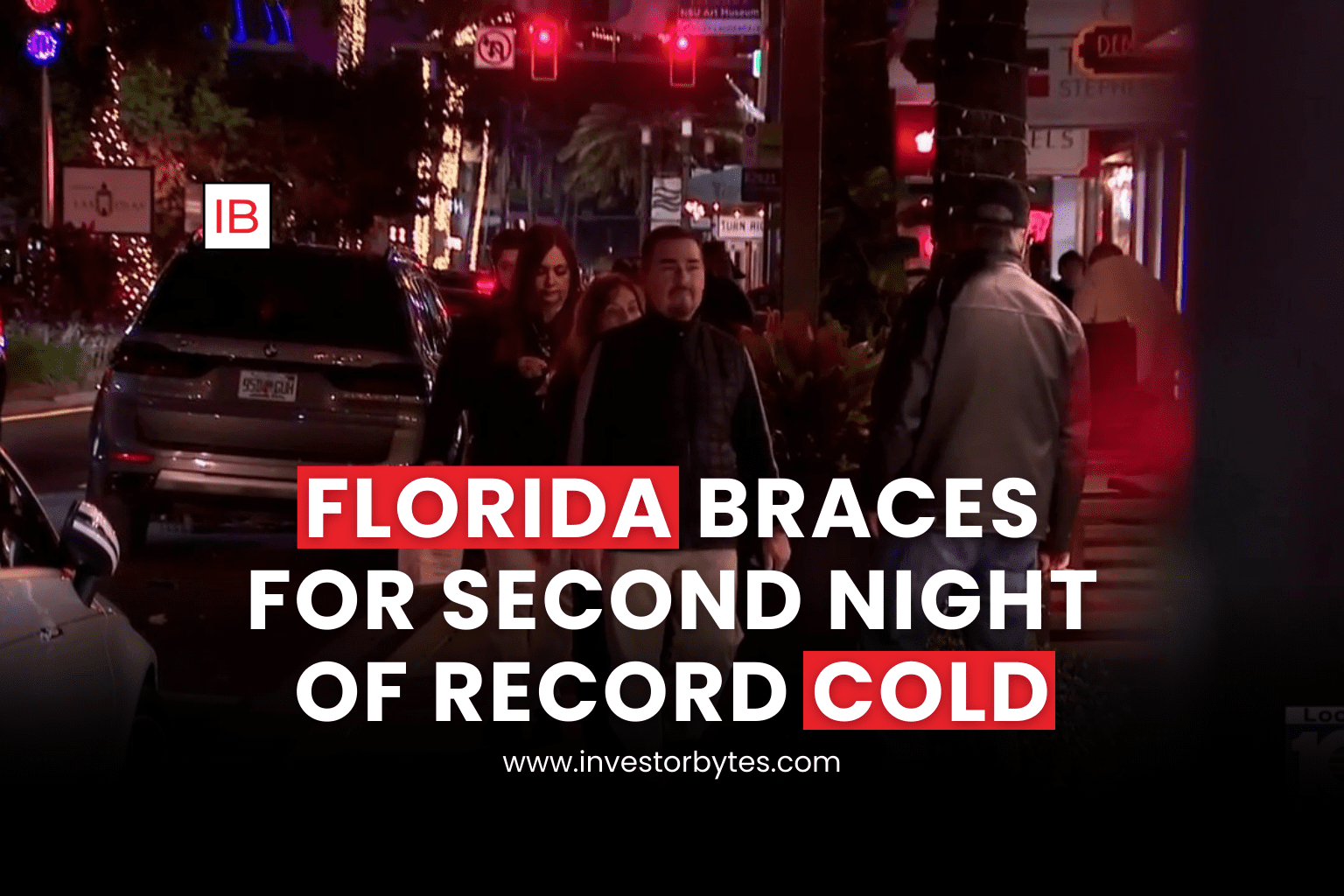
In a historic weather event that has turned the “Sunshine State” into a deep freezer, South Florida is facing a second consecutive night of record-shattering cold.
The region is currently gripped by the most intense Arctic air mass seen since December 1989, part of a massive weather system that has placed approximately 150 million Americans under cold weather advisories and warnings.
The Big Freeze: Record Lows
The frigid front brought the unthinkable to Florida over the weekend: rare snow flurries reported as far south as Tampa, St. Petersburg, and North Port (Sarasota County).
Miami’s Deep Chill: Temperatures in Miami plummeted to 35°F on Sunday morning, the city’s coldest reading since 2010. Some inland areas of South Florida reportedly hit the 32°F freezing mark for the first time in 37 years.
Dangerous Wind Chills: Biting winds have pushed “feels like” temperatures into the 20s across South Florida, forcing residents to bundle up in gear rarely seen in the tropics.
New Records: Daily record lows were smashed in Daytona Beach (23°F), Melbourne (25°F), and Vero Beach (26°F) as the Arctic lobe of the polar vortex settled over the peninsula.
Impact on Agriculture and Wildlife
The freeze poses an existential threat to Florida’s delicate tropical ecosystem and its multibillion-dollar agricultural sector.
The Agricultural Crisis
Citrus at Risk: The Florida citrus sector, already expecting a low-yield season of 12 million boxes, is scrambling to protect Valencia oranges and grapefruit, which are highly sensitive to freezing temperatures.
Vegetable Damage: Growers in southern counties report “leaf burn” and flower drop in snap beans, sweet corn, squash, and bell peppers.
Strawberry Protection: In West Central Florida, farmers are using high-volume irrigation to create a protective ice layer over strawberry crops, though this has sparked concerns about groundwater depletion and potential sinkholes.
Falling Iguanas & Wildlife
Invasive Iguanas: The Florida Fish and Wildlife Conservation Commission (FWC) issued a rare alert as temperatures dropped below 50°F, causing iguanas to lose muscle control and fall from trees in a state of “cold-stunned” suspended animation.
Manatee Alerts: Boaters have been urged to stay clear of “warm-water refuges” where manatees are congregating in massive numbers to survive the plummeting water temperatures.
Short-Term Outlook: Night Two
Meteorologists warn that while a “gradual moderating trend” is expected by mid-week, the night of Monday, February 2, into Tuesday, February 3, will remain dangerously cold.
| Location | Expected Low (Feb 2-3) | Concern Level |
| Tallahassee | 22°F | Critical (Hard Freeze) |
| Orlando | 31°F | High (Frost/Freeze) |
| West Palm Beach | 38°F | Moderate (Wind Chill) |
| Miami | 40°F | Moderate (Wind Chill) |
“This is a bone-deep chill that the infrastructure in the South simply isn’t built for. We are urging everyone to protect the four P’s: People, Pets, Plants, and Pipes.” — National Weather Service Alert, Feb 2026