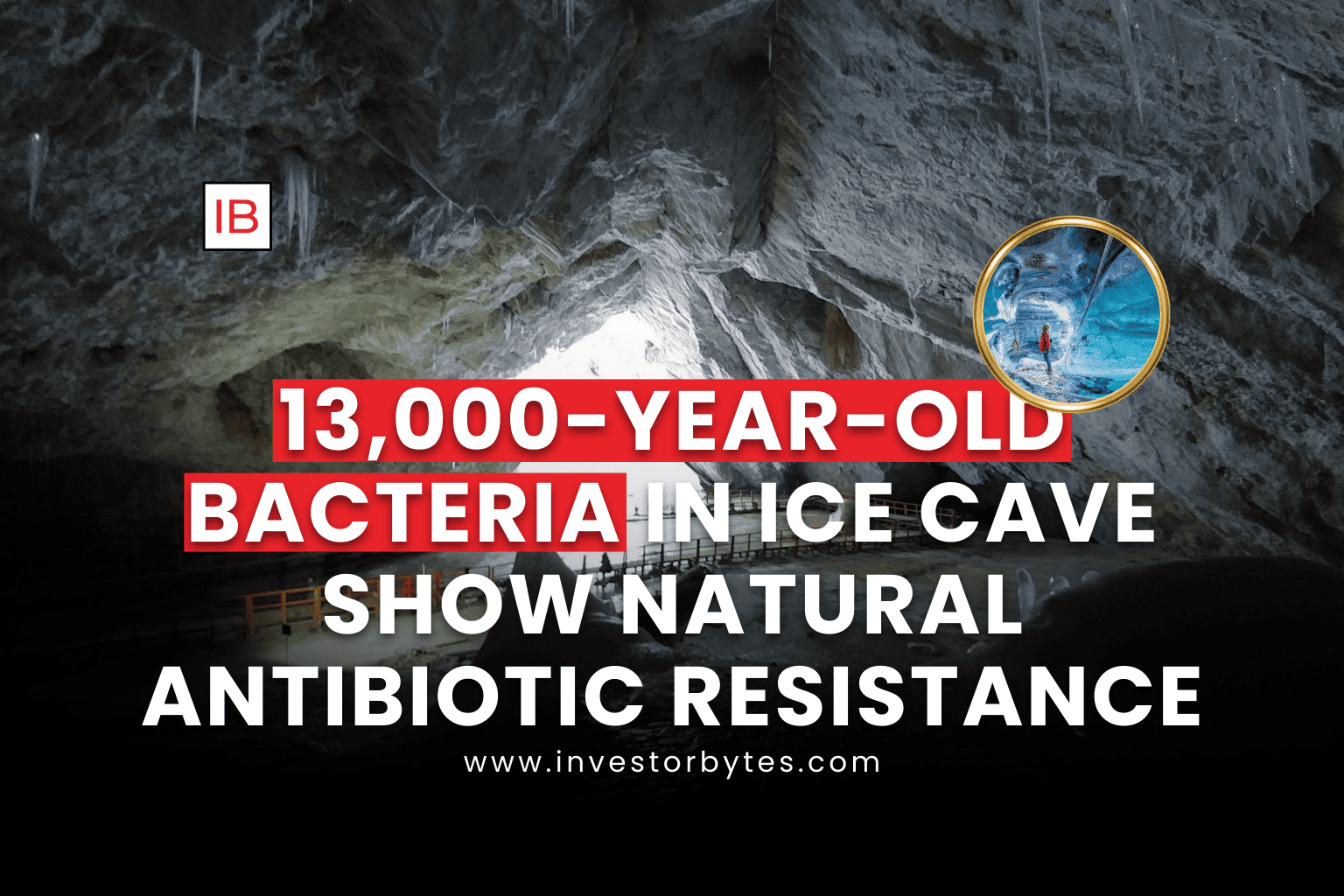
In mid-February 2026, a groundbreaking study published in Frontiers in Microbiology has fundamentally challenged our understanding of the global antibiotic crisis. Researchers from the Institute of Biology Bucharest of the Romanian Academy have successfully isolated a bacterial strain, Psychrobacter SC65A.3, from a layer of ice over 5,000 years old that shows significant resistance to modern antibiotics—despite never having encountered them in a clinical setting.
The discovery, made in the Scărișoara Ice Cave in the Carpathian Mountains, provides definitive proof that the “resistome”—the collection of all antibiotic resistance genes—is a natural, ancient evolutionary feature rather than a modern byproduct of pharmaceutical overuse.
The Scărișoara Discovery: Key Findings
The research team, led by Dr. Cristina Purcarea, drilled a 25-meter (82-foot) ice core from the cave’s “Great Hall,” which contains one of the world’s oldest and largest perennial blocks of ice, representing a 13,000-year timeline.
The Ancient Resistome: Genome sequencing of the Psychrobacter strain revealed over 100 resistance-related genes, including clinically relevant markers like mcr-1 and tetA.
Modern Resistance: When tested in the lab, this ancient bacterium was resistant to 10 classes of modern antibiotics (across 28 different drugs), including those used to treat pneumonia, UTIs, and skin infections.
Competitive Evolution: Scientists believe these bacteria developed resistance mechanisms millennia ago as a “survival toolkit” to compete with other microbes for limited nutrients in extreme, sub-zero environments.
The “Double-Edged” Implications
This 2026 finding presents both a significant risk and a massive opportunity for global health.
| Potential Benefit | Potential Risk |
| New Antibiotics: The strain inhibited the growth of 14 dangerous pathogens, including Klebsiella pneumoniae, offering a roadmap for next-gen drug design. | Reservoir of Resistance: As climate change thaws ancient ice, these “frozen” resistance genes could potentially transfer to modern pathogens. |
| Biotechnological Utility: The cold-adapted enzymes from these bacteria have applications in green chemistry, food production, and carbon dating. | Biological Re-emergence: If released into the biosphere, these microbes could introduce ancient survival traits into contemporary bacterial populations. |