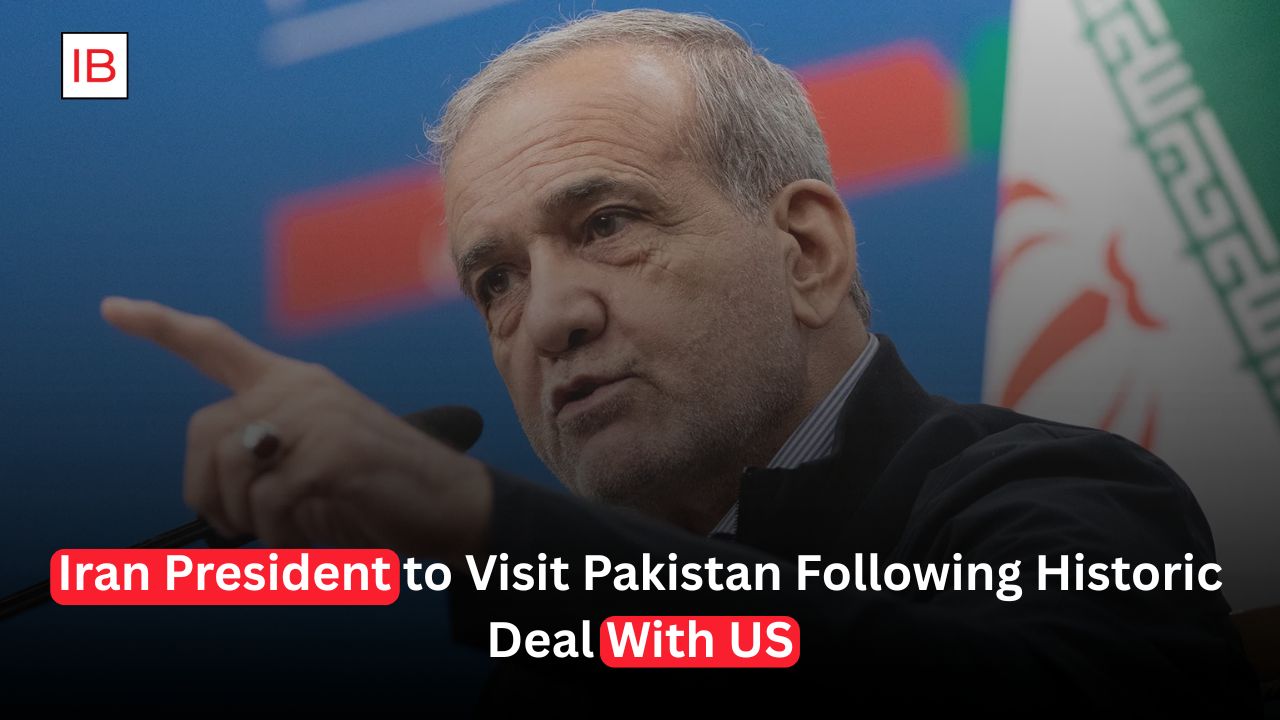
Iranian President Masoud Pezeshkian has arrived in Pakistan for high-level talks, marking his first major foreign visit since the recent breakthrough agreement between Tehran and Washington. The trip highlights Pakistan’s growing diplomatic role after helping facilitate negotiations aimed at ending months of regional tensions and laying the groundwork for a broader peace settlement.
Visit Comes After Historic Diplomatic Breakthrough
Pezeshkian’s visit follows recent negotiations in Switzerland between senior U.S. and Iranian officials that produced a framework for a long-term agreement. The talks, supported by Pakistani and Qatari mediation efforts, led to a roadmap designed to reduce hostilities, ease sanctions disputes, and address broader regional security concerns.
The Iranian leader is expected to meet Pakistani Prime Minister Shehbaz Sharif and President Asif Ali Zardari, with discussions focusing on bilateral relations as well as developments stemming from the recent U.S.-Iran diplomatic process.
Pakistan’s Role Gains International Attention
Pakistan has emerged as a key intermediary in efforts to reduce tensions between Tehran and Washington. Analysts say Islamabad’s involvement in facilitating dialogue has boosted its diplomatic profile and strengthened its position as a regional mediator.
Government officials hope the country’s role in the negotiations could open doors for deeper economic cooperation, increased foreign investment, and stronger ties with both Middle Eastern and Western partners. However, experts caution that long-term benefits will depend on Pakistan’s ability to address domestic economic challenges.
Focus on Trade, Energy and Regional Connectivity
Beyond diplomacy, the visit is expected to focus heavily on economic cooperation. Pakistan and Iran are likely to discuss expanding trade, energy collaboration, border security coordination, and regional connectivity projects. Both countries have expressed interest in strengthening commercial ties and improving cross-border infrastructure.
Officials from both sides have indicated that the talks will review the full spectrum of bilateral relations while exploring new opportunities for cooperation in sectors critical to economic growth and regional stability.
Challenges Remain in US-Iran Negotiations
Despite recent progress, significant differences remain between Washington and Tehran. Disputes continue over sanctions relief, nuclear oversight, and the implementation of commitments made during the talks. Technical teams from both sides are still working to finalize details of a permanent agreement.
Iran has publicly pushed back against some U.S. claims regarding nuclear inspections and the use of unfrozen assets, underscoring the challenges that negotiators still face before a final deal can be completed.
What Happens Next
Pezeshkian’s visit is being closely watched across the region as a test of whether recent diplomatic momentum can translate into broader political and economic cooperation. A successful outcome could strengthen Pakistan-Iran relations while reinforcing efforts to secure a lasting settlement between Tehran and Washington.
For now, officials remain cautiously optimistic as negotiations continue and regional leaders seek to build on one of the most significant diplomatic developments in the Middle East this year.