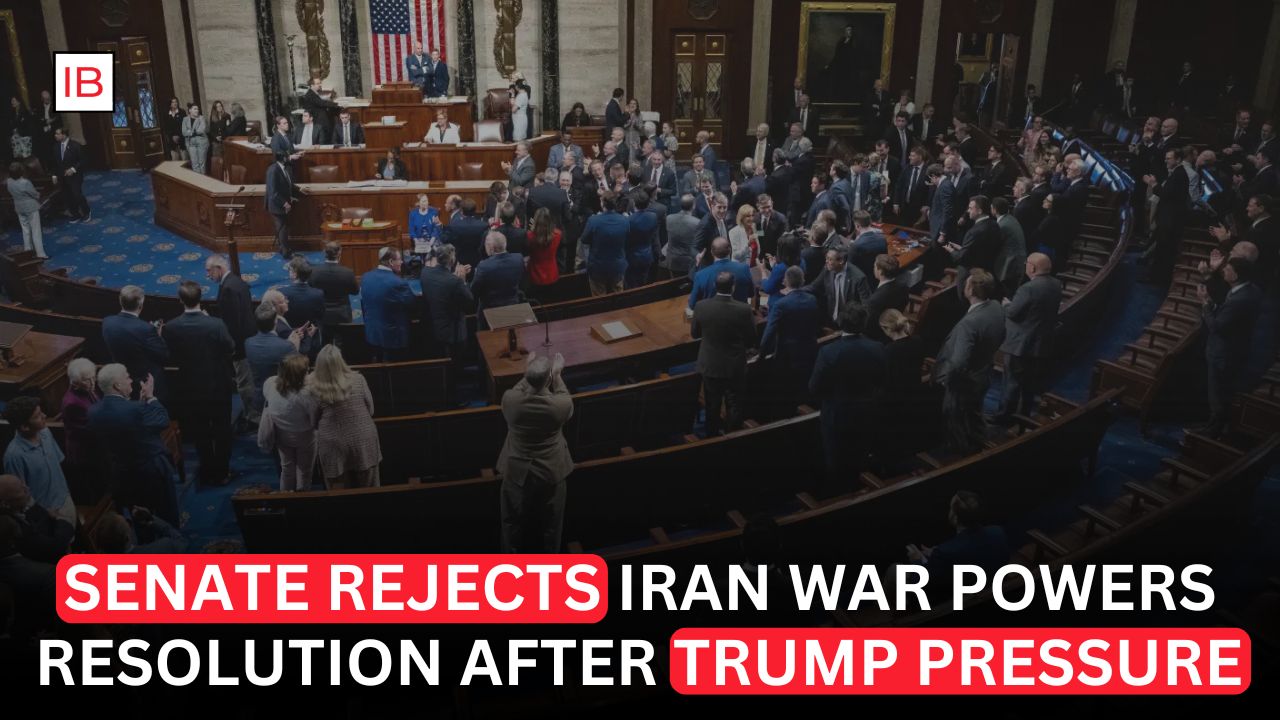
Republican Support Helps Block Measure Seeking to Limit Trump’s Military Authority. The US Senate has rejected a war powers resolution aimed at restricting President Donald Trump’s authority over military actions involving Iran, following strong pressure from the White House.
The vote came after a politically tense debate in Washington over whether the president should continue directing military operations without additional approval from Congress. The resolution’s failure represents a victory for Trump as he continues pursuing his Iran strategy.
Senate Votes Against Limiting Presidential Powers
The resolution was defeated in the Senate after lawmakers considered whether Congress should take a stronger role in decisions involving the ongoing Iran conflict.
Supporters argued that the measure was necessary to restore Congress’s constitutional authority over war decisions, while opponents said it could weaken the president’s ability to respond quickly to national security threats.
Trump Opposed the Resolution
Trump strongly criticized the effort, arguing that the timing of the vote could damage US negotiating power during diplomatic discussions with Iran.
The administration said restricting presidential authority could create uncertainty and make it harder for Washington to manage security and peace negotiations.
Republican Divisions Highlighted
The debate exposed disagreements within the Republican Party over the Iran conflict and the limits of presidential power.
Some Republican senators previously supported efforts to restrict military action, but after pressure from the White House and additional briefings, the final vote shifted against the resolution.
The disagreement highlights growing tensions between Trump and some members of his own party over foreign policy decisions.
Congress Questions Iran War Strategy
Lawmakers who backed the resolution argued that major military engagements require congressional authorization.
They raised concerns about the financial cost of the conflict and questioned whether the administration had provided enough information about its long-term strategy.
The White House has defended its actions, saying the military response was necessary and that negotiations remain a key part of its approach.
Debate Continues Over War Powers
Although the Senate rejection removes an immediate challenge to Trump’s authority, the broader debate over presidential war powers is expected to continue.
The dispute reflects a long-running argument in Washington over how much power presidents should have to use military force without a formal declaration of war from Congress.
Focus Shifts to Iran Negotiations
The vote comes as US officials continue working on diplomatic efforts connected to Iran.
Trump’s administration has argued that maintaining flexibility is important while talks and security discussions continue. However, critics say Congress must have a stronger role in decisions involving military action.
For now, the Senate decision allows Trump to continue his current approach, while political divisions over the Iran conflict remain unresolved.