US-China Technology Rivalry Accelerates Beijing’s Push for Homegrown AI Hardware
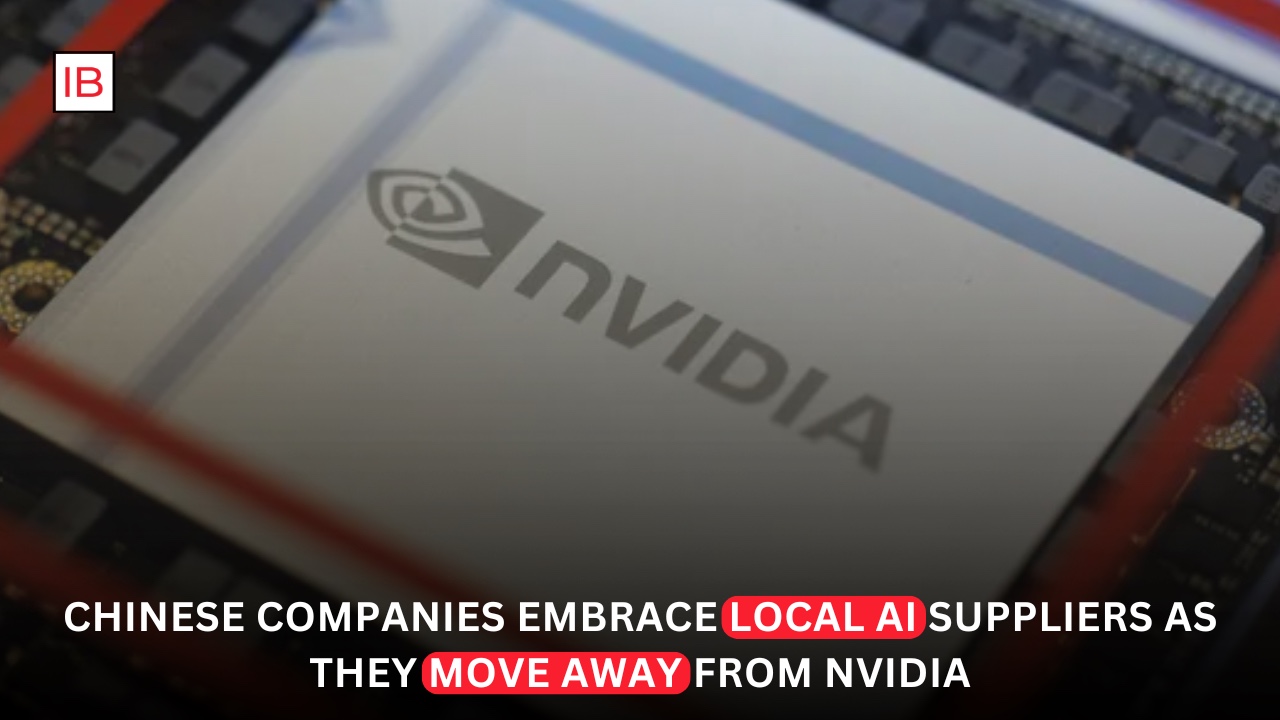
Chinese companies are increasingly moving their artificial intelligence infrastructure spending away from Nvidia chips and toward domestic AI accelerator suppliers, according to a Bloomberg Intelligence survey, highlighting how geopolitical tensions and technology restrictions are reshaping the global AI hardware market.
The survey found that Chinese executives plan to allocate 46% of their AI accelerator budgets to domestic products over the next 12 months, up from about 30% currently.
Domestic AI Chip Adoption Accelerates
China’s technology companies are increasingly turning to local alternatives as access to advanced U.S. semiconductor technology becomes more uncertain.
Key beneficiaries include:
- Huawei Technologies
- Alibaba Group
- Tencent Holdings
These companies are positioned to benefit from China’s push for greater technological self-reliance and the development of domestic AI infrastructure.
Nvidia Faces Growing Pressure in China
For years, Nvidia has been the dominant supplier of high-performance AI accelerators used by Chinese cloud providers and technology firms.
However, the market environment has changed due to:
- U.S. export controls on advanced AI chips
- Beijing’s push for domestic semiconductor independence
- Government support for local suppliers
- Concerns over long-term access to foreign technology
The shift represents one of the most significant challenges to Nvidia’s position in China’s AI ecosystem.
Huawei Emerges as a Major Domestic Challenger
Among Chinese suppliers, Huawei has become one of the strongest competitors in AI computing hardware.
Its Ascend AI accelerator platform has gained attention as Chinese companies seek alternatives to Nvidia’s ecosystem.
Huawei’s advantages include:
- Large domestic customer base
- Government support
- Integration with China’s cloud and computing infrastructure
- Experience developing semiconductor and AI systems
AI Infrastructure Spending Still Rising
The transition toward domestic chips is occurring as Chinese companies continue increasing AI-related investment.
The survey showed that:
- Around 80% of executives said AI infrastructure spending is exceeding budgets
- Companies are investing heavily in computing capacity, data centers, and AI systems
- Demand remains strong despite higher costs
The AI boom is therefore not slowing — instead, companies are changing suppliers and technology strategies.
China’s Broader Semiconductor Strategy
The move away from Nvidia fits into Beijing’s broader effort to reduce dependence on foreign technology.
China’s strategy focuses on:
- Expanding domestic chip design capabilities
- Supporting semiconductor manufacturing
- Building local AI software ecosystems
- Increasing government procurement of Chinese technology
The shift mirrors similar efforts in other strategic industries where China has pursued greater supply-chain independence.
Global AI Supply Chain Impact
The change could have major implications for the worldwide AI industry.
Potential effects include:
- Greater fragmentation between U.S. and Chinese AI ecosystems
- Increased competition among chipmakers
- More investment in domestic semiconductor technology
- New challenges for global technology companies operating in China
The AI hardware race is increasingly becoming not only a commercial competition but also a geopolitical one.
Looking Ahead
China’s shift toward local AI chips does not immediately eliminate Nvidia’s influence, as many companies still rely on Nvidia’s software ecosystem and advanced hardware capabilities.
However, the growing adoption of domestic alternatives signals a long-term transformation in the AI semiconductor market.
As Beijing continues prioritizing technological independence, companies such as Huawei, Alibaba, and Tencent are expected to play a larger role in shaping China’s AI infrastructure future.