Christopher Pissarides Says Artificial Intelligence May Transform Some Jobs but Won’t Create Another Productivity Boom
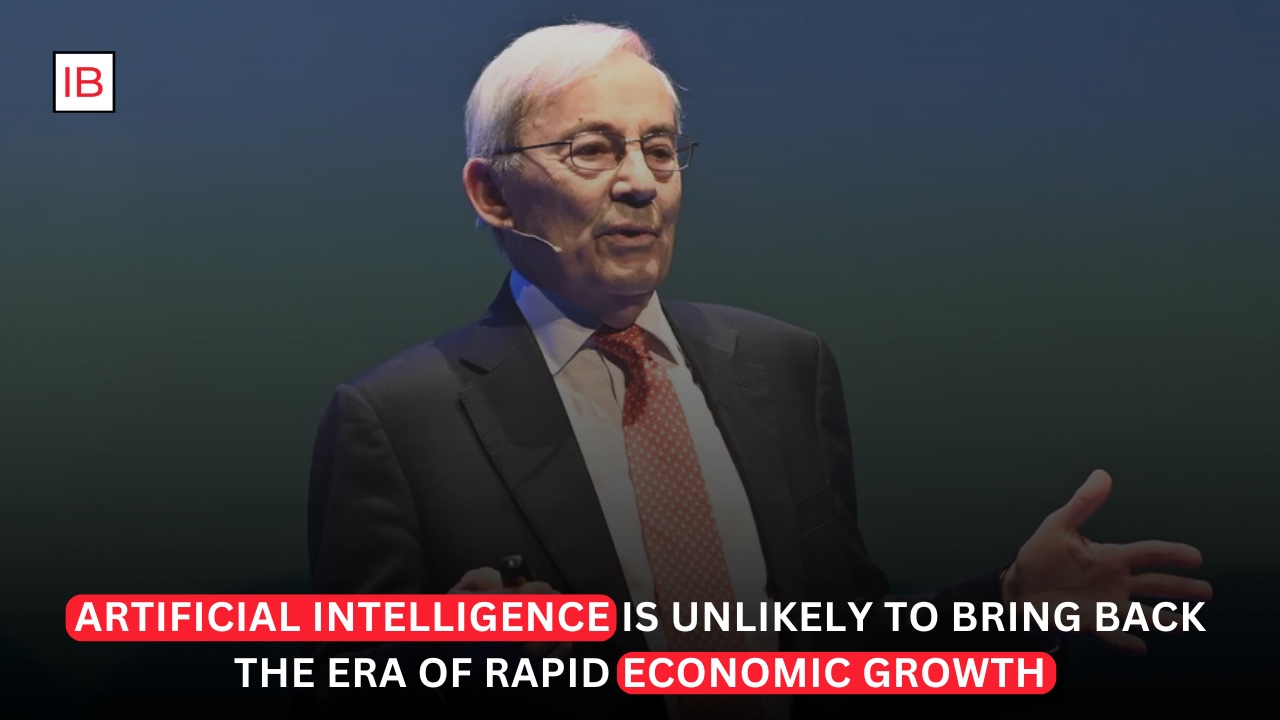
A Nobel Prize-winning economist has pushed back against expectations that artificial intelligence (AI) will return Western economies to the high-growth, high-productivity era seen in previous technological revolutions.
Christopher Pissarides, who won the 2010 Nobel Prize in Economics for his work on labor markets and unemployment, said AI is unlikely to recreate the rapid productivity gains that followed earlier innovations such as computers and the internet.
AI Expectations May Be Too Optimistic
Technology companies and governments have increasingly promoted AI as a potential solution to slowing economic growth, aging populations, and weak productivity gains.
However, Pissarides argues that evidence of a major economy-wide productivity boost from AI remains limited so far.
He questioned whether current AI advances will produce the kind of broad economic transformation expected by some technology leaders, who have predicted sweeping changes to work and productivity.
Many Jobs May Remain Largely Unaffected
Pissarides said a significant portion of jobs in advanced economies are unlikely to be fundamentally changed by AI.
He estimated that as many as four in 10 jobs in the United States and United Kingdom could remain largely unaffected, pointing to fields such as:
- Nursing
- Hospitality
- Other roles requiring human interaction and physical presence
While AI may improve efficiency in many industries, he argued that not every occupation can be easily automated.
Productivity Gains Could Be Slower Than Expected
A major argument behind the AI investment boom is that artificial intelligence will dramatically increase worker output.
Supporters believe AI can:
- Automate routine tasks
- Improve decision-making
- Accelerate research and development
- Reduce business costs
But Pissarides cautioned that widespread productivity improvements often take years to appear because companies must redesign processes, retrain workers, and adapt their organizations before new technologies deliver maximum benefits.
Comparison With Past Technology Revolutions
Previous technological breakthroughs produced major economic changes, but often only after long periods of adjustment.
The AI debate echoes earlier discussions about computers and the internet, where early enthusiasm was not immediately reflected in productivity statistics.
Economists have long noted that technological revolutions can require significant changes in:
- Business structures
- Workforce skills
- Investment patterns
- Regulation
before their full economic impact becomes visible.
Implications for Workers and Policymakers
Pissarides’ comments suggest that governments should avoid assuming AI alone will solve economic challenges.
Instead, policymakers may need to focus on:
- Education and skills development
- Worker transition programs
- Innovation policies
- Supporting industries where human expertise remains essential
The economist’s view contrasts with more aggressive predictions from some technology executives who expect AI to dramatically reshape labor markets.
AI Still Expected to Change the Economy
Despite his cautious outlook, Pissarides does not dismiss AI’s importance.
Artificial intelligence is expected to create meaningful changes in areas such as:
- Professional services
- Software development
- Research
- Manufacturing
- Business operations
The debate is less about whether AI will matter and more about whether its effects will arrive quickly enough and broadly enough to produce a historic economic acceleration.
Looking Ahead
The AI boom has generated enormous investment from companies and governments hoping for a new era of growth.
Pissarides’ warning highlights a more cautious possibility: AI may become a powerful tool that improves many sectors without necessarily recreating the exceptional productivity growth of past decades.
As adoption continues, economists and businesses will be watching whether AI delivers a genuine economic transformation or a more gradual improvement spread across individual industries.