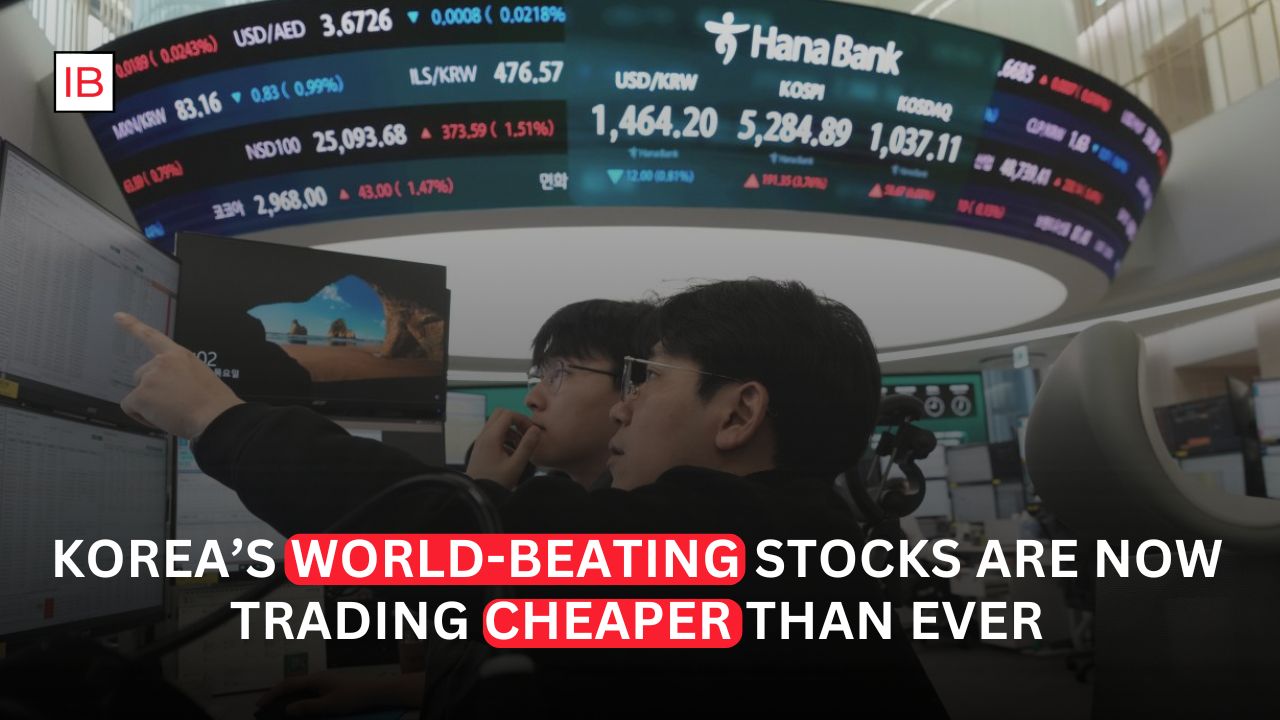
Investor Caution Keeps Korean Equities Cheap Even as Leading Companies Deliver Strong Results
South Korean stocks are trading at some of their lowest valuations in years despite many of the country’s largest companies remaining global leaders in industries such as semiconductors, batteries, automobiles, and shipbuilding. The disconnect between strong corporate fundamentals and subdued market valuations has attracted growing attention from global investors seeking undervalued opportunities.
Analysts say concerns over corporate governance, slowing economic growth, geopolitical tensions, and global trade uncertainty have continued to weigh on investor sentiment, leaving many Korean stocks trading at significant discounts compared with their international peers.
Valuation Gap Continues to Widen
Despite strong earnings from several major companies, South Korea’s stock market continues to trade at relatively low price-to-earnings and price-to-book ratios.
Investors have remained cautious due to:
- Global economic uncertainty
- Geopolitical risks in the region
- Slower domestic economic growth
- Corporate governance concerns
- Weak investor confidence
These factors have prevented valuations from fully reflecting the strength of many Korean businesses.
Global Leaders Drive the Korean Economy
South Korea is home to several world-leading companies across multiple industries.
Its largest corporations operate in sectors including:
- Semiconductors
- Electric vehicle batteries
- Consumer electronics
- Automobile manufacturing
- Shipbuilding
Many of these businesses continue benefiting from long-term trends such as artificial intelligence, clean energy, and advanced manufacturing.
Why Korean Stocks Are Considered Undervalued
Market analysts often refer to the persistent valuation gap as the “Korea Discount.”
The term describes the tendency for South Korean companies to trade at lower valuations than comparable firms in other developed markets despite maintaining competitive businesses and strong profitability.
Reasons behind the Korea Discount include:
- Complex corporate ownership structures
- Lower shareholder returns
- Governance-related concerns
- Geopolitical uncertainty involving North Korea
- Reduced foreign investor participation
These issues have contributed to a long-standing discount in Korean equity markets.
AI and Semiconductor Demand Support Growth
The rapid expansion of artificial intelligence has provided a major boost for South Korea’s technology sector.
Growing demand for advanced semiconductors, memory chips, and AI infrastructure has strengthened earnings prospects for leading Korean manufacturers.
Industries benefiting from AI investment include:
- Memory chip production
- AI servers
- Data centers
- Advanced electronics
- Cloud computing infrastructure
This trend has helped offset weakness in some traditional export markets.
Investors Look for Potential Rebound
Some international fund managers believe the current valuation gap presents an attractive investment opportunity.
If corporate governance continues improving and economic conditions stabilize, analysts believe Korean equities could experience a meaningful re-rating as investor confidence returns.
Government initiatives aimed at enhancing shareholder value have also increased optimism that market discounts could narrow over time.
Risks Remain
Despite the attractive valuations, investors continue monitoring several challenges that could affect market performance.
Key risks include:
- Global economic slowdown
- Trade policy uncertainty
- Currency volatility
- Rising geopolitical tensions
- Slower technology demand
These factors may continue influencing foreign investment flows into South Korea’s equity market.
Looking Ahead
South Korean stocks remain among the cheapest in the developed world despite housing many globally competitive companies. As demand for artificial intelligence, semiconductors, and advanced manufacturing continues to grow, investors will be watching closely to see whether improving corporate reforms and stronger earnings can finally close the long-standing Korea Discount.
If investor confidence improves, South Korea’s equity market could be well positioned for a significant revaluation in the years ahead.