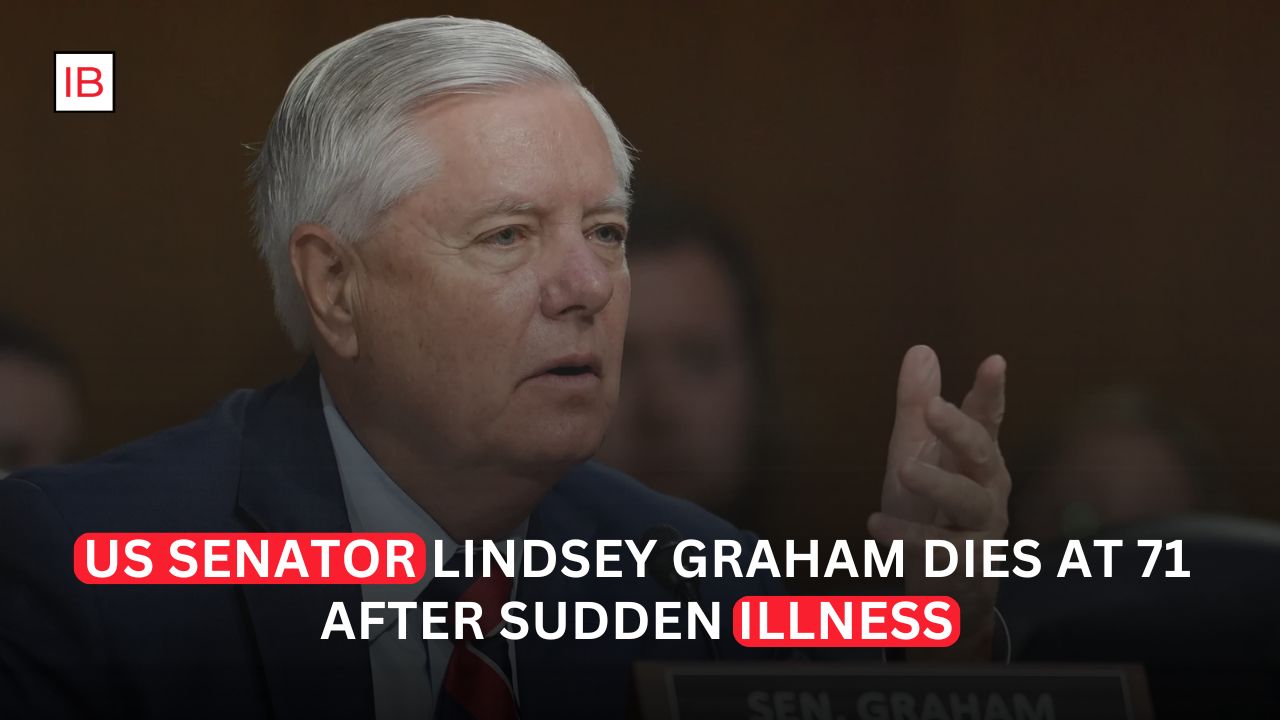
Veteran Republican Lawmaker and Key Trump Ally Served South Carolina in the Senate for More Than Two Decades
U.S. Senator Lindsey Graham, one of the Republican Party’s most influential lawmakers and a longtime ally of President Donald Trump, has died at the age of 71 following what his office described as a “brief and sudden illness.” The announcement was made early Sunday, with Graham’s family requesting privacy during this difficult time.
Graham represented South Carolina in the U.S. Senate since 2003, playing a prominent role in shaping American foreign policy, national security, and judicial matters. His unexpected death is expected to have significant political implications in Washington and within the Republican Party.
A Long Career in Public Service
Before entering the Senate, Graham served four terms in the U.S. House of Representatives after beginning his political career in the South Carolina House of Representatives.
Prior to politics, he served as an officer and military lawyer in the U.S. Air Force, later retiring from the Air Force Reserve with the rank of Colonel. Throughout his career, Graham became known for his focus on defense, military affairs, and foreign policy.
From Trump Critic to Close Ally
During the 2016 Republican presidential primary, Graham was an outspoken critic of Donald Trump.
However, after Trump secured the presidency, Graham became one of his closest allies in Congress, frequently supporting the administration’s legislative agenda and defending its foreign and domestic policies.
The relationship made Graham one of the Republican Party’s most recognizable and influential voices on Capitol Hill.
Influential Voice on National Security
Throughout his Senate career, Graham was widely recognized for his strong positions on defense and international affairs.
He consistently advocated for:
- Strong U.S. military capabilities
- Increased national security funding
- Robust support for American allies
- Tough sanctions against geopolitical rivals
- Active U.S. engagement in global conflicts
His views made him one of the Senate’s leading voices on foreign policy and defense issues.
Leadership in the Senate
Graham held several senior leadership positions during his time in Congress.
Among his most notable roles were:
- Chairman of the Senate Judiciary Committee
- Chairman of the Senate Budget Committee
- Senior member of the Senate Armed Services Committee
- Member of several national security and appropriations committees
He was actively involved in judicial confirmations, budget negotiations, and major national policy debates throughout his career.
Political Impact
Graham’s death leaves a significant vacancy in both the U.S. Senate and Republican leadership.
Political observers expect attention to turn toward:
- The process for filling his Senate seat
- The impact on Senate committee leadership
- South Carolina’s political landscape
- The Republican Party’s legislative agenda
- Upcoming Senate elections
His passing comes at a critical time as Congress continues debating major domestic and international policy issues.
Tributes Expected Across Washington
Leaders from both political parties are expected to pay tribute to Graham’s decades of public service.
Although often a polarizing political figure, he was widely respected for his willingness to work across party lines on certain bipartisan issues, particularly those involving national security and judicial matters.
Looking Ahead
Lindsey Graham’s death marks the end of a political career that spanned more than three decades in public office. From his military service to his years in Congress, he remained one of the most influential Republican lawmakers in Washington and a prominent voice on foreign policy, defense, and judicial affairs.
As tributes continue and South Carolina prepares to fill the vacant Senate seat, Graham’s legacy is expected to remain an important part of modern American political history.