False Claims on Social Media Turned Tragedy Into Nationwide Violence
A wave of anti-immigrant riots that spread across the United Kingdom was fueled by false online narratives, conspiracy theories, and coordinated misinformation, demonstrating how rapidly digital rumors can escalate into real-world violence.
The unrest, which followed a series of high-profile incidents, was intensified by fabricated claims about migrants, asylum seekers, and minority communities that circulated widely across social media before being amplified by influential online figures.
False Information Spread Faster Than Facts
Investigations found that misleading posts spread across multiple online platforms within hours of the triggering events.
Some of the most widely circulated false claims alleged that:
- Suspects were undocumented migrants before authorities confirmed their identities.
- Government officials were deliberately hiding information.
- Immigration policies were directly responsible for unrelated crimes.
- Authorities were protecting migrants instead of local communities.
Many of these claims were later proven false, but they had already reached millions of users before corrections gained attention.
Conspiracy Theories Became Rallying Points
Researchers found that several long-running conspiracy theories were used to reinforce anti-immigrant narratives.
Among them were claims suggesting that:
- Immigration was part of a coordinated effort to replace native populations.
- Governments were intentionally concealing crimes involving migrants.
- Traditional media could not be trusted because it was suppressing the “truth.”
Although these theories have circulated online for years, experts say periods of crisis make them far more likely to influence public behavior.
Social Media Accelerated Mobilization
Digital platforms played a central role in organizing demonstrations and spreading inflammatory content.
Investigators say online networks were used to:
- Coordinate protest locations.
- Share unverified videos and images.
- Amplify emotional messaging.
- Encourage rapid participation before official information became available.
The speed of online communication allowed rumors to spread much faster than verified reporting from authorities or established news organizations.
Real-World Violence Followed Online Narratives
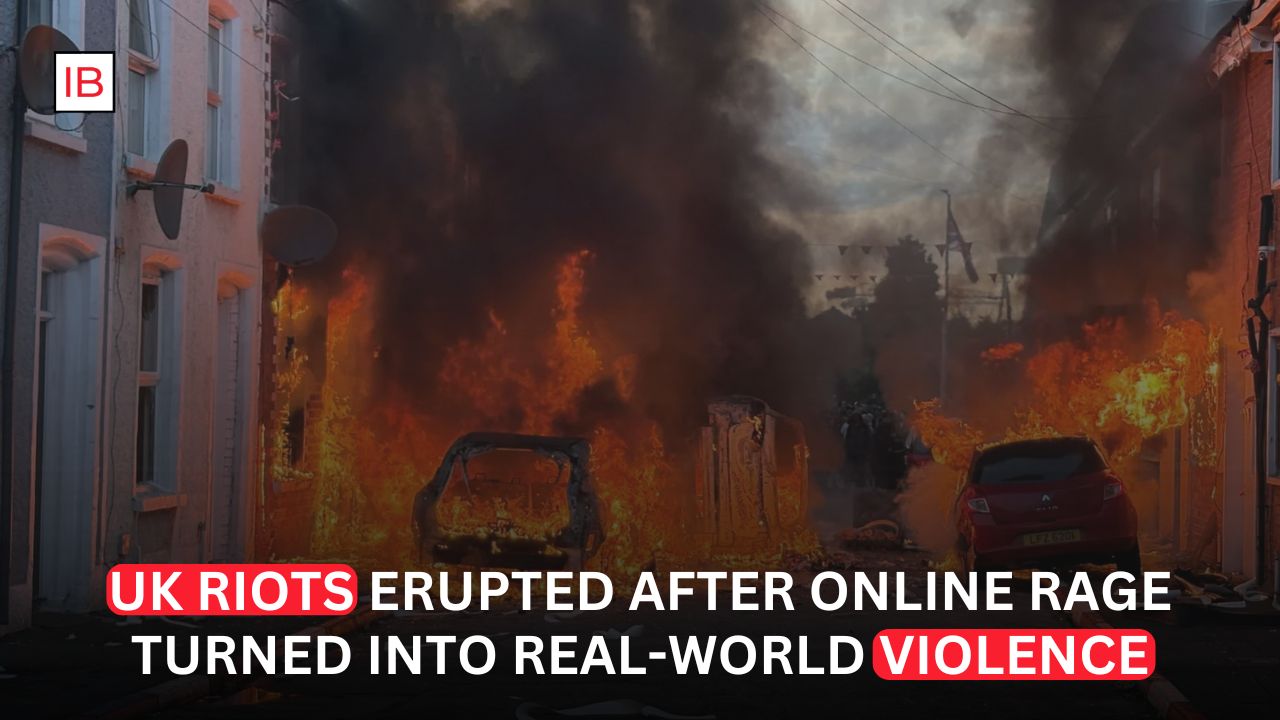
As misinformation spread, demonstrations in several cities escalated into violence.
The disorder included attacks on:
- Police officers
- Community buildings
- Businesses
- Religious sites
Authorities carried out numerous arrests while increasing police deployments to restore public order.
Experts Warn of Growing Information Risks
Researchers studying online extremism argue that modern misinformation campaigns increasingly combine:
- Emotionally charged narratives
- Viral social media content
- Conspiracy theories
- Existing political frustrations
This combination can rapidly transform isolated incidents into nationwide unrest, particularly when false information spreads before official investigations are complete.
Governments Face New Challenges
The events have intensified debate over how governments and technology companies should respond to online misinformation.
Key issues include:
- Faster removal of demonstrably false content.
- Greater transparency from social media platforms.
- Improved public access to verified information.
- Balancing free expression with public safety.
Officials acknowledge that responding too slowly allows false narratives to become deeply embedded before factual information reaches the public.
Looking Ahead
The UK riots demonstrate how misinformation and conspiracy theories can have consequences far beyond the digital world.
While underlying concerns over immigration and public policy remain subjects of legitimate political debate, investigators and researchers conclude that false online claims significantly accelerated the violence by exploiting fear, uncertainty, and existing social divisions.
As governments worldwide confront similar challenges, the events serve as a reminder that combating misinformation is becoming an increasingly important part of maintaining public safety and social stability.