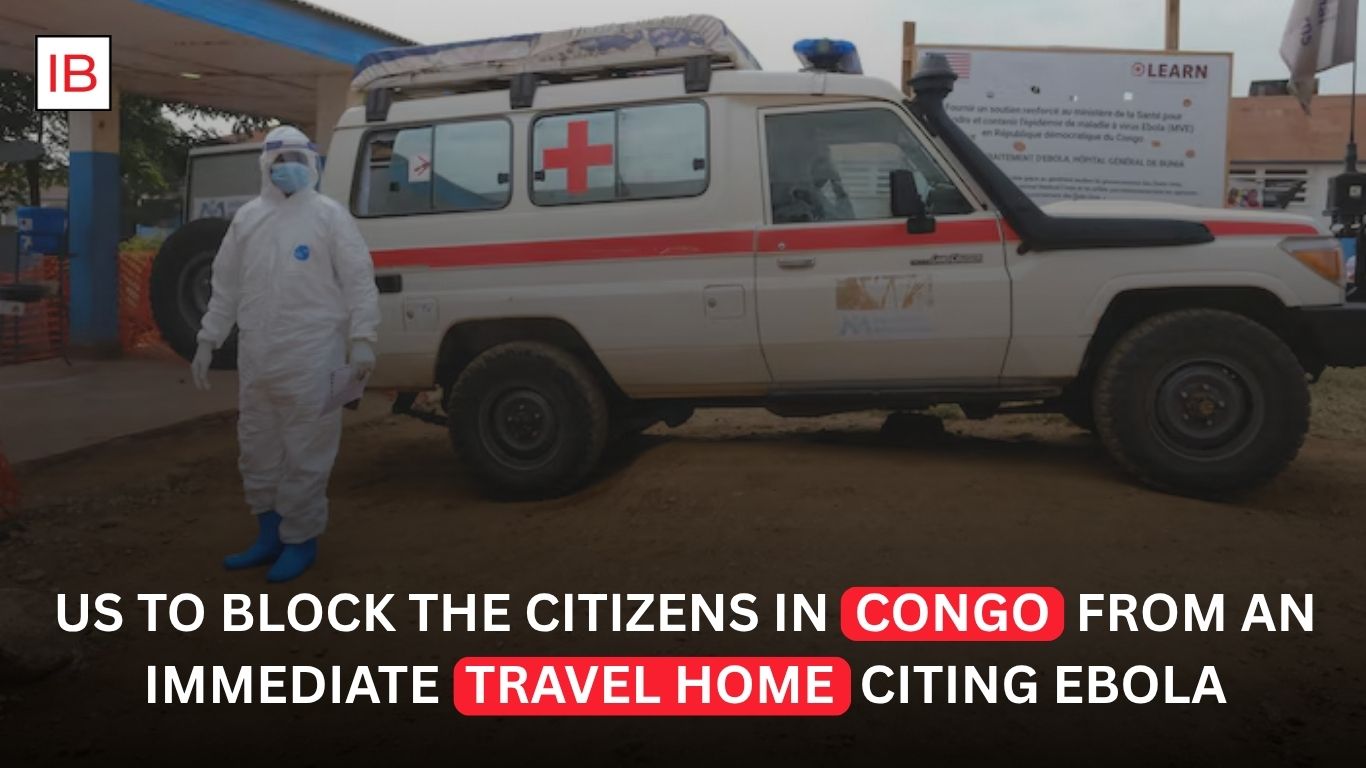
New Travel Restrictions Require US Citizens to Wait 21 Days Before Returning on Commercial Flights
The United States has introduced new travel restrictions preventing American citizens currently in the Democratic Republic of the Congo (DRC) from immediately returning home on commercial flights because of the country’s worsening Ebola outbreak.
Under the new policy, U.S. citizens in Congo—or those who have recently departed the country—will be placed on a “do-not-board” list and must spend 21 days in a third country before they are permitted to fly commercially to the United States.
New Measures Aim to Reduce Ebola Transmission
The restrictions were ordered by the Trump administration as part of efforts to prevent Ebola from reaching the United States.
The policy includes:
- A 21-day waiting period outside Congo
- Placement on a “do-not-board” list for affected travelers
- Restrictions on commercial flights to the U.S.
- Continued support for affected Americans through the U.S. State Department
Officials said the measures are designed to reduce the risk of international transmission while monitoring potential infections.
Ebola Outbreak Continues to Expand
The Democratic Republic of the Congo is experiencing one of its most severe Ebola outbreaks in recent years.
According to the latest official figures:
- More than 1,900 confirmed cases have been reported.
- More than 700 deaths have been recorded.
- The virus has spread to multiple provinces, including areas closer to Kinshasa.
Health authorities continue working to trace contacts, isolate patients, and slow further transmission.
US Citizens Among Confirmed Cases
The travel restrictions follow recent cases involving American citizens working in Congo.
Health officials confirmed that:
- A U.S. humanitarian worker contracted the Bundibugyo strain of Ebola.
- Another American physician has been receiving treatment in Germany.
- The CDC and State Department are coordinating with employers and health partners to monitor exposed individuals.
Officials say the restrictions are intended to protect public health while ensuring affected citizens receive appropriate assistance.
Ebola Spreads Through Direct Contact
Ebola is a severe viral disease that spreads through direct contact with infected bodily fluids.
Common symptoms include:
- High fever
- Vomiting
- Severe weakness
- Diarrhea
- Internal and external bleeding in severe cases
Health experts emphasize that early isolation, contact tracing, and supportive medical care remain essential to controlling outbreaks.
Humanitarian Response Faces Challenges
Medical teams continue battling the outbreak despite significant obstacles.
Current challenges include:
- Ongoing armed conflict
- Displaced populations
- Limited healthcare infrastructure
- Difficult access to affected communities
- Resource constraints
These factors have complicated efforts to contain the virus and protect vulnerable populations.
International Health Officials Remain on Alert
Global health agencies continue monitoring the outbreak closely amid concerns that additional cross-border transmission could occur if containment efforts weaken.
Authorities stress that international cooperation, surveillance, and rapid response remain critical to limiting the spread of Ebola beyond Central Africa.
Looking Ahead
The United States’ decision to temporarily prevent American citizens in Congo from returning home directly reflects growing concern over the expanding Ebola outbreak. While officials describe the restrictions as a precautionary public health measure, they underscore the seriousness of the situation as health workers continue working to contain the virus.
As the outbreak evolves, U.S. authorities and international health organizations are expected to closely monitor conditions and adjust travel guidance as needed.