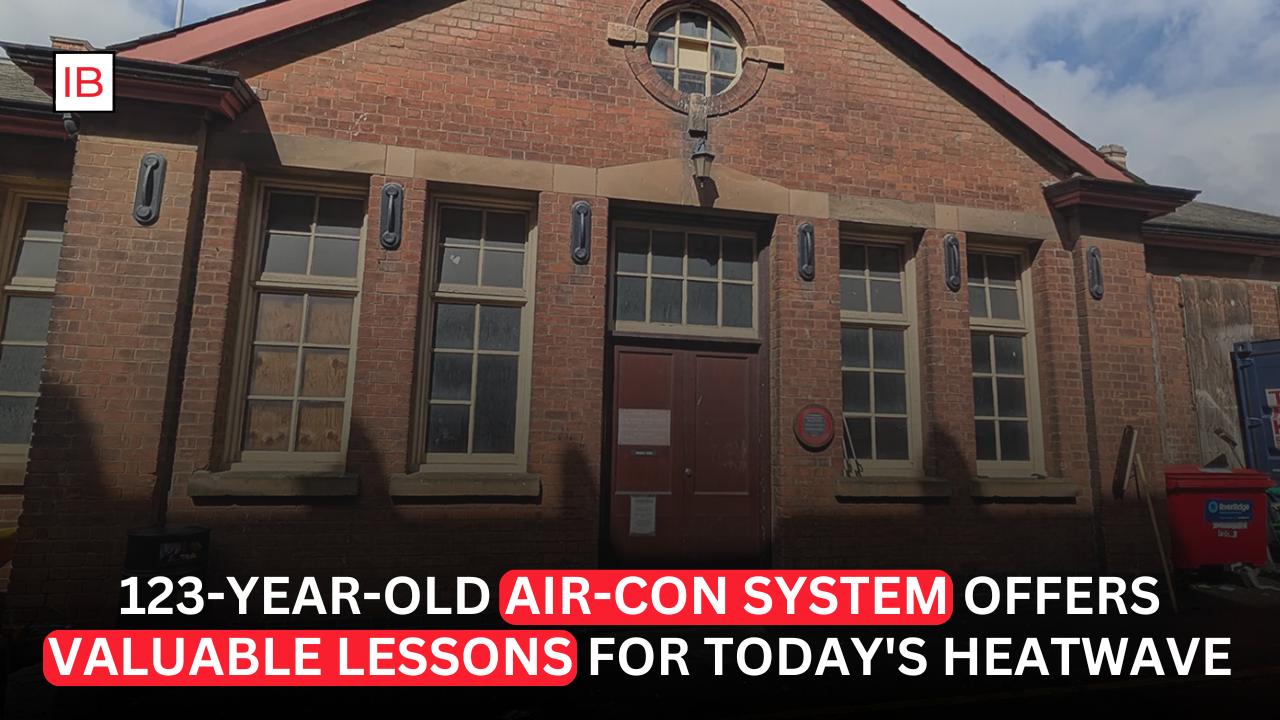
Royal Victoria Hospital Became One of the World’s First Public Buildings to Use Modern Air Conditioning in 1903
Long before air conditioning became common in homes, offices, and shopping centers, Royal Victoria Hospital in Belfast, Northern Ireland, pioneered the technology for public use. When the hospital opened in 1903, it featured one of the world’s earliest public air-conditioning systems, designed to improve patient care by providing cleaner, cooler, and better-ventilated hospital wards.
The innovative system was installed by Sirocco Works, a Belfast engineering company renowned for its advanced ventilation technology. At a time when infectious diseases were a major public health challenge, the hospital’s ventilation system represented a significant leap forward in healthcare infrastructure and hospital design.
A Revolutionary Approach to Hospital Care
In the late 19th and early 20th centuries, doctors increasingly recognized that fresh air and proper ventilation played a crucial role in preventing the spread of disease.
Royal Victoria Hospital was designed with this philosophy in mind, incorporating an advanced mechanical ventilation system that regulated indoor temperature and circulated filtered air throughout patient wards.
The system aimed to:
- Improve indoor air quality
- Reduce heat during warmer months
- Increase patient comfort
- Enhance ventilation throughout the hospital
- Support infection control efforts
These features made the hospital one of the most technologically advanced medical facilities of its time.
How the Early Air-Conditioning System Worked
Unlike today’s digital climate-control systems, the 1903 installation relied on large industrial fans, ductwork, and cooling techniques that continuously circulated fresh outdoor air through the hospital.
The ventilation system helped remove stale air while maintaining a more comfortable indoor environment for patients and medical staff.
Although far less sophisticated than modern HVAC technology, it laid the foundation for future developments in building climate control.
Why Air Conditioning Was Important for Hospitals
At the beginning of the 20th century, hospitals faced frequent outbreaks of infectious diseases such as tuberculosis and influenza.
Engineers and healthcare professionals believed that better airflow could reduce airborne contaminants and improve recovery conditions for patients.
Proper ventilation also helped:
- Control humidity
- Reduce unpleasant odors
- Improve staff working conditions
- Create a cleaner clinical environment
- Increase overall patient comfort
These principles continue to influence hospital design today.
Belfast’s Engineering Innovation
The groundbreaking ventilation system was developed by Sirocco Works, a Belfast-based engineering company that became internationally known for manufacturing industrial fans and ventilation equipment.
Its innovations were exported around the world and contributed to advances in climate-control systems used in factories, ships, public buildings, and hospitals.
Royal Victoria Hospital became an early showcase of the company’s engineering expertise and Belfast’s growing industrial capabilities during the early 1900s.
Air Conditioning Has Evolved Dramatically
Modern air-conditioning systems now do far more than simply cool indoor spaces.
Today’s HVAC systems are designed to:
- Maintain precise temperatures
- Filter airborne particles
- Remove excess humidity
- Improve energy efficiency
- Reduce the spread of airborne pathogens
These advancements have made climate control an essential feature of hospitals, laboratories, offices, airports, and homes around the world.
Royal Victoria Hospital’s Lasting Legacy
More than a century after opening, Royal Victoria Hospital remains one of Northern Ireland’s leading healthcare institutions.
Its pioneering ventilation system is remembered as an important milestone in both medical architecture and engineering history, demonstrating how innovation can improve healthcare and public wellbeing.
Looking Ahead
The story of Belfast’s Royal Victoria Hospital illustrates that many technologies now considered everyday conveniences were originally developed to solve critical public health challenges. Its early adoption of air conditioning in 1903 helped redefine hospital design and influenced future standards for ventilation and patient care.
As modern buildings continue to adopt smarter, more energy-efficient climate-control systems, the hospital’s pioneering achievement remains an important chapter in the history of engineering, healthcare, and public infrastructure.