Government Plans Long-Term Investment as Rising Energy Costs and Security Challenges Shape Political Agenda
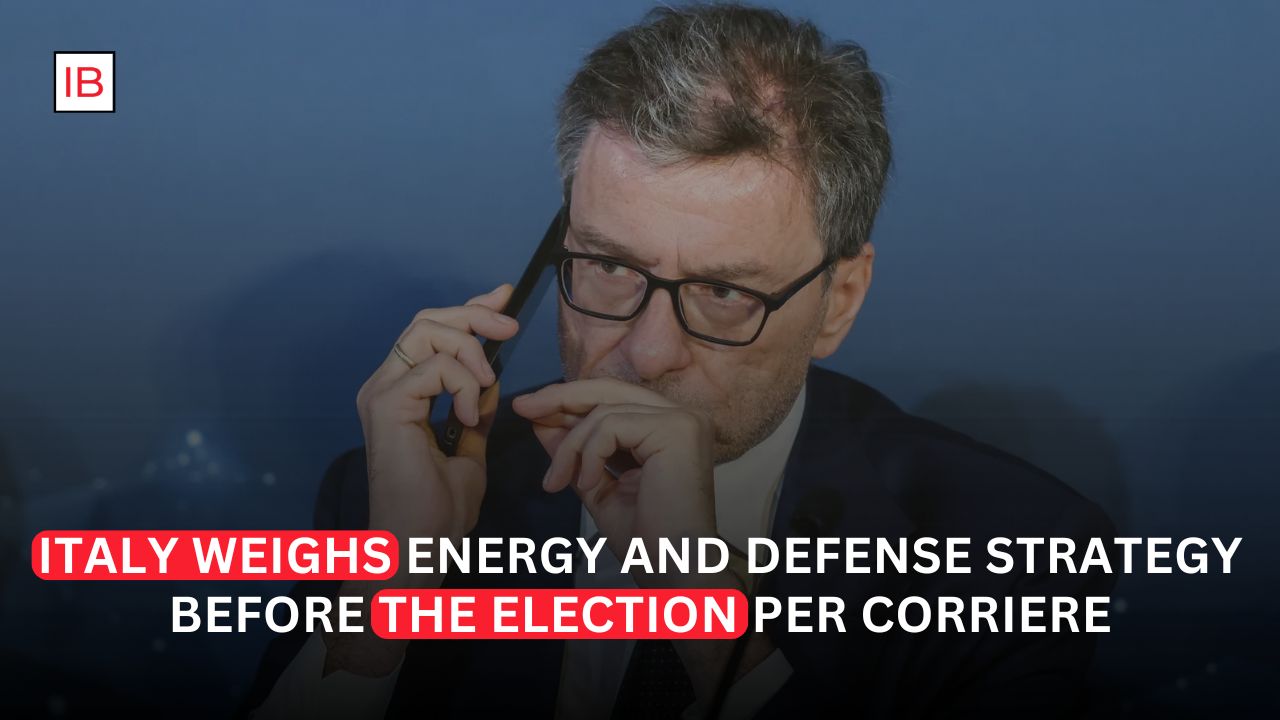
Italian Prime Minister Giorgia Meloni is preparing a policy agenda centered on energy security and increased defense spending as her government positions itself ahead of the country’s next general election. Facing persistent energy price pressures and growing geopolitical uncertainty, Meloni’s administration is seeking to balance military commitments with measures that protect households and businesses from rising energy costs while strengthening Italy’s long-term economic resilience.
The strategy reflects the government’s belief that national security now extends beyond military preparedness to include reliable energy supplies, resilient infrastructure, and economic stability. Officials argue that both defense and energy investments have become essential priorities as Europe continues adapting to geopolitical tensions and volatile global energy markets.
Energy Costs Take Center Stage
One of the government’s main priorities is easing the financial burden of high energy prices on Italian families and businesses.
Meloni’s administration plans to use new flexibility provided under European Union fiscal rules to finance energy-related measures over the coming years.
The proposed initiatives include:
- Support for household energy bills.
- Assistance for businesses facing high electricity costs.
- Investment in cleaner energy technologies.
- Measures to improve long-term energy independence.
- Infrastructure supporting the transition away from fossil fuels.
Italian officials believe reducing energy costs will strengthen economic competitiveness while helping industries remain productive during a period of elevated global energy prices.
Defense Spending Remains a Priority
Alongside energy policy, Italy continues working toward higher defense spending commitments within NATO.
Meloni has repeatedly stated that Italy intends to meet its international security obligations while ensuring that increased military investment remains financially sustainable.
Government officials have emphasized that future defense spending should:
- Support domestic manufacturing.
- Create skilled jobs.
- Encourage research and innovation.
- Strengthen Italy’s industrial base.
- Improve national security.
Rather than rapidly increasing expenditures, the government says it will determine the timing and pace of higher defense spending according to Italy’s broader economic conditions.
Balancing Budget Pressures
Italy faces the difficult task of increasing investment while maintaining control over public finances.
To create additional fiscal space, Rome plans to make use of the European Union’s budget flexibility, which allows member states to temporarily increase spending under specific conditions.
Originally designed to accommodate higher defense expenditures, the flexibility can also be used for investments supporting Europe’s transition toward cleaner energy systems.
Government officials believe this approach provides greater room to address both national security and rising living costs without immediately imposing additional financial pressure on taxpayers.
Election Strategy Takes Shape
With national elections approaching, Meloni’s government appears focused on issues that directly affect Italian voters.
Key campaign priorities are expected to include:
- Lower energy costs.
- National security.
- Economic stability.
- Industrial competitiveness.
- Job creation.
- Fiscal responsibility.
Political analysts say these themes are likely to dominate public debate as voters evaluate the government’s record during a period marked by inflation, geopolitical tensions, and slowing economic growth.
Energy Security Becomes National Security
Meloni has increasingly argued that energy independence should be treated as a strategic priority equal to defense.
The government believes reducing dependence on volatile international energy markets will:
- Improve economic resilience.
- Protect consumers.
- Strengthen industrial production.
- Reduce exposure to geopolitical shocks.
- Enhance national sovereignty.
Officials have linked affordable and reliable energy directly to Italy’s ability to maintain long-term economic growth and support future defense investments.
European Cooperation Continues
Italy remains actively engaged with European partners on both defense and energy policy.
Rome continues supporting EU initiatives aimed at:
- Strengthening collective security.
- Expanding clean energy investment.
- Improving energy resilience.
- Coordinating responses to geopolitical risks.
Government officials maintain that close cooperation within the European Union remains essential while allowing individual member states flexibility to address national economic priorities.
Looking Ahead
Prime Minister Giorgia Meloni’s emerging policy agenda reflects a broader shift in European politics, where economic resilience, energy security, and national defense have become increasingly interconnected. By emphasizing investment in both energy infrastructure and military capabilities, the Italian government hopes to reassure voters that it can protect national interests while supporting long-term economic growth.
As Italy moves closer to its next election, the success of this strategy will largely depend on whether the government can deliver meaningful relief from high energy costs while maintaining fiscal discipline and meeting international defense commitments. With uncertainty continuing across global energy markets and Europe’s security environment, Meloni’s focus on these issues is likely to remain at the center of Italy’s political and economic debate.