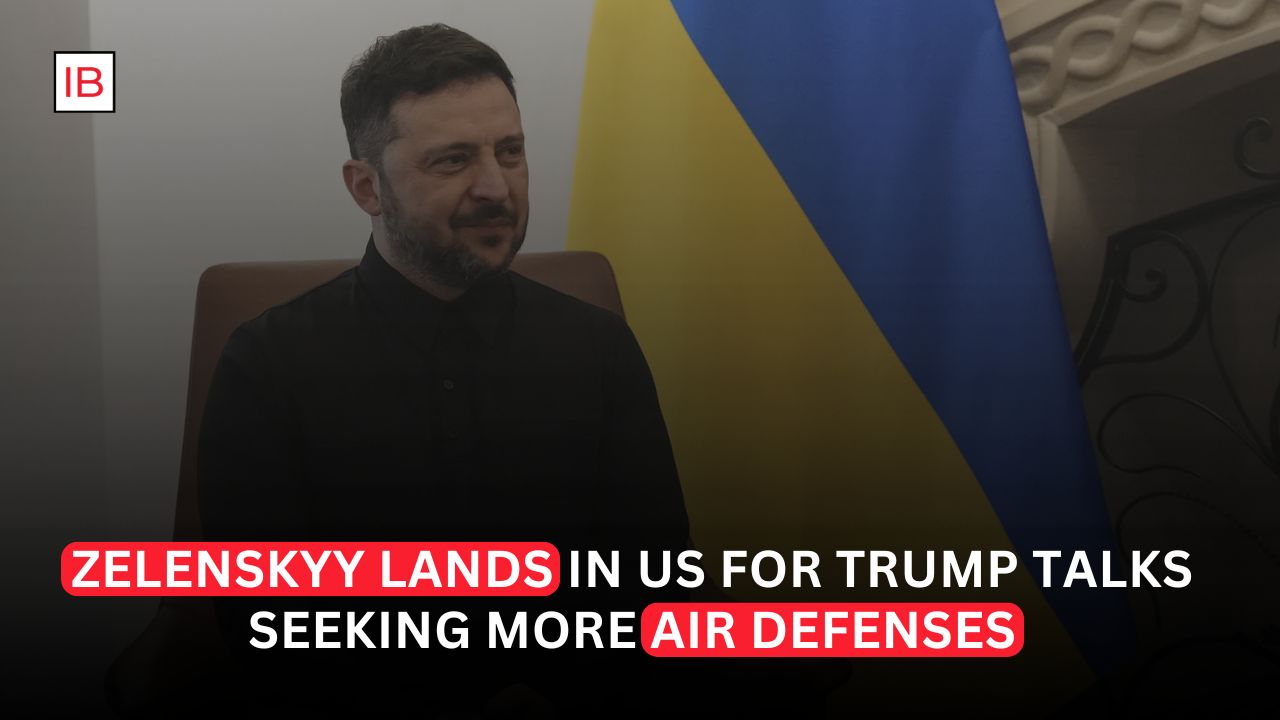
Ukrainian President Volodymyr Zelenskyy arrived in the United States on Tuesday for high-stakes talks with President Donald Trump, with securing additional air defense systems standing as his clearest priority as Russia continues to pound Ukrainian cities with missile and drone strikes.
A Priority Set in Advance
Zelenskyy made his intentions clear before even landing, posting on social media that his top priority for the visit was anti-ballistic missile defense and deeper strategic cooperation with Washington. His schedule was set to include meetings with Trump, his administration, and other officials capable of bolstering Ukraine’s defenses, with the closed-door Oval Office meeting scheduled for 9:30 a.m. local time. Patriot missile interceptors, which have become one of Ukraine’s most urgently needed and hardest-to-obtain defensive assets, were expected to top the agenda, alongside a proposed U.S.-Ukraine drone production agreement.
Building on Momentum from Ankara
The Washington meeting follows a series of encouraging signals for Kyiv over the past month. At the NATO summit in Ankara earlier in July, Trump told Zelenskyy directly that the U.S. would grant Ukraine a license to manufacture Patriot air defense systems domestically, framing the move as a way to address Ukraine’s persistent complaints about insufficient supply. “One of the things we’re going to be talking about is, we’re going to give a license to you to make Patriots,” Trump said at the time, adding that the arrangement would mean Kyiv could no longer complain about not receiving enough support.
Since that pledge, momentum has continued to build. Zelenskyy revealed he had met in Kyiv with senior representatives from Raytheon, the American defense contractor that manufactures the Patriot system, to discuss the details of potential joint production. Separately, Zelenskyy confirmed that the U.S. was already testing Ukrainian-made aerial and maritime drones and had provided what he described as very positive feedback, describing it as the clearest sign yet that a long-stalled, multibillion-dollar drone production arrangement between the two countries was moving forward.
A Relationship That Has Softened Over Time
The tone of the Trump-Zelenskyy relationship marks a notable shift from where it stood roughly a year and a half earlier, when a tense public exchange between the two leaders in the Oval Office in February 2025 became emblematic of early friction between the new U.S. administration and Kyiv. Since then, ties have gradually warmed, with Trump offering praise for Zelenskyy at the Ankara summit and following through on the Patriot licensing commitment. Notably, even prominent Trump allies who had previously downplayed the severity of Russia’s invasion, such as commentator Laura Loomer, have shifted tone, with Loomer meeting Zelenskyy in Kyiv and publicly criticizing Russian President Vladimir Putin over recent missile attacks.
Despite the improving atmosphere, direct U.S. arms shipments to Ukraine have largely given way to an arrangement under which European allies purchase American-made weapons on Kyiv’s behalf, with Washington continuing to provide intelligence support and other forms of assistance rather than direct weapons transfers.
A Visit With Multiple Purposes
Beyond the security discussions, Zelenskyy’s Washington trip carried personal and symbolic significance, as he was also set to attend the funeral of U.S. Senator Lindsey Graham, a staunch and long-time supporter of Ukraine’s fight against Russian aggression, alongside meetings with lawmakers on Capitol Hill. Discussions in Washington were also expected to touch on renewed efforts to arrange direct talks between Zelenskyy and Putin, part of a broader, so-far unsuccessful push by the Trump administration to broker an end to the war.
Why It Matters
The stakes surrounding Ukraine’s air defense needs have only grown more urgent as Russia has intensified concentrated bombardments using ballistic missiles and drone swarms, aiming to overwhelm Ukrainian defenses and inflicting a steady toll of civilian casualties. While the promise of licensed Patriot production represents a potentially significant long-term boost to Ukraine’s defensive capabilities, experts and Ukrainian officials alike have cautioned that establishing meaningful domestic production would likely take years to materialize, leaving Kyiv dependent on existing supply channels in the near term even as this week’s talks aim to accelerate broader cooperation.