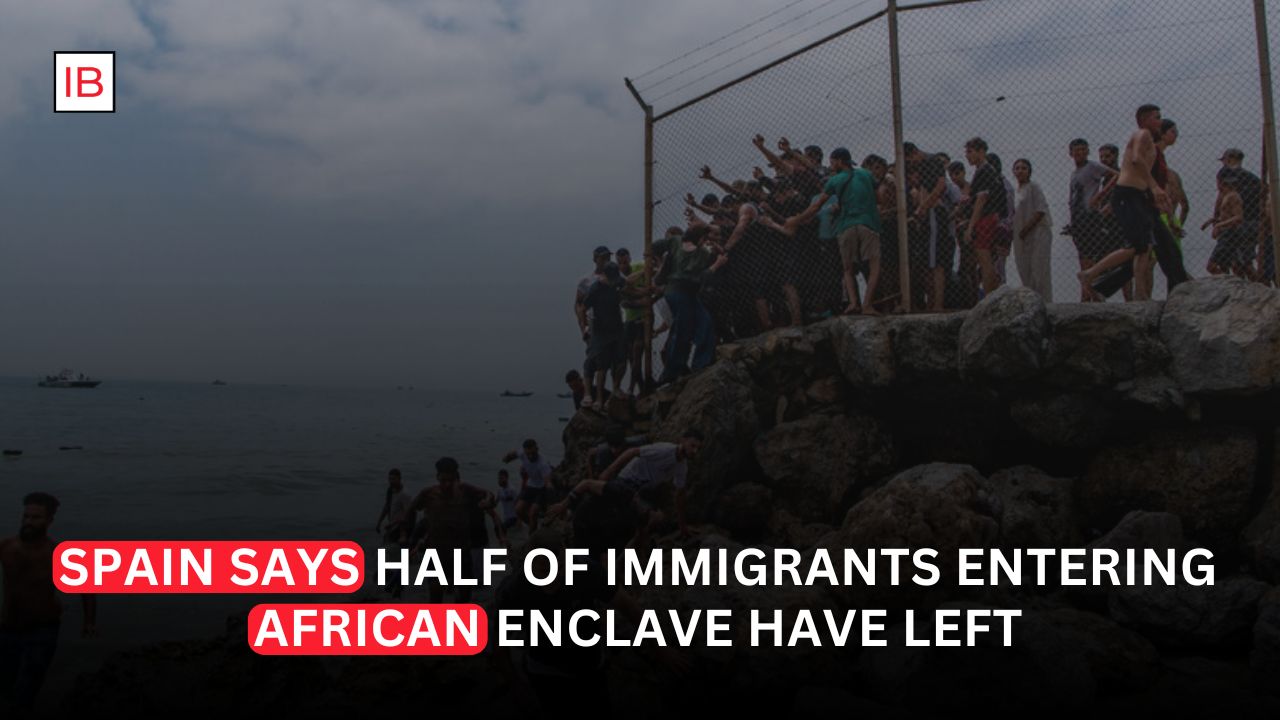
Spanish Prime Minister Pedro Sánchez says the unprecedented surge of migrants into the North African enclave of Ceuta represents a serious challenge to national sovereignty as authorities work to restore order.
Spain is confronting one of its largest migration crises in recent years after tens of thousands of migrants crossed into the North African enclave of Ceuta from neighboring Morocco within a short period. Prime Minister Pedro Sánchez described the situation as an “attack” on Spain’s territorial integrity, pledging swift action to strengthen border security while coordinating with Moroccan authorities to manage the crisis.
The sudden influx overwhelmed local infrastructure, prompting Spain to deploy additional security personnel and emergency resources to the enclave. Authorities also accelerated efforts to return migrants who entered illegally while providing humanitarian assistance to those stranded in the territory. The crisis has reignited debate across Europe over border management, migration policy, and cooperation between neighboring countries.
Record Crossing Overwhelms Ceuta
Ceuta, one of Spain’s two autonomous enclaves in North Africa, experienced an unprecedented surge as thousands of migrants crossed the border by land and sea within a single day. Local shelters and emergency facilities quickly reached capacity, forcing authorities to establish temporary reception centers and deploy additional police and military personnel.
Spanish officials said many migrants later chose to return voluntarily after facing overcrowded conditions and limited resources inside the enclave. Meanwhile, border security operations continued in cooperation with Morocco to prevent further large-scale crossings.
Sánchez Vows Firm Response
Speaking after visiting the affected area, Sánchez said Spain would defend its borders while maintaining its commitment to humanitarian obligations. He described the mass crossing as a serious challenge to the country’s sovereignty and stressed that illegal migration networks must be dismantled.
The government also announced plans to speed up repatriation procedures for those who do not qualify for protection under Spanish or European law. Officials emphasized that legal migration pathways remain available but warned that irregular border crossings cannot be tolerated.
Humanitarian and Security Concerns
The crisis has also highlighted significant humanitarian challenges. Reports indicate that dozens of people died during the dangerous journey, with many attempting to reach Ceuta by swimming or crossing rough coastal waters. Emergency responders continued search and rescue operations while medical teams treated injured migrants arriving in the enclave.
Human rights organizations have called for measures to protect vulnerable migrants, particularly children and families, while urging authorities to ensure that international asylum obligations are respected throughout the response.
Political Debate Intensifies Across Europe
The migration surge has triggered political reactions beyond Spain. Several European leaders expressed concern that uncontrolled crossings could place additional pressure on the European Union’s external borders, while opposition parties inside Spain criticized the government’s migration policies.
The incident has also renewed discussions about closer cooperation between Spain, Morocco, and EU institutions to strengthen border controls, combat human trafficking networks, and improve legal migration systems.
Looking Ahead
Spain’s latest migration emergency is expected to remain a major political issue as authorities continue restoring order in Ceuta and working with Morocco to prevent further crossings. While the immediate surge appears to be easing, policymakers face the longer-term challenge of balancing border security with humanitarian responsibilities.
The coming weeks are likely to focus on reinforcing cooperation between Spain and its European partners while addressing the underlying factors driving irregular migration. The crisis also underscores the growing pressure on European governments to develop coordinated migration policies capable of responding to large-scale cross-border movements.