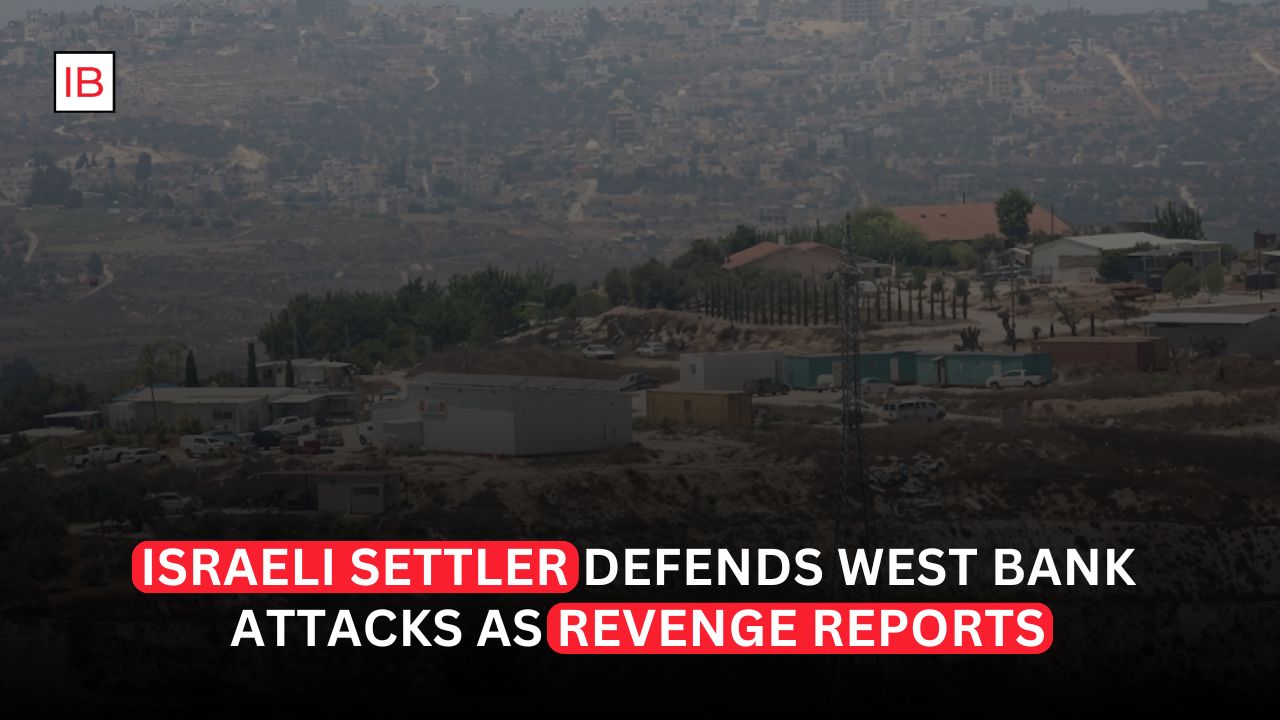
An Israeli settler living in the Havat Gilad outpost in the occupied West Bank has publicly defended recent attacks on nearby Palestinian villages as justified retaliation for the killing of the outpost’s security guard, offering a rare on-the-record window into the ideology driving a broader surge in settler violence across the territory.
What Triggered the Latest Violence
The wave of attacks followed a confrontation in the Palestinian village of Tal on July 18, in which the Havat Gilad security guard, four Palestinians, and an Israeli soldier were all killed. The precise circumstances that sparked the initial clash remain disputed. In the days that followed, settlers carried out a series of attacks on nearby Palestinian villages, described as a direct response to the guard’s death.
Journalists gained rare access to Havat Gilad, an outpost that international media organizations are seldom permitted to enter, and spoke with Yehuda Shimon, a lawyer who represents Israelis facing charges over violence against Palestinians. Shimon defended the attacks as justified retaliation and argued that Israeli forces should be willing to use lethal force more readily during confrontations with Palestinians. He also criticized the Israeli government and military for what he described as insufficient support for settlers, and invoked religious justification for Jewish settlement of the West Bank while dismissing the relevance of international law to the territory’s status.
A Broader Pattern of Escalating Violence
The Havat Gilad attacks are not an isolated episode. According to the UN Office for the Coordination of Humanitarian Affairs, 64 Palestinians were killed in the West Bank between the start of the year and July 20, with settlers responsible for at least 12 of those deaths and Israeli forces responsible for three others. Separately, earlier reporting this year documented a spate of settler attacks on Palestinian villages including Jalud, Qaryut, al-Funduqmiya, and Silat al-Dhahr, after an 18-year-old settler was killed in an incident involving a vehicle allegedly driven by a Palestinian, an incident police said they were investigating as either deliberate or accidental. That episode saw WhatsApp groups used by settlers explicitly calling for a coordinated revenge campaign, with more than 20 separate settler attacks reported in a single overnight period according to an Israeli defense official.
The Israel Defense Forces has said its troops and border police were dispatched to several Palestinian villages in response to reports of Israeli civilians committing arson against structures and property, along with broader disturbances in affected areas.
A Climate Shaped by Wider Regional Conflict
Observers note that settler violence has intensified further amid the broader military conflict involving Iran that began earlier this year, with the UN reporting that at least six Palestinians were killed by settlers in the weeks following the war’s outbreak. The convergence of settlement expansion, an outpost network operating with varying degrees of formal recognition, and a wartime security environment stretched thin by conflict elsewhere in the region has created conditions that rights advocates warn are enabling more frequent and more organized attacks on Palestinian communities.
Reactions and Broader Context
Many Israelis reject the views expressed by Shimon, but they help illuminate the ideological currents driving a segment of the settler movement as both formal settlements and informal outposts continue to expand across the West Bank. International bodies and human rights organizations have previously condemned rhetoric that frames attacks on Palestinian communities as legitimate retaliation, warning that such justifications risk further entrenching cycles of violence in an already volatile environment.
What Comes Next
With settlement expansion continuing alongside a documented rise in settler-related violence, and with the underlying regional conflict showing no clear signs of resolution, the dynamics described in Havat Gilad appear likely to remain a recurring feature of life in the West Bank for the foreseeable future. How Israeli authorities respond to documented attacks on Palestinian villages, and whether accountability measures keep pace with the scale of the violence being reported, will likely shape whether tensions in the territory continue escalating in the months ahead.