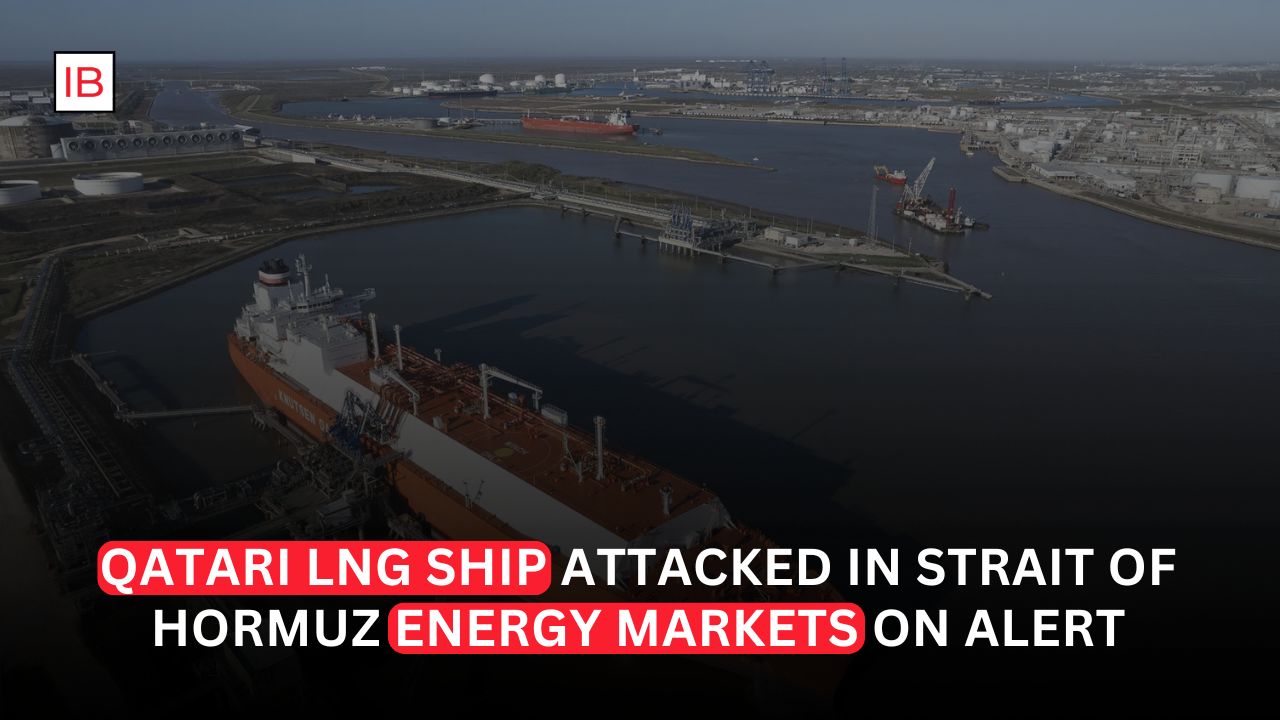
A liquefied natural gas tanker carrying a shipment from Qatar was struck by a projectile while transiting the Strait of Hormuz, according to security intelligence firms and ship tracking data, once again threatening to disrupt the flow of super-chilled fuel through one of the world’s most critical energy corridors.
Details of the Latest Strike
Security consultancies Vanguard Tech and Marisks identified the vessel as the Gaslog Shanghai, an LNG tanker. The UK Maritime Trade Operations agency had earlier issued an alert that a vessel was struck in the strait off the Omani coast overnight, though it did not immediately identify the ship involved. According to the UKMTO, there has been no environmental impact reported so far from the incident.
A Waterway Already Under Repeated Attack
This is not the first time a Qatari LNG carrier has come under fire since fighting between the U.S. and Iran began in late February. In early July, the Al Rekayyat, an LNG tanker owned by Qatar’s state shipping company Nakilat, was struck on its port side while transiting the Omani side of Hormuz, triggering an engine room fire that filled with smoke and left the vessel briefly at risk of exploding. The ship’s captain radioed a mayday call describing the vessel being hit by a drone near the top of the engine room, though all crew members were safely evacuated and the LNG stored in the tanker’s tanks remained intact with no breach reported.
That earlier strike came after Iran’s Islamic Revolutionary Guard Corps reportedly fired missiles at commercial ships transiting the strait overnight, damaging at least two vessels, including a Saudi-flagged crude oil tanker, without causing casualties. Qatar’s foreign ministry said at the time that Iran bore full legal responsibility for the attack and summoned Iran’s deputy ambassador to formally protest the targeting of the tanker.
A Fragile Peace Repeatedly Tested
The renewed strikes underscore how persistently unstable shipping through Hormuz has remained, even following an interim ceasefire agreement reached between Washington and Tehran. Iran has repeatedly maintained that it will not permit vessels to transit the waterway without its explicit permission, while the United States has continued managing a separate shipping corridor along the Omani side of the strait specifically intended to keep commercial vessels clear of Iranian waters.
Notably, vessels transiting the strait have frequently done so with their tracking transponders switched off, a common precaution intended to reduce the risk of attracting hostile attention, though the practice also makes it more difficult to definitively attribute responsibility for individual strikes.
Impact on Regional Shipping and Energy Markets
Ship traffic through Hormuz has fluctuated considerably throughout the conflict, at times picking up to an average of 25 to 40 vessels sailing daily as periods of relative calm allowed some normalization, though that remains well below the roughly 125 daily sailings recorded before the war began in late February. Shipbrokers have described the on-again, off-again nature of the strait’s reopening as a persistent source of volatility for Middle Eastern tanker markets, contributing to irregular flows of vessels in both directions. Following the earlier July strikes, Brent crude prices rose toward $73 a barrel, reflecting how quickly shipping disruptions in the strait continue to translate into broader energy market anxiety.
Why LNG Tankers Face Particular Risk
Industry sources have noted that LNG tankers rank among the highest-risk vessels operating in the region, given both the substantial value of the ships themselves and the flammable nature of their cargo. Any successful strike on a fully loaded LNG carrier carries the potential for catastrophic consequences well beyond a typical crude oil tanker incident, a risk that has kept shipowners and insurers on edge throughout the conflict even during periods of relative calm in the strait.
What Comes Next
With the Strait of Hormuz continuing to see intermittent attacks despite ongoing diplomatic efforts between Washington and Tehran, shipping companies and energy markets are likely to remain on high alert for further incidents. Whether this latest strike on the Gaslog Shanghai proves to be an isolated event or signals a renewed escalation in attacks on commercial shipping will likely become clearer in the days ahead, as investigators work to determine responsibility and assess the full extent of any damage to the vessel.