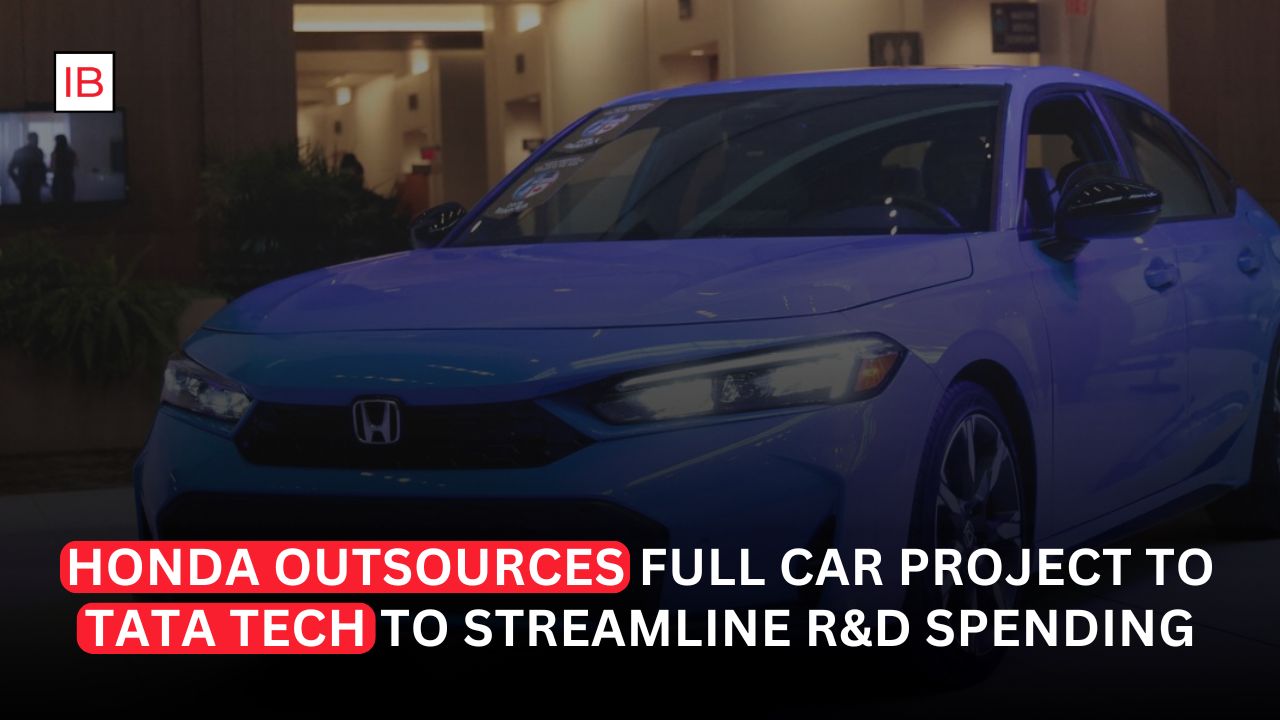
Honda Motor Co. is turning to India’s Tata Technologies to help develop a new vehicle program, marking a significant departure from the Japanese automaker’s traditionally in-house approach to product development as it works to slash costs amid a challenging period for its global business.
A Notable Shift for a Historically Independent Automaker
The arrangement would represent one of the first times Honda has partnered with an outside company, let alone an Indian firm, to build a vehicle program from the ground up, a move that breaks sharply from the company’s long-standing practice of keeping core engineering and development work internal. That shift reflects mounting pressure on Honda to find efficiencies wherever possible, as the automaker continues navigating a difficult stretch marked by tariff pressures, semiconductor shortages, and a costly recalibration of its electric vehicle strategy.
Part of a Broader Cost-Cutting Push
The Tata Technologies arrangement fits squarely within the cost-reduction framework Honda laid out in its 2026 Business Briefing, where the company outlined plans to pursue “fundamental cost reduction” by reassessing Honda-specific engineering standards and proactively utilizing standardized components rather than custom-built parts and processes. Honda specifically flagged its intention to incorporate the competitiveness of local businesses in China and India into its global cost structure, alongside a stated goal of what the company called a “Triple Half” approach aimed at dramatically improving development efficiency through more thorough engineering chain management.
Why India, and Why Now
Honda’s pivot toward outside partnerships comes as the company pursues an ambitious “re-ignite India” strategy, which includes plans for 10 new models in the Indian market by 2030. As part of that broader push, Honda has signaled openness to supplying future products, platforms, and electrification technology to other Indian automakers as well, marking a notable pivot for a company that has traditionally operated in relative isolation even as alliances have become increasingly standard practice across the global auto industry. Tapping Tata Technologies, an engineering and product development services firm with deep experience supporting automakers, offers Honda a way to access local cost advantages and engineering capacity without building that expertise entirely from scratch internally.
A Company Under Financial Pressure
Honda’s push to cut costs comes after a rough stretch financially. The company cut its full-year operating profit forecast by 21%, to 550 billion yen, from an original target of 700 billion yen, following a 24.8% drop in second-quarter operating profit tied to one-off expenses related to electric vehicles, semiconductor shortages, and U.S. tariffs. Honda also slashed its 2030 global EV sales target from 30% down to 20%, reflecting significantly diminished expectations for EV growth, particularly across the North American market. The company separately indefinitely suspended its project to build a comprehensive EV value chain in Canada, opting instead to reassess its broader procurement and manufacturing strategy.
Supply chain disruptions have compounded those financial pressures, with Honda CFO Eiji Fujimura previously citing a Chinese government dispute with Dutch authorities over ownership of chipmaker Nexperia as a factor that halted critical semiconductor supply and forced the company to cut vehicle shipment targets in North America.
A Broader Industry Trend
Honda’s outsourcing move mirrors a wider pattern across the global auto industry, where automakers including Hyundai, Kia, Lamborghini, and Tesla have all cut or delayed various vehicle and EV programs this year, collectively booking tens of billions of dollars in write-downs tied to tariffs and softer-than-expected demand. Against that backdrop, forming partnerships that share development costs and leverage lower-cost engineering talent has become an increasingly attractive option for automakers looking to preserve profitability without abandoning their broader product ambitions entirely.
What Comes Next
With Honda continuing to pursue its “re-ignite India” strategy alongside this new outsourcing arrangement with Tata Technologies, the coming months will offer a clearer picture of how deeply the two companies’ collaboration extends, and whether similar partnerships emerge for future vehicle programs beyond this initial project. For Honda, the success of this approach could determine whether outsourcing becomes a more permanent fixture of its global product development strategy, or remains a targeted response to the specific cost pressures the company faces in today’s challenging automotive market.