Semiconductor Boom Fuels Economic Growth, Stock Market Gains, and Industrial Transformation
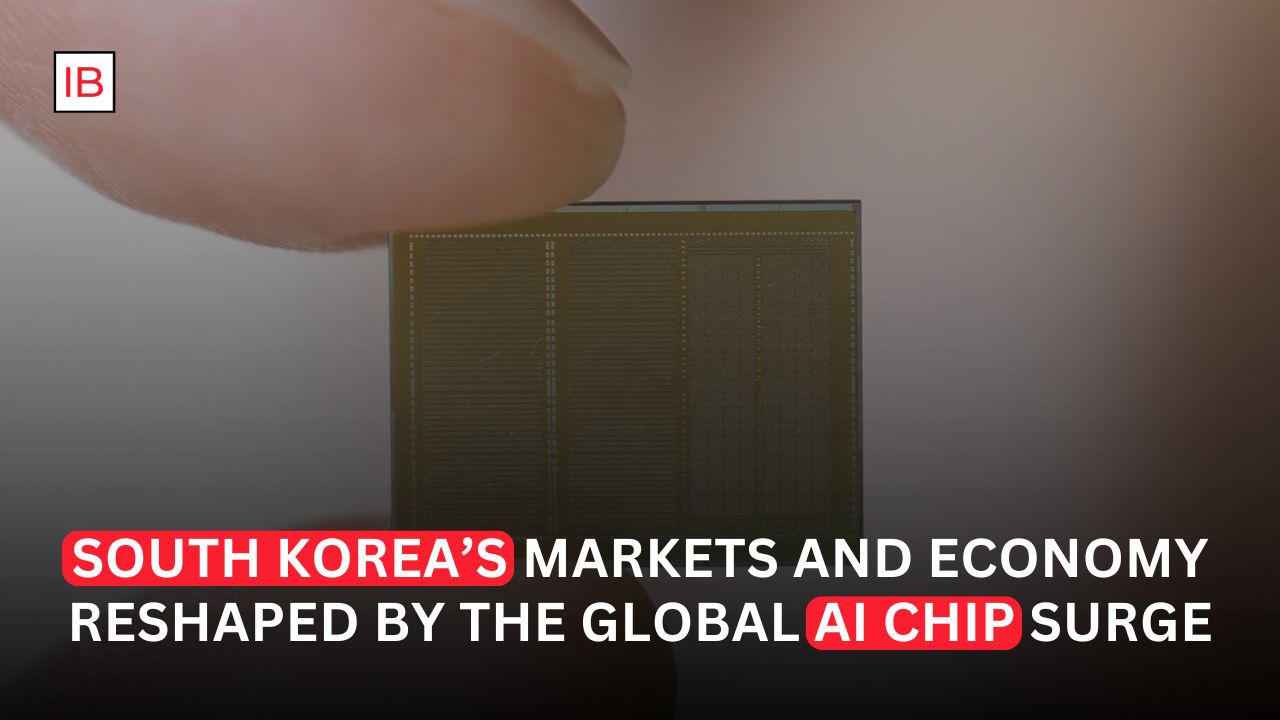
South Korea is experiencing one of the most significant economic transformations in decades as the global artificial intelligence boom reshapes its financial markets, industrial landscape, and broader economy. The explosive demand for AI-powered computing has placed the country’s semiconductor industry at the center of one of the fastest-growing technology revolutions in history, driving record investment, strengthening exports, boosting corporate earnings, and transforming South Korea into one of the world’s most important suppliers of advanced AI hardware.
At the heart of this transformation are memory chip manufacturers such as SK Hynix and Samsung Electronics, whose high-bandwidth memory (HBM) chips have become critical components for artificial intelligence servers powering data centers worldwide. As demand for generative AI, cloud computing, and large language models continues accelerating, South Korea has emerged as one of the largest beneficiaries of this technological shift, with ripple effects extending across financial markets, employment, manufacturing, infrastructure, and national economic policy.
AI Boom Places South Korea at Center of Global Technology
Artificial intelligence has dramatically increased demand for advanced semiconductor components capable of handling enormous computing workloads.
South Korea’s technology leadership has positioned the country as a key supplier of:
- High-bandwidth memory (HBM).
- DRAM chips.
- NAND flash memory.
- Advanced semiconductor packaging.
- AI server components.
Global technology companies building AI infrastructure continue relying heavily on Korean manufacturers, creating sustained demand for exports while strengthening the country’s position within the international semiconductor supply chain.
Semiconductor Exports Reach New Highs
The AI revolution has significantly boosted South Korea’s export performance.
Strong demand has increased shipments of:
- Memory chips.
- Semiconductor equipment.
- Electronics.
- Advanced manufacturing components.
Technology exports now represent one of the country’s strongest economic growth drivers, helping offset weaker performance in several traditional manufacturing industries.
Higher export revenues have also strengthened South Korea’s trade balance while supporting the value of the Korean won.
Financial Markets Benefit From AI Optimism
South Korean equity markets have been among the strongest performers in Asia as investors increasingly focus on companies benefiting from artificial intelligence.
Stocks attracting strong investor interest include:
- SK Hynix.
- Samsung Electronics.
- Semiconductor equipment suppliers.
- AI component manufacturers.
Rising semiconductor earnings have lifted broader market sentiment, with institutional investors increasing exposure to Korean technology companies expected to benefit from long-term AI investment.
Massive Corporate Investment Continues
To meet growing global demand, South Korean semiconductor companies continue investing billions of dollars.
Current investment priorities include:
- New semiconductor fabrication plants.
- AI memory production.
- Research and development.
- Advanced packaging technology.
- Manufacturing automation.
These investments aim to maintain South Korea’s technological leadership while expanding production capacity for next-generation AI chips.
Employment and Wages Receive Support
The semiconductor expansion has also influenced South Korea’s labor market.
Growing AI investment has created demand for:
- Engineers.
- Software developers.
- Semiconductor specialists.
- Manufacturing technicians.
- Data center professionals.
Higher demand for skilled workers has contributed to rising wages within the technology sector while encouraging universities and research institutions to expand semiconductor-related education programs.
Infrastructure Development Accelerates
Artificial intelligence requires enormous computing capacity supported by extensive infrastructure.
Investment continues expanding across:
- Data centers.
- Electricity networks.
- High-speed communications.
- Industrial parks.
- Water supply systems.
Both government and private companies continue increasing spending to ensure South Korea can support future semiconductor manufacturing growth.
Economic Policy Adapts to AI Era
South Korean policymakers increasingly view artificial intelligence and semiconductors as strategic national industries.
Government priorities include:
- Supporting chip research.
- Expanding manufacturing incentives.
- Strengthening supply chains.
- Developing advanced talent.
- Improving technological competitiveness.
Officials continue emphasizing semiconductor leadership as essential for maintaining long-term economic growth and international competitiveness.
Challenges Remain
Despite remarkable growth, several risks continue facing the industry.
These include:
- Global trade tensions.
- Export restrictions.
- Supply chain disruptions.
- Intense international competition.
- High capital investment requirements.
Because semiconductor markets remain cyclical, future demand could fluctuate depending upon global economic conditions and technology spending.
Long-Term Outlook Remains Strong
Most analysts continue expecting artificial intelligence to remain one of the strongest long-term growth drivers for the semiconductor industry.
Demand continues expanding across:
- Cloud computing.
- Enterprise AI.
- Autonomous systems.
- Consumer electronics.
- Robotics.
As AI adoption spreads across nearly every major industry, South Korea’s advanced semiconductor manufacturers appear well positioned to benefit from sustained global investment.
Looking Ahead
South Korea’s economy is undergoing a profound transformation as artificial intelligence reshapes global technology markets and dramatically increases demand for advanced semiconductors. The country’s leadership in memory chip manufacturing has positioned it at the center of one of the world’s fastest-growing industries, generating stronger exports, rising corporate earnings, expanding investment, and increased employment opportunities. Financial markets have responded positively, reflecting investor confidence that Korean technology companies will remain critical suppliers for the global AI revolution.
Looking forward, continued advances in artificial intelligence are expected to reinforce South Korea’s importance within the international semiconductor supply chain. Although challenges including geopolitical tensions, global competition, and cyclical market conditions remain, the country’s strong manufacturing capabilities, technological expertise, and sustained investment suggest it is well positioned to remain one of the primary beneficiaries of the global AI chip boom for many years to come.