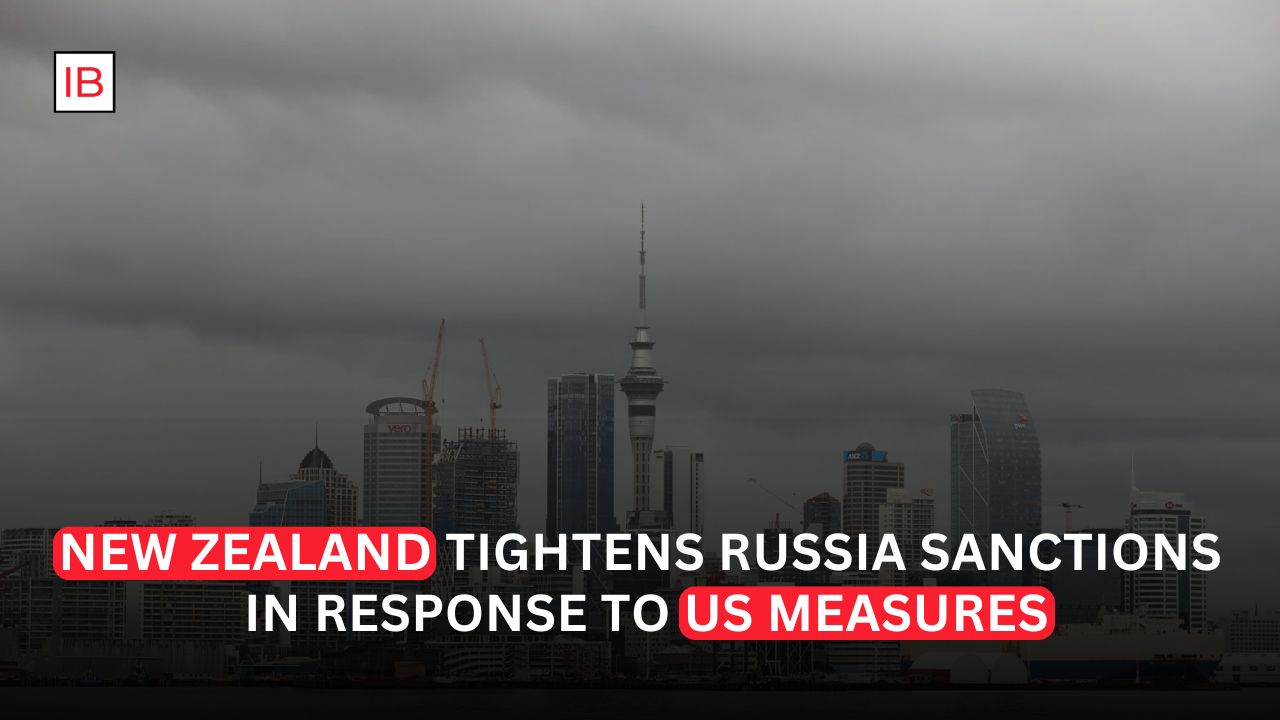
Wellington Expands Pressure on Moscow as Western Allies Coordinate Economic Measures
New Zealand has announced a new package of sanctions against Russia, following a fresh move by the United States to increase economic pressure on Moscow. The decision underscores Wellington’s continued alignment with Western governments over Russia’s war and reflects broader efforts by US allies to coordinate restrictions on Russian individuals, companies and economic networks.
The latest measures come as governments continue looking for ways to restrict Russia’s access to international finance, technology and trade. New Zealand’s actions are relatively small compared with those imposed by larger economies, but they reinforce the broader international sanctions framework surrounding Russia.
Wellington Follows Washington
New Zealand’s latest sanctions follow recent US action targeting Russia.
The move demonstrates Wellington’s willingness to respond alongside major Western allies rather than acting independently.
New Zealand has repeatedly coordinated its sanctions policy with partners including the United States, United Kingdom, Australia and European countries.
The latest package is therefore part of a wider effort to maintain pressure on Moscow.
Sanctions Target Russia’s Economic Network
Western sanctions have increasingly expanded beyond directly targeting Russian government officials.
Measures can also focus on:
- Companies.
- Financial institutions.
- Business executives.
- Shipping networks.
- Energy-related entities.
- Individuals supporting Russia’s war effort.
The objective is to make it harder for sanctioned entities to access international financial systems and conduct business with Western-linked economies.
Economic Pressure Remains a Key Tool
Sanctions have become one of the main economic instruments used by Western governments in response to Russia’s invasion of Ukraine.
Rather than relying solely on military or diplomatic pressure, governments have attempted to restrict Russia’s ability to generate revenue and obtain strategically important goods.
Financial restrictions can limit access to:
- Banking services.
- International investment.
- Capital markets.
- Foreign currency.
- Cross-border transactions.
New Zealand’s Role
New Zealand is not among Russia’s largest trading partners, meaning the direct economic impact of its sanctions is relatively limited.
However, Wellington has consistently argued that coordinated international action is important.
New Zealand’s participation can help strengthen efforts to prevent sanctioned Russian entities from shifting activities between different jurisdictions.
The country has also worked with other governments on measures designed to prevent sanctions evasion.
Russia Faces Continued Restrictions
Russia has adapted to Western sanctions by redirecting trade toward countries outside the traditional Western economic system.
Russian companies have expanded relationships with buyers and suppliers in parts of:
- Asia.
- The Middle East.
- Africa.
- Latin America.
This has allowed Moscow to maintain significant portions of its international trade despite restrictions.
As a result, Western governments have increasingly focused on enforcement and preventing companies from using third countries to circumvent sanctions.
Energy Remains Central
Energy continues to be one of the most important areas of the sanctions debate.
Russia remains a major global producer of:
- Oil.
- Natural gas.
- Refined petroleum products.
Restrictions on Russian energy exports can affect global commodity markets, creating a difficult balance for governments seeking to reduce Russian revenues without triggering excessive increases in energy prices.
Coordination With Western Allies
New Zealand’s decision also highlights the importance of coordination among Western governments.
The United States and European countries have imposed much larger sanctions packages, while countries such as New Zealand and Australia have introduced complementary measures.
This creates a broader sanctions network that can make it more difficult for targeted individuals and companies to shift assets and commercial operations between jurisdictions.
Potential Impact on Global Trade
The continued expansion of sanctions against Russia adds another layer of complexity to international trade.
Companies operating across multiple jurisdictions must increasingly monitor:
- Sanctions lists.
- Ownership structures.
- Shipping routes.
- Financial counterparties.
- Export restrictions.
Businesses can face significant penalties if they accidentally conduct transactions involving sanctioned entities.
Looking Ahead
New Zealand’s latest sanctions demonstrate that Western governments continue to use economic restrictions as a central component of their strategy toward Russia. While New Zealand’s direct economic influence over Moscow is limited, coordinated sanctions can contribute to broader efforts to restrict Russia’s access to international finance, technology and trade.
The effectiveness of future measures will depend increasingly on enforcement and the ability of Western governments to prevent sanctions evasion through third countries. As Russia continues adapting its trade relationships, the sanctions regime is likely to evolve further, with greater attention placed on financial networks, shipping, energy revenues and companies accused of helping Moscow circumvent existing restrictions.