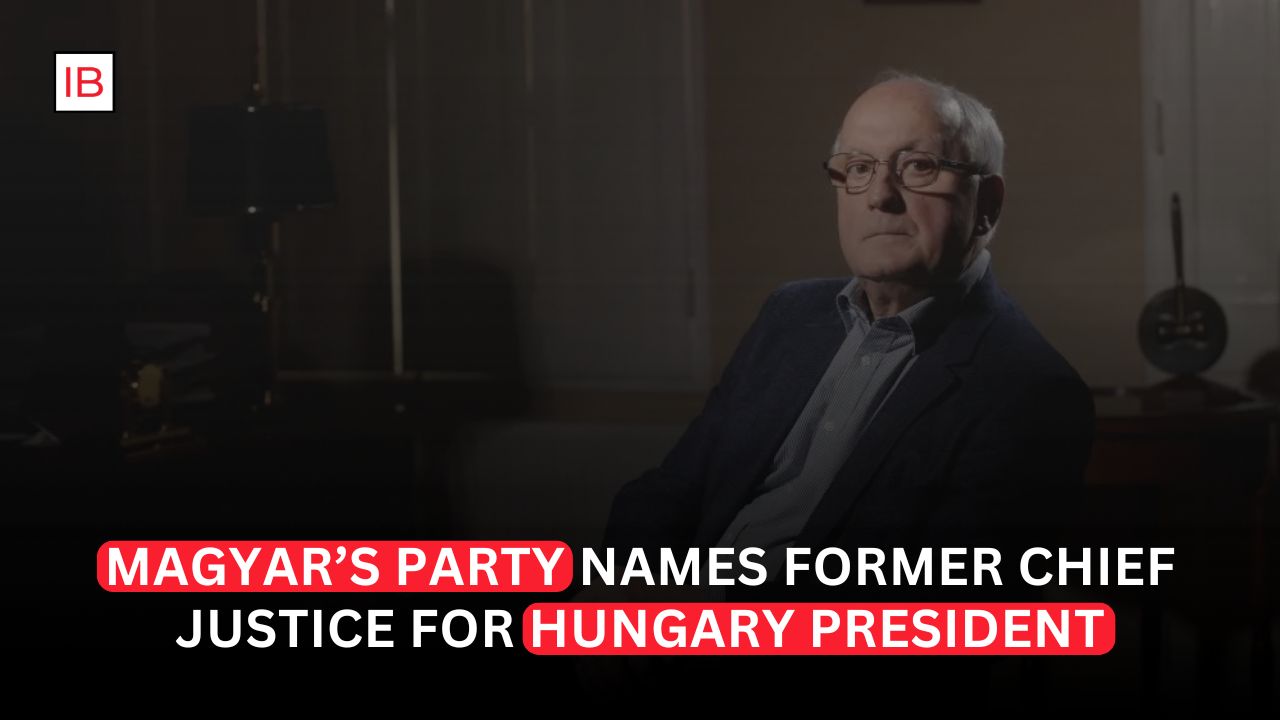
Prime Minister Péter Magyar’s ruling party has nominated former Supreme Court head Andras Baka for Hungary’s largely ceremonial presidency as the government moves to reshape the country’s political institutions.
Hungary’s ruling Tisza Party has nominated former Supreme Court chief Andras Baka as its candidate for president, marking another important step in Prime Minister Péter Magyar’s effort to overhaul the country’s political system after ending Viktor Orbán’s long rule.
Baka’s nomination comes after Parliament approved changes that will bring President Tamás Sulyok’s term to an early end. The Tisza Party, which holds a large parliamentary majority following its election victory, is expected to elect Baka when lawmakers vote on the new president.
Former Supreme Court Chief Chosen
Baka brings extensive judicial experience to the position, having previously served as head of Hungary’s Supreme Court. His selection gives the Tisza government an opportunity to emphasize legal expertise and institutional reform as it seeks to distance itself from the political structures established during Orbán’s 16-year period in power.
The presidency is largely ceremonial, but the office carries important constitutional responsibilities and symbolic significance. Magyar’s government has presented institutional reform as a central part of its political agenda, making the choice of president particularly important as Hungary enters a new political period.
Magyar Continues Political Restructuring
The nomination is part of a broader restructuring campaign by Magyar and the Tisza Party.
Since taking power after the 2026 parliamentary election, Magyar has moved quickly to dismantle institutions and political arrangements associated with the previous government. His party has argued that voters gave it a strong mandate to rebuild state institutions and restore closer relations with European partners.
The government has also proposed constitutional changes and other reforms designed to reshape the country’s political system. These moves have drawn criticism from opposition forces, which argue that Magyar is using his parliamentary majority to make sweeping changes too quickly.
President’s Early Departure Creates Controversy
The choice of Baka follows the decision by President Tamás Sulyok to leave office after Parliament approved a constitutional amendment ending his term. The amendment was supported by Magyar’s governing majority and described by the government as part of its broader effort to remove officials linked to the previous political order.
The move has generated political controversy, with opposition politicians questioning whether the president’s removal was justified. Nevertheless, the parliamentary process is moving forward, and Tisza has proposed August 11 as the date for the presidential election.
Tisza Holds Strong Parliamentary Position
The Tisza Party’s ability to nominate and elect its preferred candidate reflects the scale of its parliamentary victory earlier this year.
Magyar’s party won a large majority in the National Assembly, giving the new government significant control over legislation and constitutional changes. That majority has allowed Tisza to move rapidly on institutional reforms that would have been difficult for a government without broad parliamentary support.
For Magyar, the presidential nomination is therefore not simply about replacing one officeholder. It is part of a wider effort to establish a new political system following the end of Orbán’s long tenure.
Opposition Remains Critical
The opposition, including Orbán’s Fidesz party, has criticized the process surrounding Sulyok’s removal and the selection of a replacement.
Critics argue that the government risks concentrating too much political power in the hands of the new ruling party. Tisza, however, maintains that its reforms are necessary to dismantle institutions it considers remnants of the previous government and to fulfill promises made during the election campaign.
The debate is likely to continue after Baka’s expected election, particularly as Magyar’s government moves toward drafting and implementing further constitutional reforms.
Looking Ahead
Andras Baka’s nomination represents another step in Hungary’s rapid political transition following the defeat of Viktor Orbán and the rise of Péter Magyar’s Tisza Party.
If elected, Baka will take office at a time when Hungary’s political institutions are undergoing significant changes. Although the presidency has limited executive power, his judicial background could give the office additional importance as the government seeks to reshape constitutional institutions and strengthen its reform agenda.
The immediate focus will now turn to Parliament’s expected vote on August 11. Beyond the presidential election, the larger question will be whether Magyar can carry out his promised institutional reforms while maintaining public confidence and avoiding accusations that the new government is simply replacing one concentration of political power with another.