Political Shift Creates New Uncertainty Seven Months Before National Vote
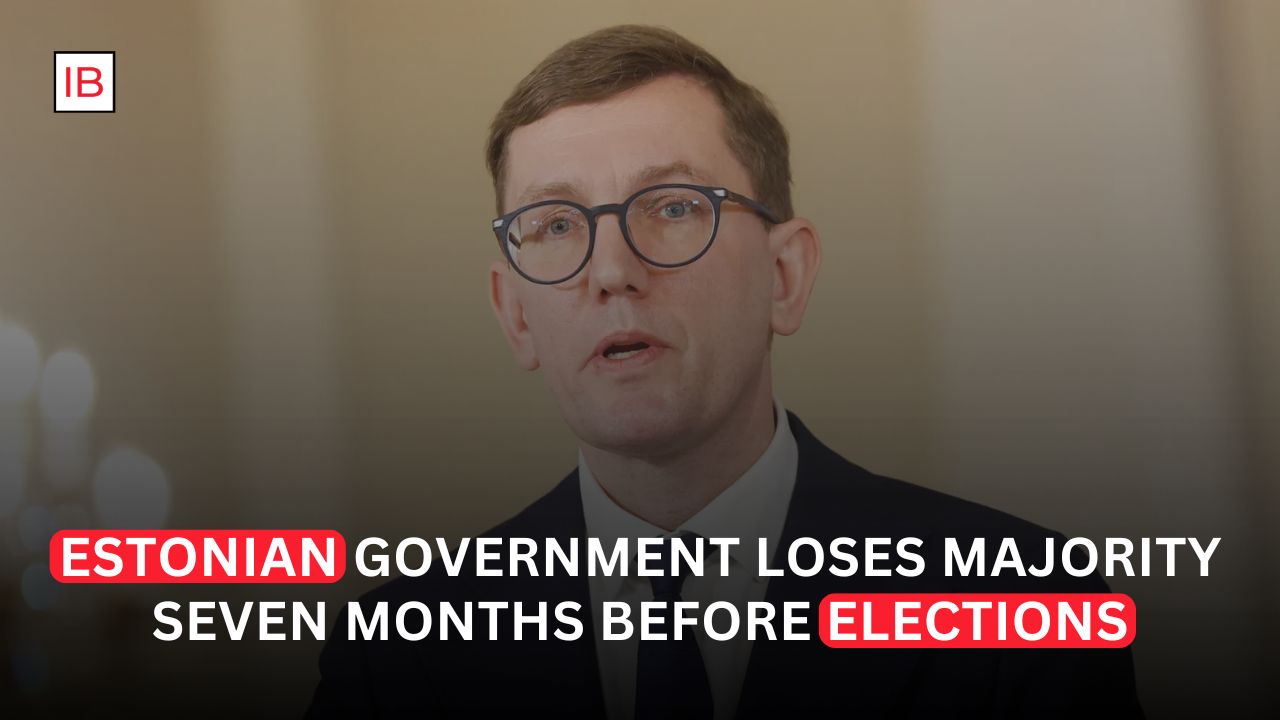
Estonia’s governing coalition has lost its parliamentary majority, creating fresh political uncertainty just seven months before the country is scheduled to hold national elections.
The development raises questions about the government’s ability to pass legislation and maintain political stability during a period marked by economic challenges, security concerns and broader geopolitical tensions across Europe.
While the government remains in office for now, the loss of a working majority could complicate policymaking and intensify political competition as parties prepare for the upcoming election campaign.
Coalition Faces Growing Pressure
Parliamentary majorities are essential for governments seeking to pass budgets, approve reforms and implement policy initiatives.
Without a clear majority, governments often have to negotiate support from opposition parties or independent lawmakers on a case-by-case basis.
This can slow decision-making and make it more difficult to advance controversial legislation.
The situation becomes even more challenging when elections are approaching, as political parties increasingly focus on campaign positioning rather than compromise.
Elections Loom on the Horizon
With national elections only months away, political parties are already beginning to shape their messages for voters.
The loss of the coalition’s majority could accelerate that process.
Opposition parties may attempt to use the government’s weakened position to argue for political change, while coalition leaders will likely emphasize stability and continuity.
As election season intensifies, parliamentary debates could become more confrontational and politically charged.
Estonia’s Strategic Importance
Although Estonia is a relatively small country, it holds significant strategic importance within Europe.
The Baltic nation is a member of:
- The European Union.
- NATO.
- The eurozone.
Its geographic location on NATO’s eastern flank has made security policy a particularly important issue in recent years.
Political stability is therefore closely watched not only by domestic voters but also by European partners and international investors.
Security Remains a Key Political Issue
Estonia has consistently emphasized defense and security policy.
The government has supported increased defense spending and closer cooperation with NATO allies.
Given Estonia’s proximity to Russia, security concerns are expected to remain a central theme in the upcoming election campaign.
Political parties may debate how best to balance defense priorities with economic and social spending commitments.
Economic Challenges Add Complexity
Like many European countries, Estonia has faced economic pressures in recent years.
Governments across the region have had to respond to challenges including:
- Inflation.
- Energy costs.
- Slower economic growth.
- Labor-market pressures.
- Fiscal constraints.
These issues can become particularly sensitive during election campaigns because voters often judge governments based on economic performance.
Coalition Politics in Estonia
Coalition governments are common in Estonia’s parliamentary system.
Political parties frequently work together to form governing alliances after elections.
While coalitions can provide stability, they also require ongoing cooperation among parties with different priorities.
Disagreements over policy, leadership or electoral strategy can sometimes weaken governing alliances, particularly when elections approach.
Impact on Legislation
A government without a secure majority may struggle to advance major reforms.
Legislation that previously could have passed with coalition support may now require broader negotiations.
This could affect policy areas such as:
- Taxation.
- Spending plans.
- Social programs.
- Economic reforms.
- Energy policy.
- Security initiatives.
The degree of disruption will depend on whether the government can secure support from lawmakers outside the coalition.
Opposition Sees Opportunity
The political shift may provide an opening for opposition parties seeking to gain momentum ahead of elections.
A weakened government can become more vulnerable to criticism regarding economic management, public services and policy outcomes.
Opposition leaders may argue that voters should choose a new direction when they go to the polls.
The coming months are therefore likely to see increasingly intense political competition.
Investors Watch Political Stability
Financial markets generally prefer predictable political environments.
While Estonia remains a stable democratic country with strong institutions, investors often monitor political developments that could affect economic policy.
Changes in government priorities, fiscal policy or regulatory frameworks can influence business confidence and investment decisions.
For now, the focus will likely remain on whether the government can continue functioning effectively despite its loss of a parliamentary majority.
European Context
Estonia’s political developments occur during a period of broader political change across Europe.
Governments in several countries have faced pressure from economic concerns, rising political polarization and debates over security and defense.
As a result, Estonia’s election will take place against a backdrop of significant regional and international challenges.
Looking Ahead
The loss of a parliamentary majority represents a significant setback for Estonia’s governing coalition and increases political uncertainty ahead of next year’s election.
The government remains in office, but its ability to pass legislation and maintain policy momentum may become more difficult in the months ahead.
With security, economic performance and public finances expected to dominate political debate, the upcoming election campaign is likely to be closely watched both inside Estonia and across Europe.
The outcome could shape not only Estonia’s domestic agenda but also its role within the European Union and NATO at a time of continuing geopolitical uncertainty.