Diplomatic Disagreement Highlights Complicated Politics Across Europe
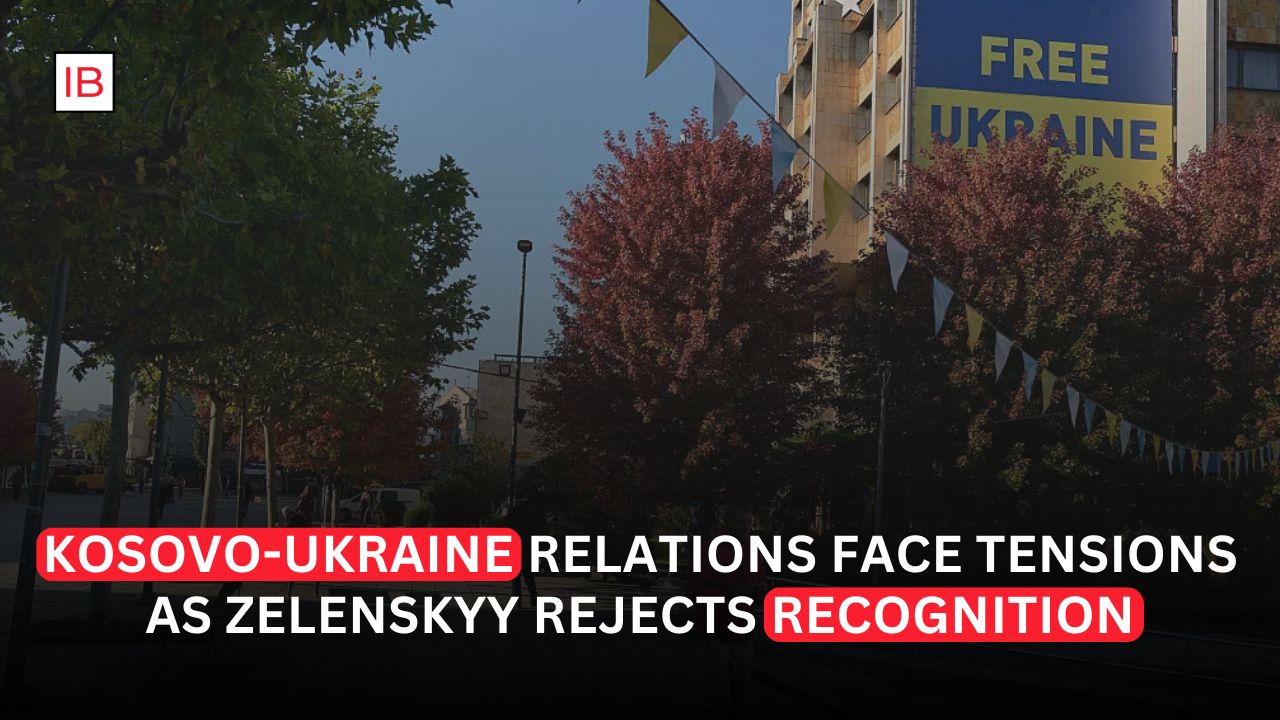
Relations between Kosovo and Ukraine have come under increasing strain as Ukrainian President Volodymyr Zelenskyy maintains Kyiv’s position of not formally recognizing Kosovo’s independence.
The disagreement reflects a broader diplomatic dilemma for Ukraine. While Kyiv has sought strong international support for its own territorial sovereignty, it has also remained cautious about recognizing territories whose status is disputed.
For Kosovo, Ukraine’s continued refusal to recognize its independence is a major source of frustration and has complicated efforts to strengthen diplomatic ties between the two countries.
Kosovo Seeks Wider Recognition
Kosovo declared independence from Serbia in 2008.
Since then, dozens of countries have recognized Kosovo as an independent state, including the United States and many European Union members.
However, several countries continue to reject recognition.
Serbia maintains that Kosovo remains part of its territory, while Kosovo argues that its independence is irreversible.
The dispute remains one of Europe’s most sensitive unresolved territorial issues.
Ukraine’s Position
Ukraine has maintained a cautious approach toward Kosovo’s status.
Kyiv’s position reflects concerns about the wider principle of territorial integrity and the potential consequences of recognizing disputed territories.
Ukraine has itself faced a major territorial conflict with Russia, which has claimed and attempted to control Ukrainian territory.
That makes questions surrounding sovereignty and territorial recognition particularly sensitive for the Ukrainian government.
Zelenskyy’s Diplomatic Challenge
President Zelenskyy has had to balance Ukraine’s foreign-policy priorities with relationships across Europe.
Since Russia’s invasion, Ukraine has worked extensively to strengthen diplomatic partnerships and secure political, military and economic support from other countries.
At the same time, Kyiv has sought to maintain consistent positions on international law and territorial sovereignty.
Kosovo’s request for recognition creates a complicated situation because the issue intersects with Ukraine’s broader diplomatic strategy.
Kosovo Frustrated by Kyiv
For Kosovo, recognition by Ukraine would represent an important diplomatic achievement.
Ukraine is a major European country and an increasingly influential international actor.
Kosovo has therefore sought closer ties with Kyiv despite Ukraine’s refusal to formally recognize its independence.
The continuing disagreement could make political cooperation more difficult and reduce enthusiasm for deeper bilateral relations.
Serbia Factor
Serbia remains an important part of the dispute.
Belgrade strongly opposes Kosovo’s independence and has worked to prevent Kosovo from gaining additional international recognition.
Serbia also maintains significant political and historical connections with Russia, although its relationship with the European Union is economically important.
Ukraine’s refusal to recognize Kosovo can therefore also be viewed within the broader political dynamics involving Serbia, Russia and the European Union.
Why Recognition Matters
Diplomatic recognition can have practical consequences.
When countries recognize a state, they can establish formal diplomatic relations, exchange ambassadors and expand cooperation.
Recognition can also strengthen a country’s position in international organizations.
For Kosovo, gaining additional recognition remains a major foreign-policy objective.
For countries that refuse recognition, however, the decision can be linked to concerns about international precedents and their own territorial disputes.
The Broader European Context
The Kosovo-Ukraine disagreement comes at a time when territorial sovereignty has become one of the most important geopolitical issues in Europe.
Russia’s war against Ukraine has placed questions about borders, sovereignty and international law at the center of European diplomacy.
At the same time, unresolved disputes remain in several parts of the continent.
The Kosovo issue therefore carries significance beyond the relationship between the two countries.
Diplomatic and Security Cooperation
Despite the disagreement over recognition, Kosovo and Ukraine share some broader interests.
Both countries have concerns about security and regional stability.
Kosovo has also expressed solidarity with Ukraine following Russia’s invasion.
However, diplomatic disagreements can limit the depth of cooperation even when countries share broader geopolitical concerns.
Economic Relations
Economic ties between Kosovo and Ukraine are relatively modest compared with their relationships with larger European economies.
Still, improved diplomatic relations could potentially create opportunities for greater cooperation in areas such as:
- Trade.
- Investment.
- Infrastructure.
- Technology.
- Reconstruction.
Ukraine’s long-term reconstruction needs could eventually create opportunities for companies and investors across Europe, including those from Kosovo.
Looking Ahead
The deterioration in Kosovo-Ukraine relations demonstrates how difficult territorial recognition can be in European diplomacy.
For Kosovo, securing broader international recognition remains a central foreign-policy goal.
For Ukraine, maintaining a consistent position on sovereignty and territorial integrity remains especially important while it continues confronting Russia.
The disagreement is unlikely to disappear quickly.
As Ukraine continues strengthening its European partnerships and Kosovo seeks greater international acceptance, both sides will have to navigate the tension between closer diplomatic cooperation and fundamentally different positions over Kosovo’s status.
The dispute is another example of how Europe’s unresolved territorial questions continue to influence modern diplomacy, even as governments confront much broader security and geopolitical challenges.