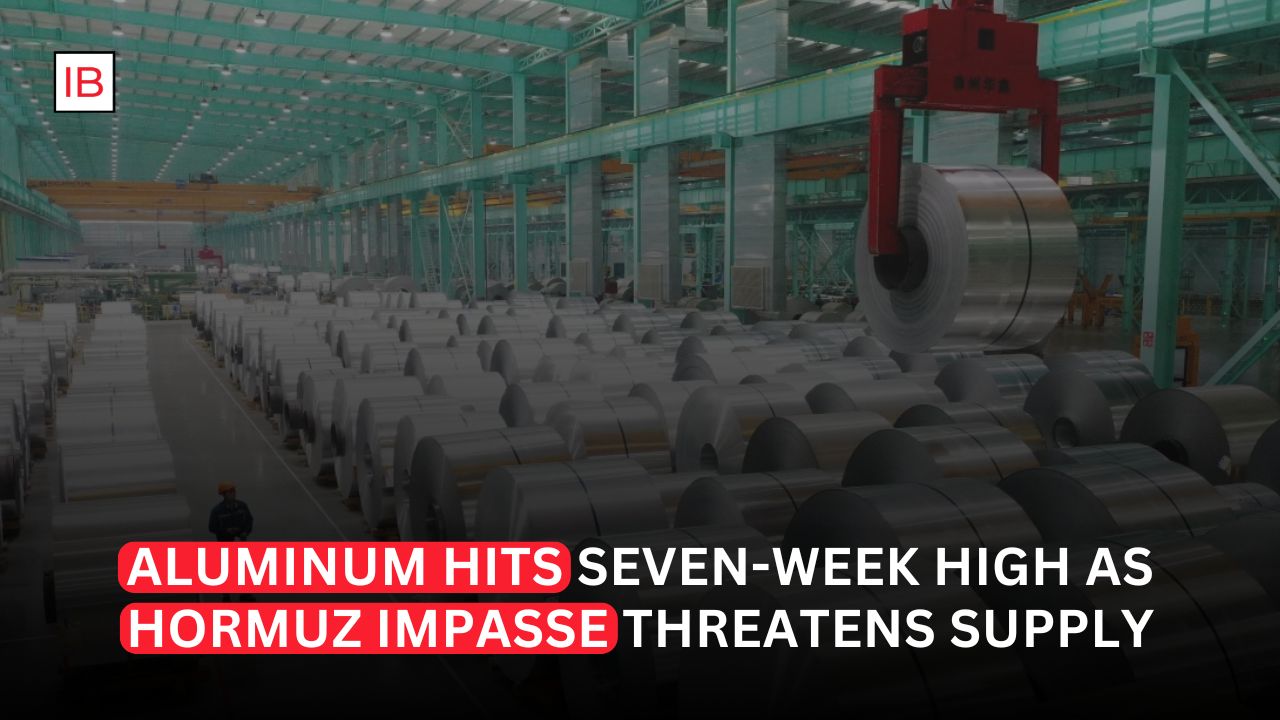
Aluminum prices climbed to their highest level in seven weeks as stalled negotiations over the Strait of Hormuz raised concerns that disruptions to Middle Eastern supplies could persist.
Aluminum prices are extending their rally as uncertainty over the future of the Strait of Hormuz increases concerns about global supplies. The metal advanced for a seventh consecutive session, with London futures rising as much as 1% on Tuesday to reach their highest level since June 23.
The latest move reflects growing anxiety that the standoff between the United States and Iran will not be resolved quickly. With negotiations showing little progress, traders are increasingly preparing for the possibility that restrictions on shipping through the strategic waterway could remain in place for an extended period.
That matters for aluminum because the Middle East is an important production region. Before the current conflict, the region accounted for roughly 10% of global aluminum output, meaning prolonged disruption could have a meaningful effect on international supply.
Hormuz Deadlock Raises Supply Concerns
The Strait of Hormuz has become a central factor in commodity markets since the conflict began.
Negotiations between Washington and Tehran had previously encouraged expectations that the waterway could eventually reopen and that disrupted commodity flows would gradually return to normal. Those hopes have weakened as both sides have taken harder positions.
US President Donald Trump recently presented Iran with extensive demands, including compensation related to people killed in conflicts, attacks and protests. Iran has also maintained its own demands for reparations. The widening gap between the two positions has reduced expectations of a quick agreement.
For aluminum traders, the longer the impasse lasts, the greater the possibility that Middle Eastern supply disruptions will become a lasting feature of the market rather than a temporary shock.
Aluminum Rally Gains Momentum
Aluminum has already risen significantly in recent weeks.
Prices have gained more than 8% since the end of June, helped by concerns surrounding the Middle East as well as changing expectations for US monetary policy and a broader rally across industrial metals.
The latest gains indicate that traders are placing greater weight on supply risks.
Aluminum is widely used in transportation, construction, packaging, electrical equipment and manufacturing. Because of its broad industrial applications, changes in aluminum prices can influence costs across numerous industries.
If supply becomes tighter while demand remains relatively stable, manufacturers may face higher input costs.
Global Inventories Are Already Low
One of the biggest reasons the current disruption is attracting attention is the relatively low level of aluminum inventories.
Stockpiles held in London Metal Exchange warehouses have declined steadily this year and are now close to 250,000 tons, their lowest level since November 1990.
Low inventories leave the market with less of a cushion.
When supply chains operate normally, producers and consumers can rely on inventories to absorb temporary disruptions. But when stockpiles are already depleted, even a relatively short interruption can create greater price volatility.
This is why traders are watching developments around the Strait of Hormuz so closely.
If shipments resume quickly, some of the current supply premium could disappear. If disruptions continue, however, buyers may compete more aggressively for available metal.
Potential Supply Shortfall
The risks could become even more serious if the disruption continues for months.
European aluminum producer Norsk Hydro warned last month that the annual global supply deficit could widen to more than 900,000 tons if trade through the Strait of Hormuz does not return to normal.
That would represent a substantial increase in the market’s supply imbalance.
Such a shortage would not necessarily occur immediately. Producers outside the affected region could potentially increase output, while buyers could draw down inventories or find alternative suppliers.
However, those responses have limits.
Aluminum smelting requires large amounts of electricity, and increasing production capacity is not something producers can accomplish overnight. New smelters and major expansions require significant capital investment and years of planning.
China and Indonesia Provide Some Relief
New supplies from China and Indonesia have helped offset some of the pressure on global aluminum availability.
Those additional supplies have prevented the market from becoming even tighter, but they may not be enough to completely eliminate the risks associated with prolonged Middle Eastern disruptions.
China remains the world’s dominant aluminum producer, giving it an important role in global supply. Indonesia has also been expanding its position in the aluminum industry.
However, transportation costs, trade restrictions and regional demand can limit how quickly additional production reaches consumers elsewhere.
The market therefore remains sensitive to disruptions in major producing regions.
Why the Middle East Matters
The Middle East has developed into a major aluminum-producing region because of its access to relatively inexpensive energy and its proximity to important global markets.
Countries in the Gulf have invested heavily in large-scale aluminum smelters and related industrial infrastructure.
This has made the region an important supplier to Europe, Asia and other markets.
A prolonged disruption to shipping could therefore affect more than local producers. It could interfere with international supply chains and force consumers to search for alternative sources.
For manufacturers that rely on predictable aluminum deliveries, that uncertainty can be almost as problematic as higher prices.
Oil Prices Add Another Layer of Risk
Aluminum is not the only commodity reacting to the Hormuz standoff.
Oil prices also moved higher as negotiations between the US and Iran remained stalled. Brent crude recently reached around $88 a barrel, while US crude climbed above $82.
Higher energy prices can create additional pressure for aluminum producers because electricity is one of the largest costs associated with aluminum smelting.
If energy prices remain elevated for an extended period, production costs could rise even in regions unaffected by the conflict.
That could reinforce upward pressure on aluminum prices.
The combination of higher energy costs and tighter physical supplies therefore creates a potentially difficult environment for aluminum consumers.
What Happens if the Strait Reopens?
A reopening of the Strait of Hormuz could quickly change the market’s outlook.
If shipping restrictions are removed and Middle Eastern exports return to normal, some of the supply risk currently reflected in aluminum prices could disappear.
Traders could begin rebuilding inventories, while buyers would have less reason to compete for alternative supplies.
That could lead to a pullback in prices, particularly if economic growth remains weak.
However, rebuilding inventories would take time. Even after shipping resumes, it could take weeks or months for supply chains to return fully to normal.
This means the market could remain volatile even after a political agreement is reached.
Broader Economic Impact
Higher aluminum prices could eventually affect businesses and consumers.
Manufacturers that use aluminum in cars, aircraft, construction materials, packaging and electronics may face higher production costs. Companies could absorb some of those costs, but others may eventually pass them on to customers.
If the commodity rally spreads across energy and other industrial metals, the broader inflation impact could become more significant.
That is particularly important for central banks because higher commodity prices can complicate efforts to control inflation.
Oil prices are already being watched closely for their potential impact on global inflation expectations. A prolonged aluminum shortage would add another supply-side pressure to the industrial economy.
Outlook for Aluminum
The immediate direction of aluminum prices will depend heavily on developments surrounding the US-Iran negotiations and the Strait of Hormuz.
For now, the market is pricing in a greater probability that supply disruptions will continue. Low global inventories make the situation more sensitive to additional shocks, while Middle Eastern production represents a significant portion of worldwide supply.
The biggest risk for buyers is that the current disruption lasts longer than expected.
For traders, however, the same uncertainty creates opportunities as prices respond rapidly to developments in diplomacy, shipping and energy markets.
If negotiations make meaningful progress, aluminum could lose some of its recent gains. If the standoff worsens and shipping remains restricted, prices could face additional upward pressure.
For now, aluminum’s seven-day rally is a clear signal that commodity markets are increasingly treating the Hormuz situation as a potential long-term supply problem rather than a temporary disruption.