Norway’s enormous sovereign wealth fund delivered a remarkable performance during the first half of 2026, generating a 9.4% return and producing a record profit of about 1.75 trillion Norwegian kroner, or roughly $184 billion. The result underscores the extraordinary influence global technology stocks continue to have on the world’s largest sovereign wealth fund.
The fund, formally known as the Government Pension Fund Global, had assets of around $2.3 trillion by mid-2026. Built largely from Norway’s oil and gas revenues, it invests those proceeds internationally rather than concentrating them in the domestic economy. The strategy has transformed petroleum wealth into a diversified financial asset designed to benefit future generations.
Technology Stocks Drive the Rally
The biggest contributor to the fund’s strong first-half performance was its equity portfolio, particularly technology companies in Asia and other global markets.
Fund CEO Nicolai Tangen said the result was driven by strong equity-market returns, with Asian technology stocks playing a particularly important role.
That exposure is substantial. The fund owns stakes in thousands of companies around the world and, on average, holds about 1.5% of listed companies globally.
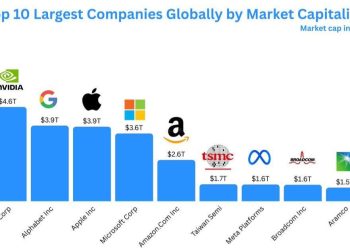
Some of its largest holdings include major technology companies. At the end of June, the fund held approximately 1.28% of Nvidia worth $62 billion, 1.24% of Apple worth $52 billion, 1.17% of Alphabet worth $50 billion, and 1.27% of Microsoft worth $35 billion. It also held about 1.7% of Taiwan Semiconductor Manufacturing, valued at roughly $34 billion.
The figures show just how closely Norway’s national wealth is now connected to the performance of global stock markets.
A Record Profit, but Not Risk-Free
A 9.4% return in six months is extraordinary, particularly given the enormous size of the fund.
However, the headline number should not be interpreted as a guaranteed or sustainable annual return.
The fund is heavily exposed to equities, which means its value can rise dramatically during strong markets and fall sharply during periods of financial stress.
Tangen himself recently warned that the fund could theoretically lose its entire value in an extreme global market collapse. He argued that investors need to recognize that the unusually strong performance of recent decades was produced by an economic environment that may not continue indefinitely.
That warning is important.
The fund’s extraordinary size makes even relatively small percentage movements translate into hundreds of billions of dollars.
SpaceX Becomes a New Holding
The Norwegian fund also disclosed a new investment that attracted considerable attention.
For the first time, its updated holdings list revealed that the fund owned a 0.05% stake in SpaceX valued at about $1.2 billion as of June 30.
The investment followed SpaceX’s initial public offering in June.
The position is relatively small compared with Norway’s enormous holdings in companies such as Nvidia, Apple and Microsoft, but its disclosure is notable because SpaceX has become one of the most closely watched technology and aerospace companies in the world.
SpaceX shares rose sharply following the IPO before later pulling back as investors questioned whether the company’s valuation was justified.
That illustrates another feature of the Norwegian fund’s strategy: its enormous scale allows it to gain exposure to emerging companies while maintaining a diversified portfolio.
Norway’s Oil Wealth Has Been Transformed
The fund exists because Norway chose a different approach to managing its petroleum wealth.
Rather than spending all of its oil and gas revenues immediately, the government invested much of the surplus abroad.
That decision created a financial buffer that has grown dramatically over decades.
By the end of 2025, the fund’s assets were already around 21.3 trillion Norwegian kroner, equivalent to roughly 516% of Norway’s mainland GDP.
The strategy is designed to prevent Norway’s economy from becoming excessively dependent on petroleum revenue.
Oil and gas prices can fluctuate dramatically. By investing the proceeds internationally, Norway can separate the value of its financial assets from the performance of its domestic economy.
The fund therefore acts as both a savings mechanism and a stabilizer for government finances.
The Fund Is More Than an Investment Portfolio
Norway’s wealth fund has become an important part of the country’s fiscal system.
The government can withdraw a portion of the fund’s expected long-term real return to help finance public spending.
The fiscal framework has been based on an expected long-term real return of around 3%, helping policymakers avoid spending too much during periods when markets perform exceptionally well.
That rule becomes especially important after a year like 2026’s first half.
A 9.4% return could tempt governments to increase spending substantially.
But doing so would undermine the purpose of the fund.
The objective is not simply to spend investment gains whenever markets rise. It is to preserve wealth over generations.
Technology Exposure Creates a New Risk
The fund’s success also highlights a potential vulnerability.
Technology companies have become an increasingly important part of global stock-market performance.
Norway’s fund benefits when technology shares rise, but that concentration also means a major correction in the sector could have a significant impact on the fund.
Artificial intelligence has been a major driver of enthusiasm around technology companies, particularly semiconductor and infrastructure businesses.
Nvidia and other AI-related companies have benefited from enormous investor expectations about future demand.
But high valuations can create risks.
If earnings fail to meet expectations or investors begin to question the sustainability of AI spending, technology stocks could fall sharply.
For a fund of Norway’s size, even a relatively modest correction could translate into hundreds of billions of dollars in paper losses.
Diversification Remains Central
Despite its large technology holdings, the Norwegian fund is not simply a technology investment vehicle.
It owns stakes in approximately 7,100 companies globally and also invests in fixed income, real estate and renewable-energy projects.
That diversification is intended to reduce the impact of individual companies or sectors performing badly.
The fund also spreads investments across countries and regions, reducing its dependence on any single economy.
Nevertheless, equities remain its dominant source of returns.
That means overall market conditions will continue to matter more than the performance of individual holdings.
A Powerful Example of Long-Term Investing
Norway’s experience demonstrates the potential benefits of treating natural-resource income as capital rather than simply as current government revenue.
The country has effectively converted oil and gas reserves into ownership of businesses, financial assets and real estate around the world.
That means future generations can benefit from resources extracted today.
The strategy also provides Norway with a financial cushion during economic downturns.
But the system depends on disciplined management.
A huge fund does not automatically guarantee prosperity.
If political leaders use the money too aggressively, or if investment decisions become excessively concentrated, the advantages can be weakened.
What the 9.4% Return Means
The first-half result is an extraordinary financial achievement, but it should be viewed in the context of the fund’s long-term mission.
The goal is not to maximize returns every year.
It is to generate sustainable returns while protecting Norway’s wealth against inflation, market shocks and future economic uncertainty.
The 9.4% return demonstrates what can happen when global equity markets perform strongly and a sovereign investor has enormous exposure to them.
But the same structure means the fund can experience enormous losses when markets turn.
That is why Tangen’s warning about a potential market collapse should not be dismissed.
The Bigger Picture
Norway’s $2.3 trillion fund is now so large that its performance can influence the country’s economic outlook, government finances and national wealth simultaneously.
Its first-half profit of roughly 1.75 trillion kroner is larger than the annual economic output of many countries.
Yet the most important lesson is not the size of the latest profit.
It is the structure behind it.
Norway took temporary oil wealth, invested it globally and created an asset that can continue generating returns long after petroleum production declines.
The fund’s spectacular 2026 performance shows the benefits of that strategy.
But it also provides a reminder that enormous wealth brings enormous exposure to global markets.
For Norway, the challenge is therefore not simply making money.
It is preserving the wealth already created while resisting the temptation to treat extraordinary market gains as permanent.
With technology stocks driving much of the latest performance, the next test will be whether those gains can endure—or whether the fund will eventually have to absorb another major market downturn.