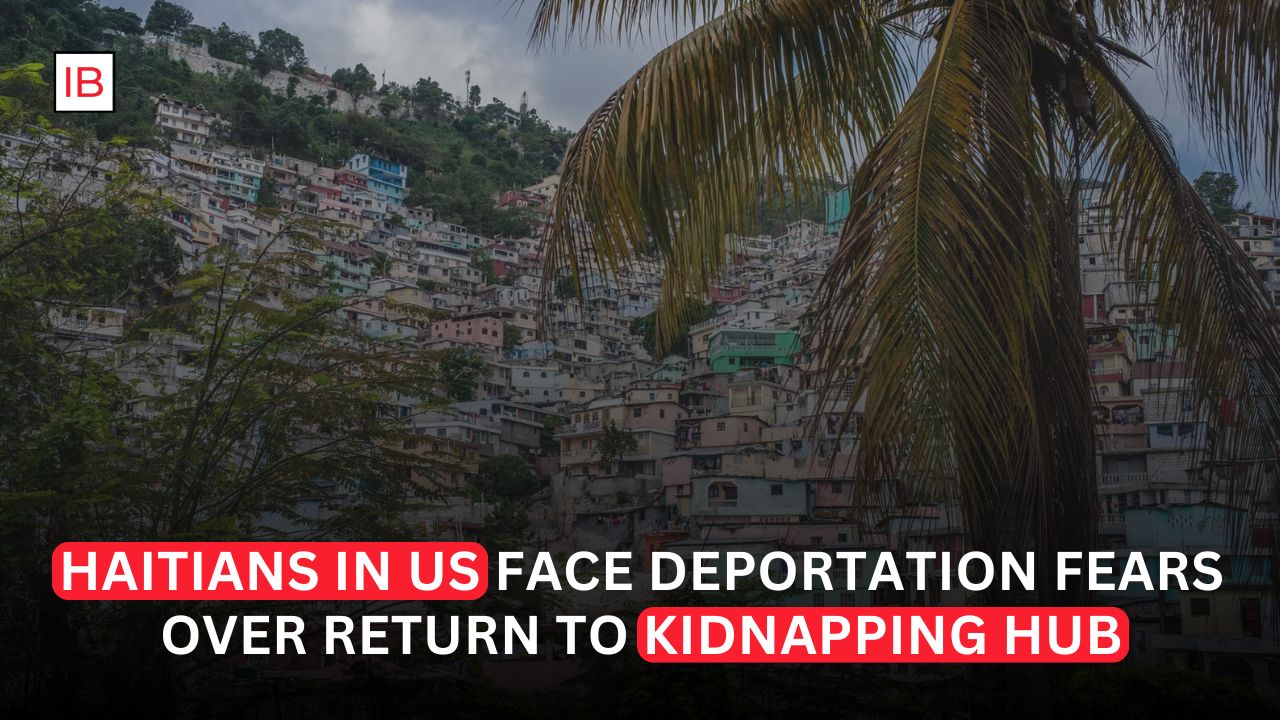
End of US Protection Leaves Hundreds of Thousands Facing an Uncertain Future as Violence and Gang Control Continue to Grip Haiti
Haitian immigrants in the United States are facing growing fear and uncertainty after the end of Temporary Protected Status, with some worrying that returning to Haiti could expose them to kidnapping, violence and other dangers as criminal gangs continue to control large parts of the country.
The US government ended Haiti’s Temporary Protected Status (TPS) on July 27, removing a legal protection that had allowed eligible Haitians to remain in the United States and work legally without facing deportation. US Citizenship and Immigration Services confirmed that Haiti’s TPS designation was terminated on that date.
The change affects hundreds of thousands of Haitians who have built lives in the United States over many years. For those without another legal immigration status, the end of TPS creates the possibility of detention and deportation.
Haitians Face an Uncertain Future
For many TPS beneficiaries, the United States has become home.
Some have lived in the country for more than a decade, raising children, purchasing homes and establishing careers. Others have family members who are US citizens or permanent residents.
The sudden loss of protection has therefore created a difficult choice for many people.
Remaining in the US without lawful status could expose them to immigration enforcement, while returning to Haiti could place them in an environment where kidnapping, gang violence and political instability remain serious concerns.
Human Rights Watch has warned that the termination has generated widespread fear among Haitian communities, including concerns about family separation, job losses and deportation to a country experiencing severe insecurity.
Haiti Remains Extremely Dangerous
The concerns surrounding deportation are closely connected to Haiti’s continuing security crisis.
Armed gangs have expanded their influence over large areas of the country, particularly around the capital, Port-au-Prince.
Kidnapping has become one of the major threats facing residents and travelers.
For Haitians who have spent years outside the country, returning can be especially difficult because they may have limited connections, housing or financial resources available to them.
The US government itself has maintained severe warnings about travel to Haiti because of crime, kidnapping, civil unrest and other security risks.
That creates an uncomfortable contradiction for Haitian immigrants who fear being sent back to conditions that remain dangerous.
TPS Was Created for Humanitarian Emergencies
Temporary Protected Status is a humanitarian immigration program created by Congress in 1990.
It allows the US government to provide temporary protection to nationals of countries experiencing armed conflict, natural disasters or other extraordinary conditions.
TPS holders can generally live and work legally in the United States for as long as the designation remains active.
For Haiti, the protection was initially established following the devastating 2010 earthquake and was later expanded and extended in response to continuing instability and humanitarian problems.
Over time, many Haitian TPS recipients became deeply integrated into American communities.
Hundreds of Thousands Could Be Affected
The number of people affected by the termination is substantial.
Congressional officials have cited estimates of more than 350,000 Haitian nationals at risk of losing TPS-related protection.
The actual number of people facing removal will depend on individual circumstances because not every Haitian TPS beneficiary lacks another form of legal immigration status.
Some may qualify for asylum, family-based immigration, employment-based visas or other forms of relief.
Others, however, may have few options available.
For those individuals, the end of TPS represents a fundamental change in their legal situation.
Fear of Kidnapping Adds to Anxiety
The possibility of returning to Haiti is especially frightening for people who know that kidnapping remains widespread.
Humanitarian organizations and international authorities have repeatedly warned about the threat posed by armed groups operating throughout the country.
For Haitian Americans and Haitian immigrants who have spent years in the US, the prospect of suddenly returning can feel extremely uncertain.
Some families worry that relatives could become targets because they have lived abroad or may be perceived as having access to money.
Others fear becoming trapped in areas controlled by gangs.
The result is a climate of anxiety among communities that previously believed they had a stable future in the United States.
Legal Battles Delayed the Termination
The end of TPS follows a lengthy legal battle.
A federal judge had previously blocked the Trump administration’s effort to terminate Haiti’s TPS protections.
The dispute eventually reached the US Supreme Court, which in June allowed the termination to move forward and sent the case back to the lower courts.
After receiving the appellate court’s mandate, a federal judge confirmed in August that the earlier order blocking the termination was no longer in effect.
That cleared the way for the administration to enforce the termination.
The legal fight has therefore shifted from whether the termination could take effect to what options remain for affected Haitians.
Work Authorization Is Also at Risk
The end of TPS has consequences beyond the threat of deportation.
TPS beneficiaries have historically received employment authorization that allows them to work legally in the United States.
Once the protection ends, those work permissions are no longer valid under TPS.
That could create serious difficulties for employers and workers.
Haitian immigrants are employed across numerous industries, including healthcare, hospitality, construction, transportation and other service sectors.
The loss of work authorization could therefore affect not only individual families but also businesses that rely on Haitian employees.
Families Face the Possibility of Separation
Another major concern is family separation.
Many Haitian TPS holders have children who are US citizens.
Some families include spouses with different immigration statuses.
If a TPS holder is detained or deported, families could face difficult decisions about whether to remain in the United States or relocate together to Haiti.
For parents, that can create an especially painful dilemma.
Leaving could disrupt children’s education and established lives, while remaining could mean separation from a deported parent.
New York Community Feels the Impact
The consequences are also being felt in major US cities with large Haitian populations.
New York City has one of the country’s largest Haitian communities.
The city has already faced political and employment consequences related to the end of TPS.
Mayor Zohran Mamdani announced that Haitian city workers whose TPS protections had been revoked would lose their jobs, highlighting how the immigration change can affect local government as well as individual families.
The situation illustrates how immigration policy can quickly move from federal courts into workplaces and local communities.
Florida Is Another Major Center
Florida is another major center of Haitian American life.
Communities in Miami-Dade County and surrounding areas have longstanding cultural, family and economic ties with Haiti.
Human Rights Watch and the Sant La Haitian Neighborhood Center have reported widespread anxiety among Haitian communities in Florida following the TPS decision.
For local businesses, churches and community organizations, the uncertainty can affect everything from employment to participation in community activities.
Some Haitian families have reportedly reduced their public activities because of fears about immigration enforcement.
Churches and Community Organizations Are Affected
The uncertainty is also changing community life.
Haitian churches and community organizations have historically served as important sources of support for immigrants.
But fear of immigration enforcement can discourage people from attending services, seeking assistance or participating in public activities.
Community groups are increasingly focused on helping TPS holders understand their legal options.
Immigration attorneys and advocacy organizations are also urging affected Haitians to determine whether they qualify for another immigration pathway rather than assuming deportation is inevitable.
Congress Faces Pressure to Act
The end of TPS has also increased pressure on Congress.
Some lawmakers have supported legislation that would extend or restore protections for Haitians.
Representative Ayanna Pressley, for example, has backed legislation to extend TPS for Haiti and said more than 350,000 Haitian nationals could be affected by the termination.
Whether Congress will ultimately act remains uncertain.
The issue has become part of a broader national debate over the future of TPS and whether protections that have lasted for many years should continue when conditions in a beneficiary’s home country remain unstable.
Haiti’s Crisis Makes Deportation More Controversial
The timing of the TPS termination is particularly controversial because Haiti remains in a severe humanitarian and security crisis.
The country continues to struggle with gang violence, political instability, displacement and limited government capacity.
Critics of the termination argue that deporting people to such conditions could expose them to serious risks.
Supporters of ending TPS argue that the program was designed to be temporary and should not become a permanent immigration pathway.
That disagreement is at the center of the political debate.
The Economic Impact Could Be Significant
The consequences could also extend to the US economy.
TPS holders participate in the labor force, pay taxes and spend money in local communities.
Removing hundreds of thousands of workers from legal employment could create labor shortages in industries where Haitian workers are heavily represented.
It could also reduce household income and consumer spending.
For employers, replacing experienced workers can be expensive, particularly in sectors already facing labor shortages.
Deportation Threat Changes Everyday Life
For affected Haitians, however, the issue is ultimately about more than economics.
The possibility of immigration enforcement can affect everyday decisions.
People may become reluctant to report crimes, interact with authorities or travel outside their communities.
Parents may worry about being separated from their children.
Workers may fear losing their jobs.
And families may have to consider whether returning to Haiti is safer than remaining in the United States without legal status.
Looking Ahead
The termination of Temporary Protected Status for Haitians marks a major turning point for one of the largest immigrant communities benefiting from the program.
More than 350,000 Haitian nationals could be affected, with many facing the loss of work authorization and protection from deportation.
For those who have lived in the United States for years, the change creates enormous uncertainty.
The prospect of returning to Haiti is particularly frightening because the country continues to face severe gang violence, kidnapping and humanitarian problems.
The legal battle over TPS may continue, while Congress faces pressure to consider new legislation that could provide longer-term protection.
For now, Haitian families must navigate a difficult and uncertain period.
Some will seek alternative immigration status. Others may challenge removal orders or pursue humanitarian relief. Some may eventually decide to return to Haiti despite the risks.
The broader issue is likely to remain a major part of the US immigration debate.
For Haitian communities, however, the debate is deeply personal. The end of TPS means that a protection many had relied on for years has disappeared, leaving families to confront difficult choices between staying in the United States without the security they once had and returning to a country where kidnapping, violence and instability remain serious threats.