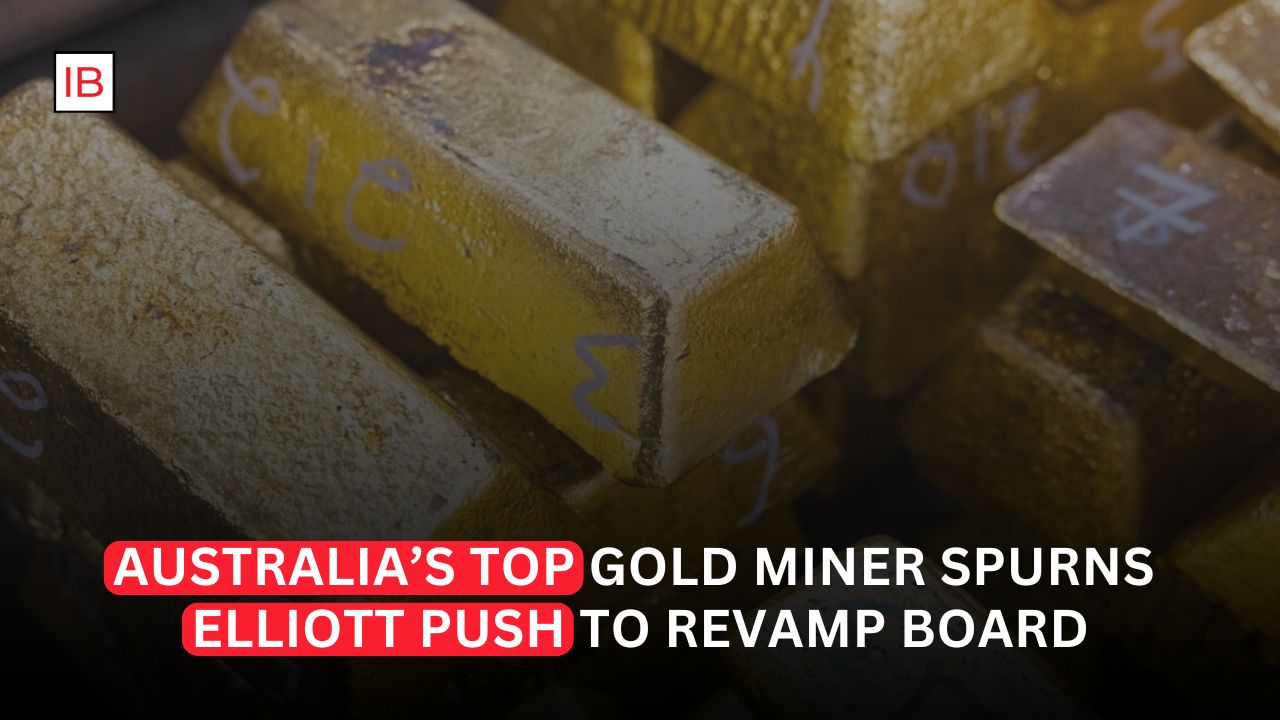
Australia’s largest gold producer, Northern Star Resources, is pushing back against activist investor Elliott Investment Management as the hedge fund escalates its campaign for major changes to the miner’s board and strategy.
The dispute has become one of the most closely watched activist campaigns in Australia’s resources sector. Elliott has built an economic interest of about 5.6% in Northern Star and argues that the company has failed to unlock the full value of its world-class gold assets despite a strong gold-price environment. Northern Star, however, has resisted Elliott’s preferred approach, including calls for a broader strategic review and substantial changes to its board.
The disagreement is no longer simply about individual directors. It is becoming a broader argument over how Northern Star should be managed, whether some assets should be sold and how aggressively the company should restructure after a period of operational challenges and leadership changes.
Elliott Wants a Major Board Overhaul
Elliott escalated its campaign by proposing a slate of six independent director candidates after negotiations with Northern Star failed to produce an agreement.
The candidates include Mark Cutifani, the former chief executive of Anglo American and a current independent director of Woodside Energy. Other nominees include Susie Corlett, Paul Graves, Mick McMullen, Peter Rozenauers and Graham Shuttleworth.
Elliott says it is not seeking control of Northern Star and does not intend to put any of its own employees on the board.
Instead, the hedge fund argues that Northern Star needs directors with deeper mining, financial and governance experience who can oversee a comprehensive review of the company’s operations and capital allocation.
That distinction matters.
Elliott is attempting to present the campaign not as a traditional takeover fight but as an effort to improve governance and shareholder returns.
Why Elliott Is Unhappy
The central argument from Elliott is performance.
The hedge fund says Northern Star’s shareholder returns have significantly lagged its peers over several years, even as gold prices have reached historically high levels.
That creates an uncomfortable question for management.
If the price of gold is strong but the company’s shares are underperforming other miners, investors naturally begin asking whether the problem lies within the company’s operations, capital allocation or management strategy.
Elliott has pointed to repeated operational problems and previous guidance misses as evidence that Northern Star has not executed effectively enough.
Earlier in its campaign, Elliott cited seven outlook misses over four years and argued that operational missteps had damaged investor confidence.
The activist investor believes the company’s assets themselves are not the problem.
Its argument is essentially that Northern Star owns valuable gold mines but has not generated the shareholder value that those assets should produce.
Northern Star Has Its Own Strategy
Northern Star does not appear willing to simply accept Elliott’s diagnosis.
The company has already been making leadership changes.
Chief Executive Officer Stuart Tonkin is departing, while Suresh Vadnagra, currently associated with Glencore’s nickel and zinc operations, has been selected as his replacement.
Chairman Michael Chaney is also leaving.
Northern Star has emphasized that its leadership succession planning began before Elliott became publicly involved and therefore rejects the idea that the changes are simply a response to activist pressure.
That is an important part of the company’s defense.
Northern Star can argue that it is already addressing management and governance issues without handing control of its strategy to an activist investor.
But Elliott Wants More Than a New CEO
This is where the disagreement becomes more serious.
Elliott has said it supports the appointment of Vadnagra but believes the incoming CEO needs a substantially stronger board around him.
In other words, Elliott is not arguing that changing the CEO alone will solve Northern Star’s problems.
The hedge fund wants a broader reset involving governance, operations and strategy.
Its proposed directors are intended to provide the incoming management team with additional mining and financial expertise.
Elliott’s position is that the scale of Northern Star’s challenges requires more than a routine succession process.
The Asset-Sale Question
One of the biggest issues is whether Northern Star should sell or spin off some of its assets.
Elliott has called for a strategic review that could potentially identify assets that would be more valuable under different ownership.
Northern Star has previously acknowledged receiving approaches from potential buyers and said investment banks had proposed options including a possible asset spin-off.
However, the company decided not to proceed with such a process.
That decision is important because it reveals that the question of asset sales is not purely theoretical.
Northern Star has actually considered alternatives.
The disagreement is about whether the company should act on them now.
Why Asset Sales Could Make Sense
From Elliott’s perspective, selling non-core assets could allow Northern Star to concentrate capital and management attention on its strongest operations.
Northern Star’s major assets include the Kalgoorlie Super Pit, the Hemi project and the Pogo mine.
Analysts have suggested that some assets could potentially be attractive to mid-tier gold producers with the financial capacity to acquire them.
An asset sale could generate cash that Northern Star could use for debt reduction, shareholder returns or investment in its highest-return projects.
It could also simplify the company’s portfolio.
But there is an obvious counterargument.
Selling assets during a period of strong gold prices could mean giving up future production and exposure to further increases in gold prices.
A mine that looks non-core today could become highly valuable if exploration succeeds or production costs decline.
Gold Prices Make the Debate More Intense
The timing of Elliott’s campaign is particularly interesting because gold prices have remained strong.
Normally, a gold producer operating during a favorable commodity cycle should have a powerful earnings tailwind.
That makes underperformance more difficult to explain.
If Northern Star were struggling because gold prices had collapsed, management could point to external conditions.
Instead, the company is operating in an environment where the underlying commodity has provided significant support.
That strengthens Elliott’s argument that company-specific problems need to be addressed.
At the same time, high gold prices could give Northern Star greater financial flexibility to invest in operational improvements rather than immediately selling assets.
Northern Star’s Shares Tell Part of the Story
The stock’s performance has become a central part of the activist argument.
Reuters reported that Northern Star shares were down about 14% for the year as of August 12, despite the strength of the gold market.
The shares did rise after Elliott announced its six proposed directors, suggesting that some investors viewed the activist campaign as potentially positive for shareholder value.
That reaction is significant.
Activist investors often need market support to pressure management.
If shareholders believe Elliott can unlock value, the hedge fund gains leverage.
If investors instead believe management already has a credible turnaround plan, Northern Star can resist the campaign more effectively.
The Super Pit Is Central to the Story
One reason Mark Cutifani is such a notable Elliott nominee is his experience with large-scale mining operations in Australia.
Cutifani has deep experience in the resources industry and was previously involved with operations connected to the Super Pit.
That makes his nomination particularly relevant to Northern Star.
Elliott is effectively saying that the board needs directors who understand the complexity of operating major gold assets rather than simply financial-market specialists.
The proposed slate combines mining experience with finance and corporate governance expertise.
That gives Elliott a stronger argument than simply demanding that the company replace directors with hedge-fund representatives.
Elliott Says It Does Not Want Control
Elliott has repeatedly emphasized that it does not want control of Northern Star’s board.
The hedge fund says its proposed candidates would serve as independent directors and act in the interests of all shareholders.
This is strategically important.
An activist investor seeking outright control could face much stronger resistance from a company’s board and other shareholders.
By presenting its campaign as a governance and value-creation effort, Elliott can potentially attract support from institutional investors who may agree with some of its criticisms without wanting a full takeover.
Whether that message convinces shareholders remains to be seen.
Northern Star Faces a Difficult Balancing Act
Northern Star’s management has to defend its existing strategy while also demonstrating that it is capable of delivering better results.
Simply rejecting Elliott is not enough.
The company needs to show investors why its current portfolio should remain intact and why its new leadership team can improve operational performance.
The incoming CEO will therefore face considerable pressure.
If production improves, costs fall and shareholder returns recover, Northern Star can argue that its standalone strategy was correct.
If problems continue, Elliott’s case becomes significantly stronger.
This Is Bigger Than One Company
The Northern Star battle reflects a broader trend across the mining industry.
As commodity prices rise, activist investors increasingly challenge mining companies over capital allocation, portfolio structure and operational performance.
Mining companies often own multiple assets across different countries and commodities.
That creates opportunities for investors to argue that businesses could be worth more if they were simplified.
The pressure can result in asset sales, spin-offs, mergers or changes to management.
Northern Star is now facing exactly that kind of pressure.
What Investors Should Watch
Several developments will determine how the dispute evolves.
Board composition: Whether Northern Star agrees to appoint any of Elliott’s nominees will be crucial.
CEO transition: Investors will watch how Suresh Vadnagra performs after taking over.
Asset sales: Any decision to sell or spin off mines could materially change the company’s investment case.
Production: Operational performance will remain one of the most important indicators.
Costs: Rising production costs could undermine the benefits of higher gold prices.
Shareholder support: Elliott’s ability to convince institutional investors will determine how much pressure it can apply.
Gold prices: A sustained gold rally could give Northern Star more room to execute its own strategy.
The Real Fight Is About Value
At the heart of the dispute is a relatively simple question:
Is Northern Star’s problem its assets, or is it the way those assets are being managed?
Elliott clearly believes the latter.
Northern Star is effectively arguing that it can fix its problems through its own leadership transition and operational plans without allowing an activist investor to dictate the company’s direction.
Both sides have something to prove.
Elliott needs to demonstrate that its proposed changes can create more value than Northern Star’s existing strategy.
The company needs to demonstrate that its new leadership and board can deliver the operational improvements investors have been waiting for.
The outcome could have consequences beyond Northern Star.
If Elliott succeeds, other Australian mining companies may face greater pressure from activist investors to review portfolios, sell non-core assets and restructure boards.
If Northern Star successfully resists and improves performance, it could reinforce the argument that companies can defeat activist campaigns by presenting credible internal turnaround plans.
For now, the battle remains unresolved.
But with Elliott holding an economic interest of around 5.6%, a six-person director slate and a clear demand for strategic change, Northern Star is unlikely to escape the pressure simply by rejecting the proposal.
The next test will not be who makes the stronger argument. It will be who can convince shareholders that their strategy will produce more value from Northern Star’s gold assets.