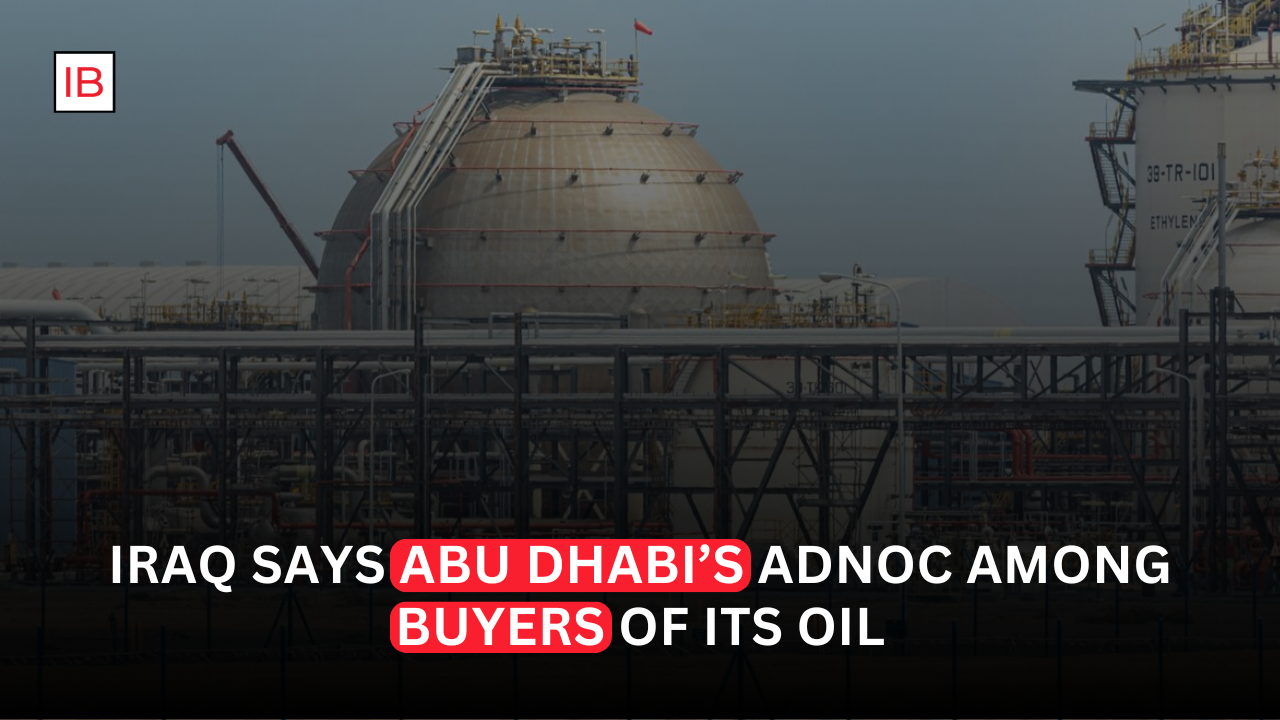
Iraq is finding buyers for its crude even as the conflict around the Strait of Hormuz disrupts one of the world’s most important energy routes. Abu Dhabi National Oil Co. (ADNOC) is among the companies buying Iraqi oil, according to Iraqi officials, highlighting how Gulf producers and traders are adapting to the extraordinary logistical challenges facing regional crude exports.
The development matters because Iraq is heavily dependent on southern oil exports, much of which normally moves through the Strait of Hormuz. With shipping conditions severely disrupted, simply having crude available is no longer enough. Producers must also find a workable route to get that oil to international customers.
Recent reports indicate that ADNOC has offered to help shuttle Iraqi crude through the strait using ship-to-ship transfers, a strategy the UAE company has already used for its own exports.
Hormuz Has Become the Critical Issue
The Strait of Hormuz is one of the world’s most important oil chokepoints.
A huge volume of crude and petroleum products normally passes through the narrow waterway connecting the Persian Gulf with the Gulf of Oman.
When shipping through the strait becomes difficult or dangerous, the consequences extend far beyond the countries directly involved.
Tankers face higher insurance costs, longer journeys and greater operational risks. Buyers become more selective, while producers may be forced to offer discounts to compensate customers for the additional transportation risk.
For Iraq, the problem is especially serious because its southern export system depends heavily on maritime routes through the Gulf.
ADNOC’s Role Is Particularly Interesting
ADNOC’s involvement is significant because the company is not simply another crude buyer.
The Abu Dhabi-based energy giant has extensive experience in oil production, shipping, trading and logistics.
Its willingness to handle Iraqi crude demonstrates how Gulf energy companies are increasingly using their integrated operations to manage disruptions.
Reports say ADNOC has proposed moving Iraqi crude through the Strait of Hormuz using ship-to-ship transfers, allowing oil to be moved between vessels rather than relying on a conventional direct voyage.
That approach does not eliminate the risk.
It simply changes the logistics.
Why Iraq Needs Alternative Solutions
Iraq’s economy is heavily dependent on oil revenues.
That makes export disruptions more than a transportation problem.
If Iraq cannot sell and ship its crude, government revenue can come under pressure.
The country therefore has a strong incentive to keep exports moving even when transportation becomes more expensive and complicated.
This creates an unusual situation.
Iraq may have to accept less favorable commercial terms simply to maintain access to international markets.
Buyers May Have More Bargaining Power
When supply routes are disrupted, the normal relationship between producers and buyers can change.
A buyer willing to accept greater shipping risk may demand a discount.
That can reduce the effective price received by the producer even if global benchmark oil prices remain elevated.
This is particularly relevant for Iraqi crude.
If transportation through Hormuz becomes more expensive or uncertain, the value of Iraqi barrels delivered to Asian customers may differ significantly from the headline Brent or Dubai price.
In other words, the problem is not necessarily a shortage of Iraqi oil. It is the cost and risk of delivering it.
Ship-to-Ship Transfers Are a Risk Management Tool
Ship-to-ship transfers are not unusual in global oil logistics.
They can be used when producers need to transfer cargo between vessels, change transportation arrangements or move crude through difficult shipping environments.
In the current situation, the technique can provide greater flexibility.
One vessel can load Iraqi crude, transfer the cargo to another tanker under controlled conditions, and allow the second vessel to continue the journey.
ADNOC’s experience with similar arrangements gives it an advantage in operating within an increasingly complicated regional shipping environment.
But the Strategy Has Limits
It would be a mistake to treat ship-to-ship transfers as a permanent solution.
They add operational complexity.
They can increase costs.
They require suitable vessels, favorable weather and safe operating conditions.
And, most importantly, the vessels still have to pass through a high-risk maritime environment.
So while the strategy can keep some Iraqi barrels moving, it cannot completely eliminate the underlying geopolitical problem.
Asian Buyers Remain Important
Iraq’s crude exports have traditionally been heavily oriented toward Asian markets.
China and other Asian refiners are major consumers of Middle Eastern oil.
That makes shipping reliability extremely important.
Asian refiners may continue buying Iraqi crude if the economics remain attractive, but they will also compare it against supplies from other regions.
If Iraqi crude becomes significantly more expensive to transport, buyers may shift toward alternative suppliers.
That creates additional pressure on Baghdad to maintain competitive pricing.
The UAE Has a Strategic Interest
The UAE also has strong reasons to keep regional oil flows functioning.
Abu Dhabi is itself a major oil producer.
ADNOC therefore understands the consequences of prolonged disruption better than most companies.
Helping move Iraqi crude can serve several purposes at once:
- Generate trading and logistics revenue
- Strengthen relationships with Iraq
- Maintain regional oil flows
- Support Asian customers
- Demonstrate the UAE’s logistical capabilities
- Reduce disruption to the wider Gulf oil market
This makes ADNOC’s involvement commercially and strategically significant.
The Bigger Oil-Market Impact
The most important question is whether Iraq can continue exporting enough crude to prevent a larger supply shock.
If substantial volumes remain trapped because of transportation problems, global supply could tighten further.
That would put upward pressure on oil prices.
But if companies such as ADNOC successfully create alternative logistics arrangements, the immediate supply impact could be smaller.
This is why traders are watching shipping flows almost as closely as production data.
A barrel that is produced but cannot reach a refinery is effectively unavailable to the market.
Oil Prices Don’t Tell the Whole Story
One of the misleading aspects of a disrupted oil market is the focus on benchmark prices.
Brent and other benchmarks provide a broad indication of market conditions.
But physical crude can trade at significant discounts or premiums depending on location, quality and transportation costs.
Iraqi producers therefore care about the netback they receive after shipping and other expenses.
If transportation risk rises sharply, the producer may have to absorb some of that additional cost through lower selling prices.
That is where the economic damage can appear even when headline oil prices remain high.
Iraq’s Fiscal Dependence Makes This More Serious
Iraq remains highly dependent on petroleum revenues to finance government spending.
That means sustained export disruption could eventually affect public finances.
The longer transportation problems persist, the greater the potential pressure on government revenue.
This creates an incentive for Iraq to accept unconventional export arrangements rather than wait for normal shipping conditions to return.
A New Role for Gulf Oil Companies
The situation also demonstrates how the traditional role of national oil companies is evolving.
Companies such as ADNOC are no longer simply producers.
They increasingly operate across:
Production → trading → shipping → refining → distribution
That vertical integration gives them greater flexibility when markets become disrupted.
A company with access to crude, tankers, trading desks and refining capacity can respond to a crisis much more effectively than a producer that relies entirely on external shipping and trading companies.
What Investors Should Watch
The key indicators over the coming weeks will be:
Iraqi export volumes: Are shipments continuing at normal levels?
Shipping activity: How many tankers are successfully moving Iraqi crude through Hormuz?
Crude discounts: Are Iraqi grades being sold at increasingly large discounts?
Asian refinery demand: Are major buyers continuing to accept Iraqi barrels?
Insurance and freight costs: How much is the disruption adding to transportation expenses?
Brent and Dubai spreads: Are physical-market disruptions being reflected in benchmark pricing?
ADNOC’s role: Does the UAE company expand its involvement in transporting Iraqi crude?
These factors will determine whether the current disruption remains primarily a logistical problem or develops into a major supply shock.
The Bigger Picture
The involvement of ADNOC in buying and helping move Iraqi oil shows how the Gulf’s energy system is adapting under extraordinary pressure.
Iraq needs to keep exporting.
Asian refiners need crude.
ADNOC has the logistical capabilities to connect the two.
That creates an obvious commercial opportunity.
But the arrangement also highlights a deeper vulnerability in the global oil market: a relatively small geographic chokepoint can influence the economics of millions of barrels of crude.
The key issue is therefore not simply whether Iraq has oil to sell.
It does.
The real question is whether that oil can be safely, reliably and economically delivered to the customers that need it.
If ADNOC and other Gulf operators can maintain those flows, the global market may absorb much of the disruption.
If they cannot, the consequences could spread quickly through oil prices, shipping costs, refinery margins and eventually consumer inflation.
For Iraq, the immediate priority is keeping the barrels moving.
For ADNOC, the crisis represents both a logistical challenge and an opportunity to strengthen its position as one of the Gulf’s most integrated energy companies.
And for global oil markets, every successful cargo moving through the disrupted route is a reminder that physical logistics can matter just as much as production when geopolitical risk hits the energy system.