Prabowo’s Spending Plan Puts Resource Industries and Electric Vehicles at the Center of Indonesia’s Growth Strategy
Indonesia’s proposed 2027 budget is positioning miners and electric-vehicle manufacturers among the biggest potential beneficiaries as President Prabowo Subianto seeks to accelerate economic growth while maintaining tighter control over the country’s finances.
The strategy reflects Indonesia’s effort to turn its enormous natural-resource base into higher-value industrial production. At the same time, Jakarta is seeking to develop a domestic electric-vehicle industry that can use the country’s advantage in nickel and other battery materials.
The approach fits into a broader economic strategy centered on industrialization, downstream processing and domestic manufacturing.
Miners Stand to Benefit From Resource Focus
Indonesia is already one of the world’s most important mining economies, particularly in nickel.
The country accounts for more than 60% of global nickel mine supply, giving Jakarta enormous influence over the international battery-materials market.
Government policy has increasingly focused on processing minerals domestically rather than simply exporting raw materials.
That means mining companies could benefit from continued investment in smelters, processing facilities and downstream industries.
The strategy also gives Indonesia greater control over the value chain surrounding critical minerals.
Nickel Remains Central to the Strategy
Nickel is particularly important because it is a key input for some types of electric-vehicle batteries.
Indonesia has spent years attracting investment into nickel mining and processing, with Chinese companies playing a major role in expanding the country’s refining and smelting capacity.
Recent government decisions to manage nickel output have also demonstrated Jakarta’s willingness to influence supply.
Indonesia has previously considered reducing production quotas to prevent oversupply and support prices, although officials have also indicated that quotas could be adjusted if market conditions remain favorable.
The 2027 budget’s emphasis on miners therefore comes at a time when Indonesia is trying to balance resource revenue with its ambitions to build a larger industrial economy.
EV Manufacturers Gain From Industrial Policy
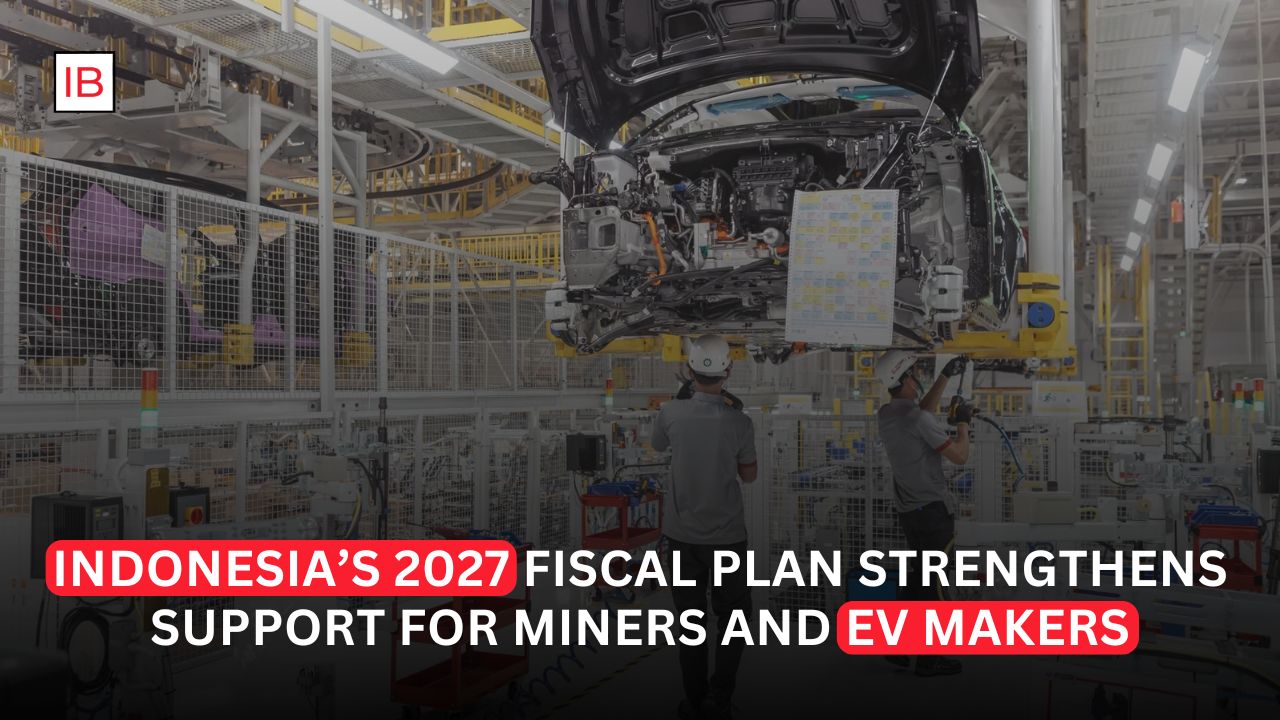
Electric-vehicle manufacturers are another major potential winner.
Indonesia wants to move beyond being a supplier of raw materials and become a manufacturing center for electric cars and batteries.
President Prabowo has said Indonesia aims to begin mass production of domestically manufactured electric vehicles by 2028, reinforcing the government’s long-term industrial strategy.
The government has also indicated that additional EV incentives could be introduced.
Indonesia’s finance minister said in August that Prabowo was expected to announce new incentives covering around 500,000 electric motorcycles and cars.
Those measures could strengthen demand while encouraging automakers to establish more production capacity inside the country.
Local Production Is Becoming More Important
Indonesia’s EV strategy increasingly favors companies willing to manufacture locally.
Investment incentives are tied to local-content requirements, with EV manufacturers able to qualify for certain benefits as domestic production and component sourcing increase.
That creates an incentive for global automakers to build factories and develop local supply chains.
The result could be a growing ecosystem covering battery materials, battery cells, vehicle components and finished automobiles.
For Indonesia, that would represent a major step up the industrial value chain.
Automakers Are Expanding Their Indonesian Presence
International manufacturers have already been investing heavily in Indonesia.
Companies including Chinese EV producers have expanded their presence as the country seeks to become a regional manufacturing hub.
BYD, for example, has planned major investment in Indonesian production, while other manufacturers have established or announced local facilities.
Indonesia’s large domestic market gives automakers another reason to build locally.
If the government continues to provide incentives for domestic manufacturing, more companies could follow.
The Government Wants Stronger Economic Growth
The budget strategy is not solely about mining and electric vehicles.
Prabowo is also seeking to maintain strong economic growth while reducing the country’s fiscal deficit.
Indonesia is targeting 6% economic growth in 2027, while aiming to reduce the budget deficit to around 2.4% of GDP, compared with an expected 2.85% in 2026.
That combination would require the government to spend strategically.
Instead of expanding every area of government spending equally, policymakers are increasingly focused on sectors that can generate investment, employment and export revenue.
Fiscal Discipline Remains Important
The push toward miners and EV manufacturers comes alongside an effort to improve fiscal discipline.
Prabowo’s government has emphasized the need to control inefficient spending and increase returns from state-owned companies.
That creates a balancing act.
The government wants to provide enough support to accelerate industrial development, but it also wants to prevent subsidies and incentives from becoming an uncontrolled drain on public finances.
The 2027 budget therefore appears designed to concentrate resources on sectors viewed as strategically important to Indonesia’s long-term development.
Downstream Processing Could Increase Export Value
Indonesia’s mineral strategy is based on the idea that exporting processed materials generates more value than shipping raw ore abroad.
Nickel provides the clearest example.
Instead of simply exporting nickel ore, Indonesia wants companies to process the material domestically and use it in batteries and other industrial products.
That could create additional jobs, increase tax revenue and attract foreign investment.
It could also make Indonesia more important to global manufacturers that need secure supplies of battery materials.
The EV Push Complements the Mining Strategy
The connection between mining and EV manufacturing is one of the most important elements of Indonesia’s industrial policy.
Indonesia has the raw materials needed for parts of the battery supply chain.
Developing domestic EV manufacturing allows the country to capture additional value from those resources.
In theory, the strategy creates a complete industrial chain:
- Mining
- Mineral processing
- Battery manufacturing
- EV component production
- Vehicle assembly
- Domestic EV sales
- Potential exports
The more of that chain Indonesia can develop domestically, the less dependent it will be on exporting raw commodities.
Global Demand Provides an Opportunity
The global transition toward electric vehicles is creating demand for battery materials and manufacturing capacity.
BloombergNEF expects global passenger EV sales to reach 23.3 million in 2026, an 11% increase from 2025, with Southeast Asia among the regions showing rising momentum.
Indonesia wants to capture part of that growth.
Its geographic position, large population and mineral resources give it several advantages.
The challenge will be building an industry capable of competing on cost, quality and technology.
Mining Policy Could Affect Global Markets
Indonesia’s decisions also have consequences beyond its borders.
Because the country controls such a large share of global nickel production, changes in Indonesian output can influence international prices.
Goldman Sachs noted that Indonesia’s supply policies helped drive a major rally in nickel prices earlier in 2026.
That means the 2027 strategy will be closely watched by battery manufacturers, automakers and commodity investors around the world.
Any major change in production policy could have repercussions throughout the global EV supply chain.
The Challenge of Balancing Growth and Subsidies
One of the biggest questions surrounding the strategy is whether incentives can produce lasting economic benefits.
Government support can accelerate investment, but excessive subsidies can create inefficiencies.
Indonesia therefore needs to ensure that incentives encourage genuine domestic production rather than simply increasing imports or benefiting companies without creating competitive industries.
The government has already shown signs of adjusting its EV policy as it seeks to move from consumer incentives toward domestic manufacturing.
Looking Ahead
Indonesia’s 2027 budget strategy puts miners and electric-vehicle manufacturers at the center of President Prabowo Subianto’s ambition to deliver faster growth while strengthening the country’s industrial base.
For miners, the strategy could provide continued support for domestic mineral processing and downstream investment.
For EV manufacturers, government incentives and local-content policies could encourage more factories, battery facilities and supply-chain investment.
The two sectors are closely connected.
Indonesia wants to use its dominant position in nickel to build an integrated EV industry rather than remain primarily an exporter of raw materials.
The country’s control of more than 60% of global nickel mine supply gives it an unusually strong position in the battery-materials market.
At the same time, Prabowo’s government is trying to maintain fiscal discipline.
The target of reducing the budget deficit to 2.4% of GDP in 2027 while maintaining 6% economic growth means policymakers will need to ensure that government support produces measurable economic returns.
The success of the strategy will ultimately depend on whether Indonesia can turn incentives and natural resources into globally competitive industries.
If mining investment, battery production and EV manufacturing expand together, Indonesia could capture a much larger share of the global electric-vehicle value chain.
For investors, the 2027 budget signals that Indonesia’s industrial policy will remain heavily focused on natural resources, downstream processing and electric mobility.
The country’s next challenge will be transforming that policy into sustainable growth, higher-value exports and jobs while keeping public finances under control.