Meta Turns to Microsoft for More AI Computing Capacity
Meta Platforms has quietly emerged as one of the largest customers for Microsoft’s artificial intelligence infrastructure, highlighting the enormous computing requirements behind the company’s expanding AI ambitions.
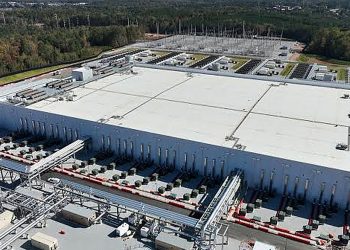
The relationship is notable because Meta is itself one of the world’s biggest technology companies and has been spending aggressively to build its own AI infrastructure. Yet even with billions of dollars committed to data centers, servers and specialized processors, Meta still needs outside computing capacity to support the rapid development and deployment of its AI systems.
The arrangement illustrates a broader reality of the AI boom: even companies with enormous infrastructure budgets are increasingly dependent on cloud providers and other technology partners to obtain enough computing power.
Meta’s AI Ambitions Require Massive Computing Resources
Meta has dramatically increased its investment in artificial intelligence as it competes to develop increasingly capable models and build its own AI ecosystem.
The company has been spending heavily on GPUs, data centers and networking equipment while expanding its AI research operations. Meta’s 2026 capital expenditure forecast is between $130 billion and $145 billion, reflecting the enormous cost of expanding its infrastructure.
Despite that spending, building enough infrastructure internally is difficult.
Advanced AI workloads require enormous quantities of computing power, and demand for specialized chips has grown faster than the ability of many companies to deploy them. Data-center construction, electricity availability and networking infrastructure can also create bottlenecks.
As a result, Meta has increasingly supplemented its own infrastructure with capacity obtained from outside providers.
Microsoft Becomes an Important Part of Meta’s AI Strategy
Microsoft is one of the world’s largest providers of cloud computing through Azure, giving it access to vast amounts of computing infrastructure.
For Meta, using Microsoft’s infrastructure provides another source of AI capacity without requiring every workload to run inside Meta-owned facilities.
The relationship is particularly interesting because Microsoft is simultaneously one of the biggest investors in AI infrastructure. Its Azure business has become a central part of the company’s AI strategy, with Microsoft spending tens of billions of dollars on data centers, processors and networking equipment to meet customer demand.
Microsoft reported that its capital expenditures reached about $41 billion in its latest quarter, a 70% increase, as it expanded infrastructure supporting cloud and AI services.
Meta’s use of Microsoft infrastructure therefore creates an important connection between two companies that are both spending enormous amounts to compete in AI.
Meta Is Not Completely Dependent on One Cloud Provider
Although Microsoft has become a significant AI infrastructure supplier for Meta, the company is pursuing a broad strategy rather than relying on a single cloud provider.
Meta announced a major agreement with Amazon Web Services in April to bring tens of millions of AWS Graviton processor cores into its computing portfolio. Meta described itself as one of the world’s largest Graviton customers and said the chips would support its expanding work on agentic AI.
The AWS agreement demonstrates how Meta is deliberately diversifying its computing resources.
Instead of depending entirely on its own data centers or a single cloud provider, Meta can combine internal infrastructure with capacity from companies such as Microsoft and Amazon.
This approach gives the company more flexibility as AI workloads change and demand continues to grow.
Meta Is Spending Billions on Its Own Infrastructure
The fact that Meta is purchasing significant amounts of outside computing capacity does not mean the company has abandoned its infrastructure strategy.
Quite the opposite.
Meta continues to build enormous data centers and acquire large quantities of AI processors. The company has reported hundreds of billions of dollars in future contractual commitments connected to AI data centers, cloud computing, servers and network infrastructure.
According to a recent regulatory filing, Meta had approximately $349.3 billion in non-cancelable contractual commitments, much of which was connected to third-party cloud deals, servers and network infrastructure. It also reported another $347 billion in leases that had not yet started.
These numbers show just how capital-intensive the AI race has become.
Even companies with the financial resources to construct their own infrastructure are signing enormous external agreements to guarantee access to computing capacity.
AI Capacity Is Becoming a Strategic Resource
Meta’s relationship with Microsoft demonstrates how AI computing capacity is becoming a strategic resource.
In earlier generations of technology, companies could often purchase additional servers when demand increased. AI infrastructure is different.
Training and operating advanced models requires specialized processors, high-speed networking and massive amounts of electricity. Data centers must also be designed specifically to handle the heat and power requirements generated by large AI clusters.
This makes expanding computing capacity a lengthy process.
A company may have enough money to buy chips but still struggle to find a data center with sufficient electricity and cooling capacity. It may also face delays in construction or grid connections.
Using cloud infrastructure can help bridge those gaps.
Microsoft Benefits From Meta’s Demand
The relationship is also valuable for Microsoft.
Azure has become one of Microsoft’s most important growth engines, and AI workloads are helping increase demand for its cloud services.
Every major customer using Azure for AI represents an opportunity for Microsoft to generate additional cloud revenue while improving utilization of its expensive infrastructure.
The broader market has already shown strong demand for AI cloud capacity. Investors have increasingly focused on whether hyperscalers such as Microsoft, Amazon and Google can generate sufficient returns from their enormous AI infrastructure investments.
Recent investor analysis suggests strong cloud growth and continued capacity constraints are helping support the economics of hyperscaler AI spending.
Meta’s demand provides another example of how these investments can translate into actual customers.
The Relationship Creates an Unusual Competitive Dynamic
The partnership also illustrates how complicated competition has become in the AI industry.
Meta, Microsoft and Amazon compete in several areas of technology while simultaneously working with one another.
Microsoft competes with Meta for AI talent, products and users, yet Meta can still become an important Microsoft cloud customer.
Similarly, Meta is developing plans for a cloud infrastructure business of its own that could eventually compete with major cloud providers, including Microsoft Azure and Amazon Web Services.
This creates a highly interconnected AI ecosystem.
Companies may compete in AI models and cloud services while relying on each other for chips, computing capacity, data centers or networking.
Meta Could Eventually Become a Cloud Competitor
Meta’s growing use of outside computing resources is particularly interesting because the company is reportedly considering ways to commercialize some of its own AI infrastructure.
Meta has been developing plans for a potential cloud infrastructure business that could offer outside customers access to AI computing power and models. Such a service would put Meta into more direct competition with AWS, Microsoft Azure and Google Cloud.
That creates a potentially unusual future scenario.
Meta could simultaneously purchase computing capacity from Microsoft while eventually competing with Microsoft by selling AI infrastructure to other customers.
The development reflects how quickly the boundaries between AI companies, cloud providers and infrastructure operators are changing.
AI Spending Is Becoming More Difficult to Ignore
Meta’s expanding infrastructure requirements also show why investors have become increasingly focused on AI spending.
The company reported a sharp increase in expenses in its latest quarterly results, with total expenses rising 55% to $42 billion. At the same time, Meta raised the lower end of its 2026 capital expenditure forecast to $130 billion while maintaining the upper end at $145 billion.
These investments are necessary to support Meta’s long-term AI ambitions, but they also create significant financial pressure.
Investors increasingly want evidence that enormous AI infrastructure spending will eventually translate into higher revenue, stronger advertising products, new AI services and improved profitability.
The Microsoft relationship adds another layer to that equation because external cloud spending becomes another cost associated with building and operating advanced AI systems.
The AI Infrastructure Race Is Becoming a Multi-Company Effort
The Meta-Microsoft relationship demonstrates that the AI infrastructure race is no longer simply about which company owns the most GPUs.
Success increasingly depends on access to an entire technology stack.
Companies need:
- AI accelerators
- CPUs
- Data centers
- Electricity
- Cooling systems
- High-speed networking
- Cloud infrastructure
- Specialized software
- Engineering talent
No single company can easily control every part of this ecosystem.
That is why partnerships between major technology companies are becoming increasingly important.
Meta can build enormous data centers while still using Microsoft or Amazon capacity. Microsoft can operate massive Azure facilities while relying on customers such as Meta to fill that capacity. Chipmakers benefit from all of these companies increasing their computing requirements.
Looking Ahead
Meta’s emergence as one of Microsoft’s largest AI customers highlights the extraordinary scale of the computing requirements behind the current AI boom.
Even with a capital expenditure budget of $130 billion to $145 billion for 2026, Meta continues to rely on outside infrastructure to supplement its own computing resources.
The relationship with Microsoft also shows how competition and cooperation are increasingly overlapping across the technology industry.
Meta is building its own AI infrastructure, buying capacity from cloud providers and exploring the possibility of eventually selling AI computing services itself. Microsoft is investing heavily in Azure while benefiting from demand from companies such as Meta. Amazon is also supplying Meta with large amounts of computing capacity through its Graviton partnership.
As AI models become more sophisticated, these relationships are likely to become even more important.
The next stage of the AI race will not be determined only by who develops the best model. It will also depend on who can secure enough chips, data centers, electricity and computing capacity to train and operate those models at global scale.
For Microsoft, Meta’s growing demand represents an important opportunity to monetize its massive AI infrastructure investments. For Meta, access to Azure provides another tool for scaling its ambitious AI strategy without waiting for every piece of its own infrastructure to come online.
The result is a powerful example of the new AI economy: even technology giants building their own computing empires increasingly need each other to keep up with demand.