Garmin Enters the Screen-Free Fitness Band Market
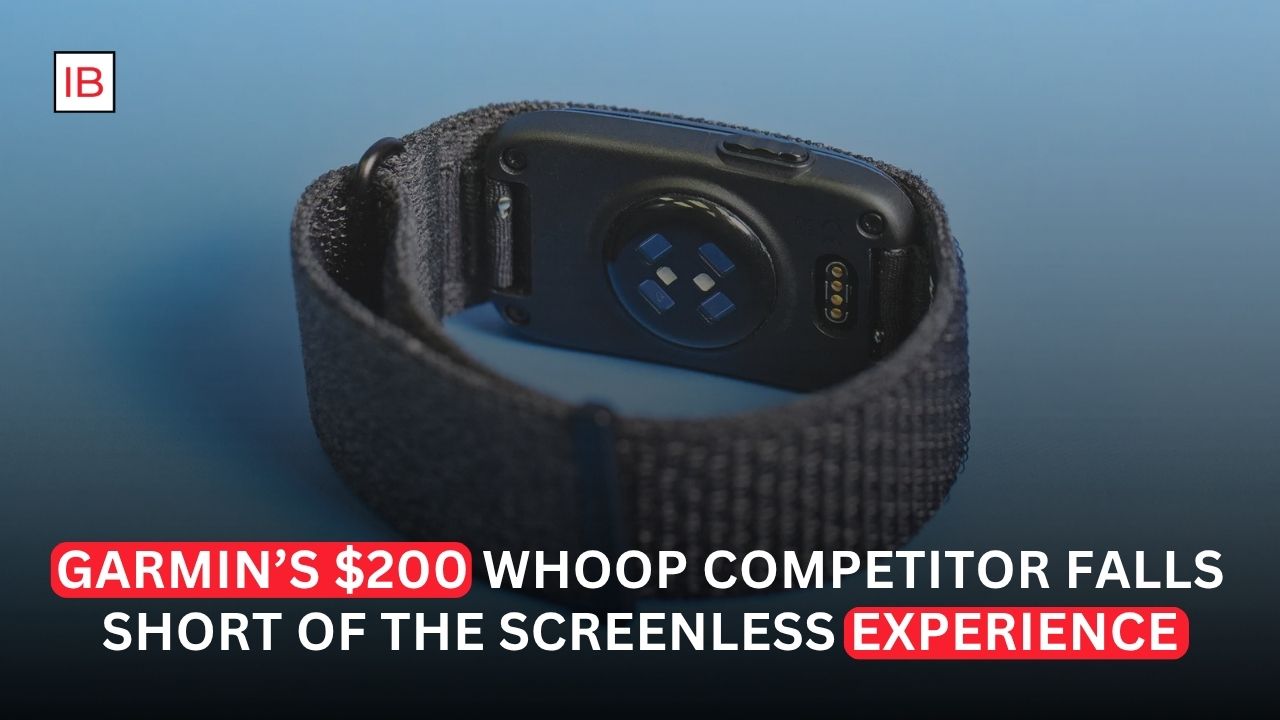
Garmin is expanding beyond traditional smartwatches with the Cirqa Smart Band, a $200 screen-free fitness tracker aimed at users who want continuous health and recovery monitoring without wearing a conventional smartwatch.
The device enters a market where Whoop has built a strong following by focusing on sleep, recovery, strain and long-term health data rather than notifications and apps. Garmin’s approach could appeal to users who already trust the company’s fitness ecosystem but prefer a smaller and less distracting wearable.
A Screen-Free Alternative to Whoop
The Cirqa is built around a simple idea: collect detailed health and fitness data without putting another screen, stream of notifications or smartwatch interface on the user’s wrist.
Garmin has priced the device at $199.99 and designed it to compete directly with screenless trackers such as Whoop. Unlike Whoop, however, Cirqa does not require a mandatory subscription to access its core health and fitness data. The tracker offers up to around 10 days of battery life and integrates directly with the Garmin Connect platform.
That pricing model could be one of Garmin’s biggest advantages. A Whoop membership involves recurring costs, while Cirqa is positioned as a one-time hardware purchase for users who want access to their data without another monthly payment.
Health Tracking Without the Smartwatch Distractions
Cirqa includes sensors designed to track heart rate, blood oxygen levels, skin temperature and movement. It can monitor sleep, heart-rate variability, recovery and other health indicators, while Garmin’s software turns that information into features such as Body Battery and Training Readiness.
The device can also track a wide range of physical activities through Garmin Connect. A physical button allows users to manually start and stop workouts, giving Cirqa an advantage over some screenless competitors that rely more heavily on automatic workout detection.
This makes the product particularly interesting for users who want serious fitness information but do not necessarily want to wear a large smartwatch throughout the day.
How Cirqa Compares With Whoop
Whoop has built its brand around continuous monitoring and insights into strain, recovery and sleep. Garmin is entering the same general market but is taking a different approach.
Cirqa benefits from Garmin’s established ecosystem and its extensive collection of fitness metrics. Users who already own a Garmin smartwatch or cycling computer can add Cirqa as a complementary device and continue tracking their data within the same Garmin Connect account.
Whoop, however, still has advantages in some areas. Reviews have highlighted its more polished hardware, stronger focus on recovery analysis and longer battery life. The Whoop MG tier also includes features such as ECG functionality that Cirqa does not offer.
The comparison therefore depends heavily on the user.
Someone who wants the most refined recovery-focused experience may still prefer Whoop. But someone who already uses Garmin devices and wants comprehensive tracking without a recurring subscription may find Cirqa more appealing.
Garmin Connect Is a Major Selling Point
One of Cirqa’s strongest advantages is its connection to Garmin Connect.
The app already provides a large amount of fitness and health data, and Cirqa allows users to add continuous tracking without having to wear a smartwatch at all times.
For example, a Garmin watch user could wear Cirqa during sleep or recovery periods while continuing to keep all health information within the same ecosystem. Garmin also provides access to most core data without requiring a subscription.
However, the depth of Garmin Connect can also be a disadvantage for casual users. Some reviewers have described the platform as complex, with a large amount of data that may be overwhelming for people who simply want straightforward daily health insights.
Accuracy Appears Strong in Most Activities
Early testing suggests that Cirqa performs well in several important areas.
Reviews have found generally reliable heart-rate tracking, particularly during steady activities, gym workouts, cycling and everyday exercise. One detailed test found that moving the tracker to the upper arm could improve accuracy during more demanding activities.
Step counting and other basic activity measurements have also performed well in comparisons. In one recent 5,000-step test, Cirqa’s recorded total was extremely close to the manually counted result.
However, the device is not perfect.
Some tests found weaker heart-rate performance during activities involving fast running intervals or open-water swimming. Another comparison also experienced an unexplained failure to record heart-rate data during a walk, showing that real-world performance can occasionally be inconsistent.
No Built-In GPS Means Your Phone Still Matters
One limitation is the lack of onboard GPS.
Users who want detailed route information for running, walking or cycling need to carry a paired smartphone. Cirqa uses connected GPS rather than including its own GPS hardware.
This is not necessarily unusual for a screenless fitness tracker. Whoop and several other competing devices also rely on connected GPS.
Still, it limits Cirqa’s appeal for athletes who want a completely independent tracking device.
Garmin does offer many watches with built-in GPS, but choosing Cirqa means accepting that location tracking will generally depend on a smartphone.
Design and Comfort May Divide Users
The screen-free design helps make Cirqa less distracting than a smartwatch, but the device is not necessarily the smallest wearable in its category.
Some reviewers found the band bulkier than expected, particularly for users with smaller wrists. The fabric strap has also received mixed feedback, with some users reporting that it can remain wet for an extended period after swimming or showering.
Others have found the device comfortable enough for continuous use and sleep tracking.
The design may therefore come down to personal preference. Users moving from a large Garmin watch may find Cirqa lightweight and unobtrusive, while those comparing it with a smaller fitness band or smart ring may consider it relatively bulky.
The $200 Price Creates a Competitive Challenge
At nearly $200, Cirqa is not a budget fitness tracker.
It costs considerably more than the $99 Fitbit Air, although Garmin’s lack of a mandatory subscription changes the long-term value calculation. Compared with subscription-based competitors such as Whoop, Cirqa could become less expensive over time because users do not have to continue paying monthly or annually for core features.
This makes the product’s price easier to justify for users planning to wear it for several years.
However, people who want a display, notifications or standalone GPS may decide that a Garmin smartwatch offers better value at a similar or slightly higher price.
Garmin Targets a Growing Wearable Market
Cirqa’s launch also reflects a wider shift in the wearable technology industry.
Many users are moving toward devices that focus less on smartphone notifications and more on health, sleep and recovery. Screenless trackers and smart rings are becoming popular among people who want to collect health data without constantly checking another display.
Garmin’s decision to enter this category places it in direct competition with companies that have built their businesses around continuous health monitoring.
The company is also reportedly exploring further expansion of the Cirqa brand, including the possibility of a smart ring, although such plans have not been officially confirmed.
Who Should Consider the Cirqa?
Cirqa appears particularly well suited to three types of users.
First, it could appeal to existing Garmin users who want to track sleep, recovery and health metrics without wearing their primary smartwatch around the clock.
Second, it may attract athletes who want a distraction-free device with detailed fitness information and a physical workout button.
Third, it could appeal to people who dislike subscription fees and want long-term access to their health data without an ongoing membership.
The device may be less attractive for users who need built-in GPS, prefer an extremely small wearable or want a simple app that automatically converts complex health data into easy recommendations.
Looking Ahead
Garmin’s Cirqa represents a serious attempt to challenge Whoop and other screenless fitness trackers with a familiar formula: detailed health data, strong fitness tracking and deep integration with an established ecosystem.
Its $199.99 price, approximately 10-day battery life, physical workout button and lack of a mandatory subscription are important advantages. Garmin Connect also gives the device access to a broad range of fitness and health insights.
The trade-offs include the lack of built-in GPS, a design that may feel bulky for some users and occasional inconsistencies in tracking performance.
Ultimately, Cirqa may not completely replace Whoop for users who want the most specialized recovery platform. But Garmin has created a compelling alternative for people who want continuous health tracking without another screen or another subscription.
For existing Garmin users especially, the Cirqa could be one of the most practical new fitness wearables of 2026, combining the company’s established health ecosystem with a simpler and more discreet way to collect data throughout the day.