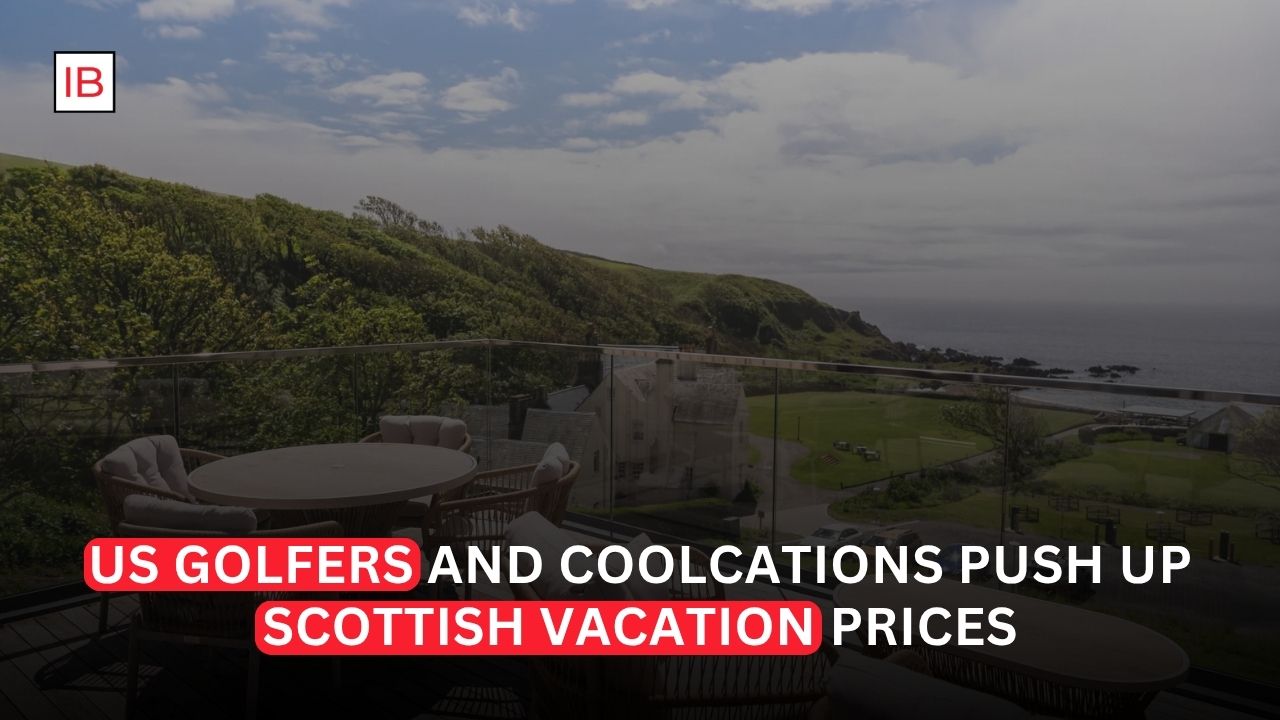
Scotland is becoming an increasingly expensive destination for travelers as American tourists, golf enthusiasts and visitors seeking cooler summer weather drive stronger demand for hotels, flights and holiday experiences.
The trend reflects a broader shift in global tourism. Travelers are increasingly looking for destinations that offer relief from extreme summer heat, while Scotland’s reputation for golf, scenery, whisky and historic cities is attracting a growing number of international visitors.
For Scotland’s tourism industry, the surge in demand is good news.
For travelers, however, it comes with a catch: popular Scottish destinations are becoming significantly more expensive during peak periods.
Americans Are Driving a Major Part of the Demand
US travelers have become one of the most important groups in Scotland’s tourism market.
The country’s combination of direct flights from North America, widespread English-language tourism infrastructure and strong cultural appeal makes it relatively easy for Americans to visit.
But the biggest attraction may be the combination of experiences that are difficult to replicate elsewhere.
Scotland offers historic castles, dramatic landscapes, whisky distilleries, coastal towns and some of the world’s most famous golf courses.
That combination is particularly appealing to affluent American travelers.
And when demand rises faster than available hotel rooms and other tourism capacity, prices usually follow.
Golf Is a Major Tourism Engine
Golf is one of Scotland’s strongest tourism assets.
The country is widely regarded as the birthplace of modern golf, and courses such as St Andrews have become global pilgrimage sites for serious golfers.
For wealthy travelers, a golf trip is rarely limited to the cost of playing a round.
Visitors may spend money on:
- Luxury hotels
- Restaurants
- Private transportation
- Golf equipment
- Caddies
- Guided tours
- Whisky experiences
- Additional sightseeing
That creates a much larger economic impact than ordinary sightseeing.
A golfer arriving in Scotland for a week can potentially spend considerably more than a traveler staying in budget accommodation and visiting free attractions.
St Andrews Remains a Major Draw
St Andrews is at the center of Scotland’s golf tourism industry.
The town’s Old Course is one of the most famous golf venues in the world.
Demand for access to prestigious courses can be extremely high, particularly during the summer season.
That creates a broader pricing effect.
Hotels and restaurants benefit from the wealthy visitors arriving for golf.
Transport providers benefit.
Luxury tourism businesses benefit.
Even towns outside St Andrews can gain from visitors who use them as bases for exploring the region.
The “Coolcation” Trend Is Growing
Golf is only part of the story.
Another major tourism trend is the rise of the so-called “coolcation.”
The concept is simple.
Instead of spending summer holidays in extremely hot Mediterranean destinations, travelers increasingly choose cooler countries such as Scotland, Norway, Sweden and Iceland.
Climate change has made summer heat a more serious consideration for tourists.
When temperatures in southern Europe become uncomfortable, northern destinations become more attractive.
Scotland can benefit from that shift.
Its summer climate is relatively mild compared with many traditional European holiday destinations.
Climate Is Changing Travel Preferences
For decades, the classic European summer holiday meant sunshine, beaches and hot weather.
That assumption is becoming less universal.
Some travelers now actively avoid extreme heat.
That changes the competitive landscape.
Scotland does not have to compete with Spain or Greece on sunshine.
Instead, it can sell something those destinations cannot easily provide during a heatwave:
cooler temperatures and outdoor experiences.
That is particularly attractive to older travelers, families and visitors who want to spend large amounts of time outdoors.
Edinburgh Is Feeling the Pressure
Scotland’s capital is another major beneficiary of international tourism.
Edinburgh combines:
- Historic architecture
- Festivals
- Restaurants
- Museums
- Shopping
- Castles
- Easy access to the Scottish Highlands
The city is already one of the UK’s biggest tourism destinations.
As international demand grows, accommodation prices can rise quickly during busy periods.
Major events create additional pressure.
The Edinburgh Festival Fringe is particularly important because it attracts huge numbers of visitors every August.
Peak Season Is Becoming More Expensive
The biggest issue for travelers is not necessarily that every Scottish holiday has become unaffordable.
The problem is peak pricing.
Hotels can charge much higher rates when demand is strongest.
Airfares can rise.
Popular attractions can become crowded.
Rental cars can become more expensive.
Restaurants may also increase prices when tourism is strong.
This creates a two-speed tourism market.
Travelers willing to visit Scotland during quieter periods may still find relatively reasonable prices.
Those determined to visit during the summer peak can face much higher costs.
Luxury Tourism Is Especially Strong
Scotland is also benefiting from the growth of luxury travel.
High-income visitors are less sensitive to price increases than budget travelers.
They may book:
- Five-star hotels
- Private tours
- Chauffeured vehicles
- Luxury golf packages
- Private whisky tastings
- Exclusive countryside estates
That allows tourism businesses to raise prices without necessarily seeing demand collapse.
The result can be a significant increase in tourism revenue even if visitor numbers do not rise dramatically.
Americans Are Attractive Tourists for Another Reason
The US market is valuable because American travelers often stay longer and spend more.
A visitor traveling thousands of miles to Scotland is unlikely to fly across the Atlantic for a short weekend.
Many Americans combine several experiences into one trip.
They might spend time in Edinburgh before traveling through the Highlands, visiting whisky distilleries and playing golf.
That increases spending across multiple parts of the Scottish economy.
The Highlands Are Benefiting Too
The tourism boom is not limited to Edinburgh and St Andrews.
The Scottish Highlands are becoming increasingly popular among international visitors.
The region offers landscapes that are difficult to find elsewhere in Europe:
- Mountains
- Lochs
- Remote islands
- Castles
- Coastal roads
- Hiking trails
- Wildlife
Social media has also made remote Scottish landscapes highly visible to international travelers.
A location that was once known mainly to specialist travelers can now become globally popular after appearing repeatedly on Instagram, TikTok or YouTube.
Tourism Businesses Have a Pricing Opportunity
For hotels and tourism operators, the increase in demand presents an obvious opportunity.
Higher prices can improve profitability.
That can allow businesses to invest in:
- Better facilities
- Staff
- Renovations
- New experiences
- Sustainability
- Marketing
But there is a limit.
If prices rise too far, Scotland risks making itself less attractive to middle-income travelers.
That could eventually create a tourism market dominated by wealthy visitors.
The Risk of Becoming Too Expensive
Tourism destinations face a difficult balance.
Higher prices can increase revenue.
But excessive pricing can damage long-term demand.
If travelers begin to believe Scotland is simply too expensive, they may choose Ireland, Scandinavia or other European destinations instead.
That makes price management important.
Tourism businesses need to capture higher spending without destroying the value proposition that attracts visitors in the first place.
Housing Is Another Concern
Tourism growth can also create pressure on local housing.
Short-term rentals can reduce the supply of properties available to residents in highly popular destinations.
When tourism demand increases, property owners may have greater incentives to rent homes to visitors rather than local residents.
That can contribute to higher housing costs.
Edinburgh and other popular tourism areas have already faced debates over short-term rentals and their effects on local communities.
Local Residents Can Feel the Downside
Tourism brings jobs and income.
But residents can experience the less attractive side of the boom.
Crowded streets can make daily life more difficult.
Restaurants and hotels may become more expensive.
Traffic can increase.
Popular hiking routes and natural attractions can become overcrowded.
Housing pressure can intensify.
The challenge for Scotland is therefore not simply attracting tourists.
It is managing tourism in a way that keeps local communities supportive.
The Weather Paradox
There is an interesting contradiction at the heart of the coolcation trend.
Scotland’s cooler climate is becoming a tourism advantage.
But climate change itself is helping create that advantage.
As southern Europe experiences more frequent periods of extreme heat, northern destinations become relatively more attractive.
That does not mean Scotland is immune from climate change.
It simply means that changing weather patterns can shift tourism demand geographically.
Scotland Has Something Other Coolcation Destinations Don’t
Scotland’s advantage is that it can combine cooler temperatures with a highly developed tourism identity.
It is not simply a place to escape heat.
It has a powerful brand.
Golf is one part.
Whisky is another.
So are castles, history, literature and landscapes.
That makes the coolcation trend particularly valuable.
Visitors have a reason to choose Scotland beyond the weather.
Golf Tourism Can Support Rural Economies
Golf has another economic advantage.
Major golf courses are often located outside large cities.
That spreads tourism spending into smaller communities.
Visitors need accommodation, restaurants, transportation and entertainment.
Local businesses can therefore benefit from international tourism.
This can help rural economies that have fewer opportunities to attract high-income visitors.
The Challenge Is Infrastructure
Rapid tourism growth creates infrastructure problems.
Scotland needs enough:
- Hotel rooms
- Rental cars
- Restaurants
- Airport capacity
- Roads
- Public transport
- Tourism staff
If demand grows faster than capacity, prices rise.
That is exactly what is happening in some popular destinations.
The answer is not necessarily to discourage tourists.
It may instead require investment in infrastructure that allows more visitors to be accommodated without overwhelming local communities.
Staffing Is Becoming More Important
Tourism is a labor-intensive industry.
Hotels need cleaners.
Restaurants need chefs and servers.
Golf courses need staff.
Tour operators need guides and drivers.
If tourism grows rapidly but businesses cannot find enough workers, wages can rise.
That increases operating costs.
Businesses may then pass those costs on to tourists through higher prices.
The tourism boom can therefore create a cycle of higher demand, higher wages and higher prices.
Travelers Can Avoid the Worst Prices
Visitors who want to experience Scotland without paying peak-season prices have several options.
The easiest is timing.
Traveling during shoulder seasons can significantly reduce accommodation pressure.
Another option is staying outside the most expensive destinations.
Instead of spending the entire trip in central Edinburgh or St Andrews, visitors can use smaller towns as bases.
That can reduce accommodation costs while still allowing access to major attractions.
The Rise of Longer Trips
Another interesting consequence is that travelers may increasingly stay longer.
If someone is already spending heavily on a long-distance flight from the United States, extending the trip from five days to ten days can make the airfare more worthwhile.
That can increase total spending.
But it can also distribute tourism more widely.
A traveler who stays for two weeks may visit multiple regions instead of concentrating entirely on Edinburgh.
Scotland’s Tourism Brand Is Getting Stronger
The broader trend suggests Scotland’s tourism brand is becoming increasingly valuable.
The country does not need to reinvent itself.
Its existing strengths are aligned with several powerful travel trends.
Americans want distinctive European experiences.
Golfers want world-class courses.
Luxury travelers want exclusive experiences.
Climate-conscious travelers may want cooler destinations.
Outdoor tourists want dramatic landscapes.
Scotland can appeal to all of them.
But Success Creates Its Own Problem
The central challenge is simple:
The more successful Scotland becomes as a tourism destination, the more expensive and crowded it can become.
That can eventually undermine the very qualities that attract visitors.
A traveler who comes for quiet landscapes may be disappointed by overcrowded roads.
Someone attracted by Scotland’s affordability may reconsider if hotel prices become excessive.
A local resident may become frustrated if tourism begins dominating daily life.
Tourism policy therefore needs to focus on managing growth rather than simply maximizing visitor numbers.
What This Means for the Scottish Economy
Tourism is an important source of economic activity across Scotland.
Higher visitor spending can support employment, restaurants, hotels, transportation companies and cultural attractions.
American tourists are particularly valuable because international visitors bring money into the Scottish economy.
Golf tourism adds another high-spending segment.
And the coolcation trend could provide a structural source of demand if extreme summer temperatures continue to influence travel choices.
The Bigger Global Tourism Shift
Scotland’s experience reflects a larger change in the global tourism industry.
Travelers are becoming more sensitive to climate.
Luxury tourism is growing.
Experiential travel is becoming more important.
Golf and wellness tourism are expanding.
And tourists increasingly discover destinations through social media.
That means traditional tourism winners may change.
Places that were once considered secondary summer destinations could become major alternatives as travelers adapt to new conditions.
Conclusion
Scotland’s tourism industry is benefiting from a powerful combination of forces.
American travelers, golf tourism and the growing popularity of cooler summer destinations are pushing demand higher.
The result is an increasingly valuable tourism market — but also rising prices during the busiest periods.
For Scotland, the opportunity is substantial.
High-spending American visitors can support hotels, restaurants, golf courses, transportation companies and rural communities.
The coolcation trend could provide another long-term source of international demand as travelers seek alternatives to Europe’s hottest destinations.
But there is a clear warning.
Tourism growth can become self-defeating if prices, crowds and housing pressure rise too far.
Scotland therefore faces a balancing act.
It needs to capture the economic benefits of stronger tourism without turning its most attractive destinations into places that are unaffordable or unpleasant for both visitors and residents.
The winners will likely be businesses that can offer travelers something distinctive rather than simply charging more for the same experience.
For visitors, meanwhile, the message is straightforward:
Scotland may be cooler than much of Europe, but a Scottish summer holiday is becoming anything but cheap.
The combination of American spending, world-class golf and climate-driven tourism could keep demand strong for years.
And as more travelers discover Scotland as a refuge from Europe’s summer heat, the country’s biggest tourism challenge may no longer be attracting visitors.
It may be deciding how many it can accommodate without losing what brought them there in the first place.