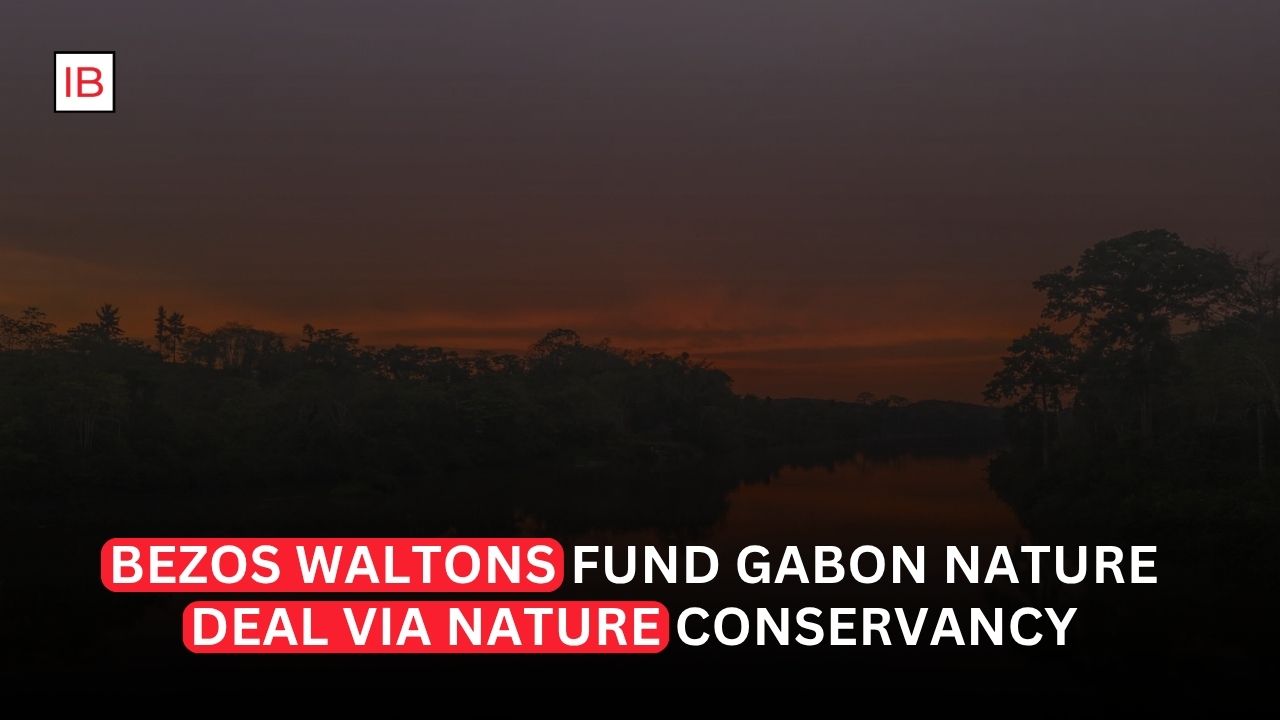
Gabon is becoming an important test case for a new approach to conservation finance as The Nature Conservancy works with major philanthropists, international partners and the government to create long-term funding for protecting the country’s forests, oceans and freshwater ecosystems.
The initiative brings together conservation goals and financial engineering, with backing connected to Jeff Bezos and the Walton family. Its central objective is to make conservation funding durable rather than dependent on short-term grants.
A Conservation Deal With Global Backing
Gabon has long been recognized for its extraordinary natural wealth. The country contains large areas of Congo Basin rainforest, extensive freshwater systems and important marine habitats.
The Nature Conservancy has been working with Gabon through its Enduring Earth partnership, which combines conservation organizations and private funding to develop large-scale projects.
The Bezos Earth Fund previously committed $30 million to innovative conservation finance in Gabon, helping support the country’s ambition to protect 30% of its forests, freshwater and ocean areas.
The Walton connection comes through ZOMALAB, the family office of Ben and Lucy Ana Walton, which has been involved in the Enduring Earth partnership alongside The Nature Conservancy and other conservation organizations.
Protecting 30% of Gabon’s Natural Capital
Gabon has set an ambitious conservation target.
The country’s plans call for protecting roughly 30% of its terrestrial, marine and freshwater ecosystems while also developing economic activities that can benefit local communities.
Earlier plans identified large areas of forests, oceans and rivers for protection. The country already had substantial protected areas, but the challenge was finding enough long-term financing to manage them effectively.
Creating a protected area on paper is relatively easy.
Paying for rangers, monitoring, scientific research, community programs and enforcement over decades is much harder.
That is where the new financing model becomes important.
Moving Beyond Traditional Donations
Traditional conservation often depends on grants that last only a few years.
Once the funding ends, governments and conservation organizations can struggle to maintain programs.
The Project Finance for Permanence model tries to solve that problem by assembling financing and long-term commitments before a conservation program begins.
The Nature Conservancy describes the approach as a way to combine public and private capital with government commitments and sustainable financing mechanisms.
The objective is straightforward: create a financial structure capable of supporting conservation for decades instead of repeatedly searching for new donations.
Why Gabon Matters
Gabon is particularly important because of its position within the Congo Basin.
Its forests store enormous amounts of carbon and provide habitat for species including forest elephants and lowland gorillas.
The country’s marine ecosystems are also significant, supporting whales, dolphins, fish and other wildlife.
Protecting these ecosystems has implications far beyond Gabon’s borders.
Forests absorb carbon, regulate water systems and support communities that depend on natural resources.
The Congo Basin is therefore a major component of global climate and biodiversity efforts.
Philanthropic Capital Can Unlock More Money
One of the most important features of conservation finance is leverage.
A philanthropic contribution does not necessarily represent the total amount spent on conservation.
Instead, it can help make a larger financial structure possible by reducing risk, paying for technical work or supporting debt restructuring.
The Nature Conservancy’s broader Nature Bonds program illustrates the concept. Its projects have helped countries refinance sovereign debt while creating dedicated funding for conservation and climate action. The organization says six projects now in implementation are expected to unlock roughly $1 billion for conservation and climate-related work.
That model is attractive because governments often face competing demands for limited budgets.
Gabon’s Debt Creates an Opportunity
Debt management is particularly relevant to Gabon.
The country has previously explored ways to restructure debt and use the resulting savings to support marine conservation.
Such arrangements can potentially lower financing costs while creating predictable funding for environmental programs.
This is fundamentally different from simply asking governments to spend more money on conservation.
Instead, financial restructuring can turn part of an existing debt burden into a source of environmental investment.
Local Communities Are Essential
The biggest risk to conservation finance is assuming that protecting nature is purely an environmental exercise.
Gabonese communities depend on forests, rivers and coastal areas for livelihoods.
If conservation programs restrict economic activity without providing alternatives, they can create local opposition.
The Enduring Earth model therefore emphasizes community involvement and sustainable economic development alongside environmental protection.
The Nature Conservancy has argued that strengthening local economies can help make conservation efforts durable over the long term.
Creating a Green Economy
Gabon is also trying to turn its environmental assets into a foundation for future economic growth.
Sustainable forestry, ecotourism, fisheries and other nature-based activities could generate income while maintaining ecosystems.
The challenge is preventing short-term commercial interests from undermining the natural resources that make these industries possible.
A successful conservation-finance model has to demonstrate that protecting forests and oceans can generate economic value.
The Bezos Earth Fund’s Role
Jeff Bezos has made nature conservation a major component of his philanthropic strategy.
The Bezos Earth Fund says it has committed $2 billion to conserving and restoring nature, with programs focused on forests, landscapes, oceans and biodiversity.
Its involvement in Gabon fits within that broader strategy.
The important point is not simply the size of the donation.
The more significant question is whether philanthropic money can help create financial systems that continue operating after the original donor funding has been spent.
The Walton Connection
The Walton family’s involvement adds another source of private philanthropic capital.
ZOMALAB has participated in Enduring Earth, a partnership designed to bring conservation organizations, governments and private funders together around large-scale environmental projects.
The broader initiative aims to mobilize billions of dollars for conservation by combining philanthropic resources with government commitments and sustainable financing mechanisms.
That approach reflects a growing recognition that philanthropy alone cannot close the enormous global biodiversity-financing gap.
A Growing Nature-Finance Market
The Gabon project comes as private investment in nature is expanding.
The Nature Conservancy’s 2026 research found that more than $60 billion has been invested in nature-oriented activities over the past decade, with annual private investment rising to more than $14 billion in 2025. More than $180 billion is reportedly committed for future investments.
But the money is unevenly distributed.
Africa remains significantly underfunded compared with the Americas, despite its enormous biodiversity and climate importance.
Gabon therefore represents an opportunity to demonstrate how private capital can be directed toward ecosystems that markets traditionally undervalue.
The Model Still Faces Risks
Conservation finance is not automatically successful.
Financial structures can become complicated, monitoring can be expensive and governments can change policies.
There is also the question of whether conservation targets are actually achieved.
Investors and donors need reliable measurements showing that forests remain protected, biodiversity improves and communities benefit.
Without strong monitoring, a sophisticated financing structure could produce impressive financial paperwork without delivering equivalent environmental results.
Success Will Depend on Governance
Gabon will therefore need strong institutions to manage the money and enforce conservation commitments.
The country’s Biodiversity Preservation Fund, established under the Nature Bonds work, is intended to play an important role in distributing conservation funding. The Nature Conservancy says the fund is designed to support biodiversity conservation and sustainable development.
Transparent governance will be essential.
International donors may provide the initial capital, but Gabonese institutions will ultimately determine how effectively the programs operate.
Conclusion
Gabon is becoming an important experiment in whether sophisticated financial structures can provide permanent funding for conservation.
The partnership involving The Nature Conservancy, the Bezos Earth Fund, the Walton family and the Gabonese government seeks to move beyond conventional environmental donations and create a system capable of supporting conservation over the long term.
That matters because Gabon’s natural wealth is globally significant.
Its rainforests form part of the Congo Basin, while its rivers and ocean ecosystems support biodiversity and local livelihoods. Protecting those resources requires far more than declaring parks and reserves. It requires reliable financing, effective enforcement, scientific monitoring and community participation.
The $30 million commitment from the Bezos Earth Fund helped provide critical deal capital for Gabon’s Project Finance for Permanence initiative, which is intended to support protection of 30% of the country’s forests, freshwater and oceans.
The involvement of the Walton family through ZOMALAB adds another major philanthropic partner to the structure.
But the real test will come later.
If the financing mechanism continues generating conservation funding after the initial philanthropic contributions, Gabon could offer a model for other biodiversity-rich countries.
If it fails to deliver measurable environmental and economic benefits, however, it will demonstrate the limits of relying on financial engineering to solve conservation problems.
For now, the Gabon initiative represents a significant shift in how nature is being financed.
The emerging idea is that forests, oceans and biodiversity should not be treated simply as costs that governments must pay to protect.
They can also be treated as valuable natural assets whose long-term protection deserves sophisticated investment.
That could become increasingly important as governments, investors and philanthropists confront the enormous cost of protecting nature in a changing climate.