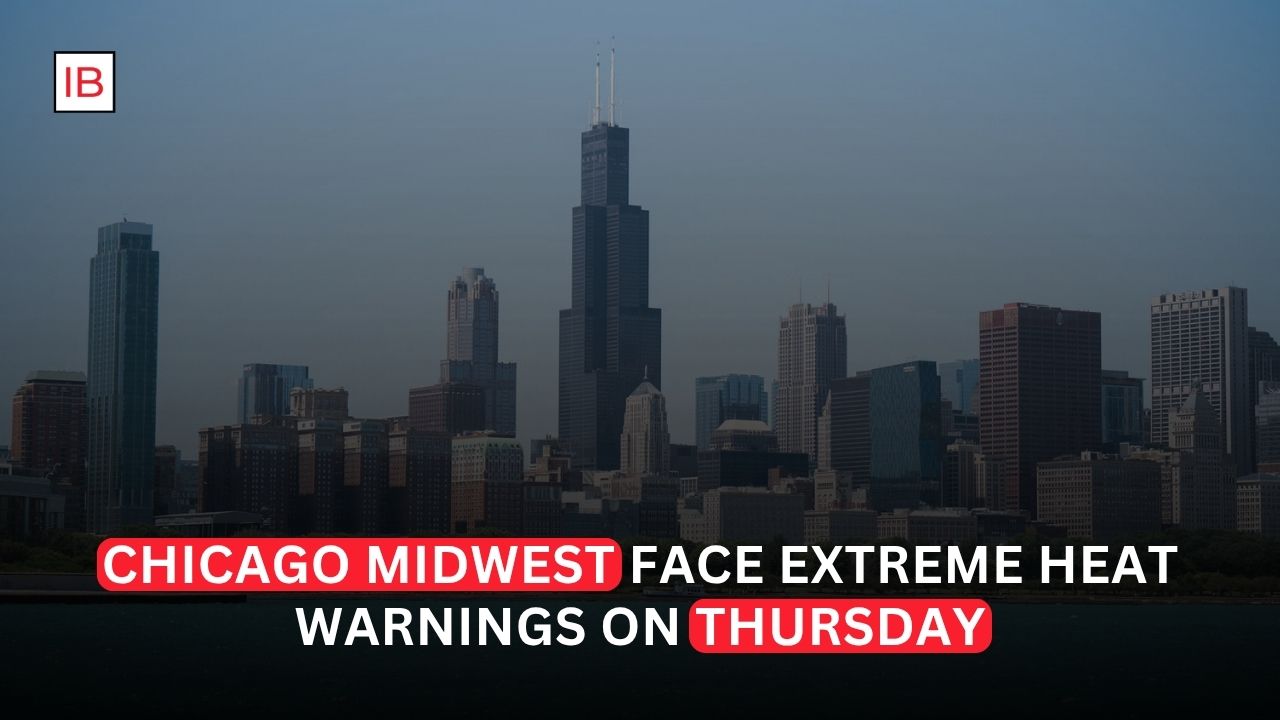
Chicago and parts of the Midwest are facing another day of dangerous heat, with the National Weather Service warning of heat index values reaching 100 to 105 degrees Fahrenheit across Cook County on Thursday. The warning remains in effect until 7 p.m. local time, marking the third consecutive day with forecast or observed heat index values above 100 degrees.
The intense heat is creating risks for residents, workers, transportation systems, and electricity networks. At the same time, the wider central United States is dealing with a broader heat dome that is putting additional pressure on power demand and infrastructure.
Chicago Remains Under Extreme Heat Warning
Chicago is at the center of the latest heat threat. The National Weather Service expects dangerously hot conditions across central, northern, and southern Cook County, including Chicago and several surrounding communities.
Thursday’s forecast calls for a high near 95 degrees Fahrenheit in Chicago, with heat index values reaching about 102 degrees. The combination of high temperatures and humidity can make outdoor conditions feel significantly hotter than the actual air temperature.
The warning is particularly important because prolonged heat can increase the risk of heat exhaustion and other heat related illnesses. People who work outdoors, exercise outside, or lack reliable cooling may face greater risks.
The latest warning follows several days of unusually hot weather across the region. As a result, heat is not only a short term weather concern. It is also placing sustained pressure on people and public infrastructure.
Midwest Heat Puts Power Grids Under Pressure
Extreme temperatures can create another major problem: electricity demand. As households and businesses use more air conditioning, power grids must handle much higher loads during the hottest parts of the day.
Recent conditions have already increased concerns about grid reliability across parts of the United States. The Midcontinent Independent System Operator, which manages a major portion of the central US power network, projected demand near 121 gigawatts, close to its record level of 127.1 gigawatts.
The situation has also raised concerns across the PJM Interconnection, a large regional grid serving millions of people from the Mid Atlantic into the Midwest. Officials have taken steps to make additional generation resources available if needed.
High electricity demand does not automatically mean widespread outages will occur. However, the margin between available supply and demand can become narrower during extreme heat. Equipment failures can also become more disruptive when the system is already operating under heavy pressure.
Heat Can Disrupt Transportation and Infrastructure
The effects of extreme heat are not limited to people and power systems. High temperatures can also affect roads, railways, bridges, aircraft operations, and other infrastructure.
Chicago recently experienced a striking example when a downtown bridge became stuck in a raised position after its components expanded in the extreme heat. The bridge remained open for boats but could not return to its normal position for several hours, causing major traffic disruption.
Such incidents demonstrate how unusually high temperatures can create operational problems even in major cities with extensive infrastructure.
Transportation networks are especially important in Chicago because the city serves as a major hub for road, rail, air, and shipping activity. Disruptions can therefore affect commuters as well as businesses moving goods through the region.
Why Humidity Makes the Heat More Dangerous
Air temperature alone does not tell the full story during a heat wave. Humidity can make conditions much more dangerous because it reduces the body’s ability to cool itself through evaporation.
That is why meteorologists use the heat index to describe how hot conditions feel to the human body. When humidity is high, a temperature in the 90s can produce a heat index above 100 degrees.
Chicago’s current warning reflects this combined risk. The National Weather Service expects heat index values between 100 and 105 degrees across parts of Cook County on Thursday.
The risk can increase further when people spend long periods outdoors or do strenuous physical activity. Older adults, young children, and people without adequate cooling can be particularly vulnerable.
Businesses Also Face Economic Pressure
Extreme heat can create costs for businesses across the Midwest. Companies may need to increase air conditioning use, change outdoor work schedules, or reduce productivity during the hottest hours.
Construction, agriculture, transportation, manufacturing, and other industries can face direct operational challenges. Outdoor workers may need additional breaks, water, shade, and schedule changes to reduce heat exposure.
Energy costs can also rise as businesses use more electricity for cooling. If extreme temperatures last longer than expected, the financial impact can become more significant.
Retail businesses may also see changes in customer behavior. People may avoid unnecessary travel during peak afternoon heat, while demand for cooling products, bottled water, and indoor entertainment can increase.
Weather Conditions May Ease After Thursday
The immediate Chicago warning is scheduled to end Thursday evening, but hot conditions are not disappearing completely. The forecast calls for scattered storms on Friday and cooler temperatures over the weekend.
Chicago’s forecast shows a high around 88 degrees Friday, followed by temperatures in the mid 80s over the weekend. Conditions are expected to become less humid as the weekend progresses.
That change would provide some relief after several days of extreme heat. However, the broader pattern across the central United States shows how quickly intense heat can develop and place pressure on communities.
Forecasters continue to monitor the position and strength of the heat dome because shifts in the weather pattern can change both temperatures and the duration of dangerous conditions.
What Residents Should Watch
People in Chicago and affected parts of the Midwest should pay attention to local weather alerts and avoid unnecessary exposure during the hottest part of the day.
Key precautions include:
- Drink water regularly and do not wait until you feel thirsty.
- Limit strenuous outdoor activity during peak heat.
- Spend time in air conditioned or otherwise cool locations when possible.
- Check on older relatives, neighbors, and other people who may need help staying cool.
- Never leave children or pets inside a parked vehicle.
- Follow local emergency guidance if conditions worsen.
The current warning is not simply about uncomfortable weather. It reflects conditions capable of creating serious health risks, particularly when high heat and humidity continue for several days.
Extreme Heat Has Wider Economic Effects
The latest Midwest heat wave also highlights the growing economic importance of extreme weather. Temperature spikes can influence electricity demand, transportation, labor productivity, business costs, and infrastructure reliability at the same time.
For financial markets, these effects can reach companies through several channels. Utilities may face higher demand, while energy companies can experience changing consumption patterns. Transportation firms may face operational disruptions, and businesses with large cooling requirements may see higher costs.
Extreme weather can therefore become more than a local forecast issue. When large population centers experience prolonged heat, the effects can spread through regional economies.
For Chicago, the immediate priority remains protecting residents as the city moves through another dangerous day. The Extreme Heat Warning remains in effect until 7 p.m. Thursday, with heat index values expected to reach 100 to 105 degrees across affected parts of Cook County.
As temperatures begin to ease later in the week, attention will shift toward whether the central US heat pattern weakens or returns. For now, residents should treat the warning seriously and limit exposure to the most dangerous conditions.