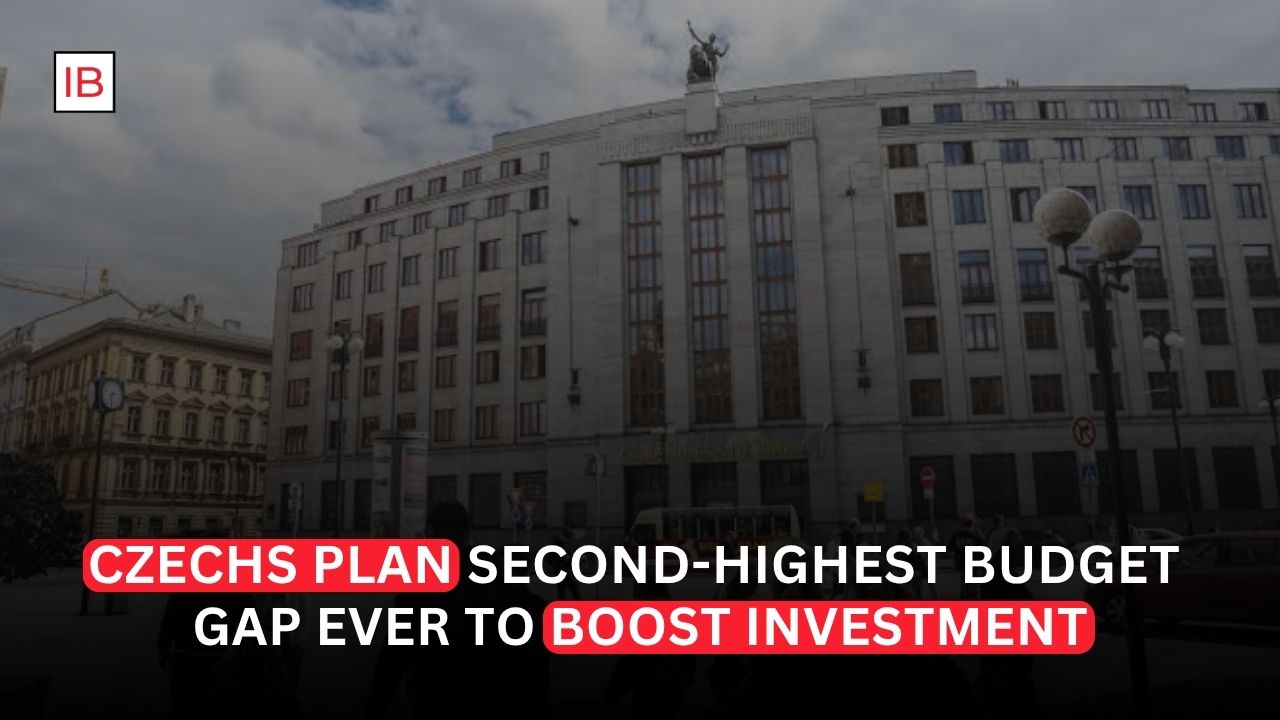
The Czech government is preparing a 2027 state budget with a deficit of 389 billion koruna, or roughly $18.5 billion, making it the second-largest budget shortfall in the country’s history. The plan represents a significant increase from the 310 billion-koruna deficit approved for 2026 and reflects the government’s decision to prioritize investment and economic development over faster fiscal consolidation.
The size of the proposed deficit is notable because Czechia has traditionally maintained a reputation for relatively conservative fiscal management. The government now argues that increased investment is necessary to strengthen long-term economic growth, improve infrastructure and support the country’s competitiveness.
Deficit Reaches Historic Levels
The proposed 389 billion-koruna deficit would be surpassed only by the 419.7 billion-koruna shortfall recorded in 2021, when the Czech economy was dealing with the extraordinary costs of the Covid-19 pandemic. The comparison makes the scale of the 2027 plan particularly significant.
The government says the higher deficit is deliberate rather than evidence of an uncontrolled deterioration in public finances.
Finance Minister Alena Schillerová has argued that the budget is based on realistic revenue and spending assumptions and remains consistent with the government’s broader fiscal strategy.
Spending Will Rise Faster Than Revenue
The draft budget anticipates government revenue increasing 3.3% to about 2.189 trillion koruna.
Expenditure, however, is expected to rise much faster, increasing 6.2% to approximately 2.578 trillion koruna.
That gap between revenue and spending is the main reason the deficit is set to expand.
The government is effectively choosing to spend more now in areas it believes can strengthen future economic performance.
That strategy carries an obvious risk: investment only improves fiscal sustainability if it ultimately produces stronger growth, higher productivity or additional government revenue.
Investment Is the Main Priority
Around 290 billion koruna of national resources is expected to be directed toward investment, according to the government’s budget plans.
The spending is intended to support infrastructure and other projects that can improve the economy’s productive capacity.
This includes transportation infrastructure, energy projects and other investments viewed as important for long-term competitiveness.
The government sees these expenditures differently from ordinary consumption.
Borrowing to finance productive infrastructure can potentially generate economic benefits for decades, while borrowing to fund recurring expenses does not necessarily create additional future revenue.
Infrastructure Needs More Money
Transport infrastructure is one of the areas where the Czech government has been seeking greater flexibility.
Earlier this year, the government moved toward legislation that would exempt investment in roads, railways and dams from some fiscal rules. The proposal also covered projects involving nuclear power and airports.
The move reflects a broader argument that strict deficit rules should not prevent governments from financing strategically important infrastructure.
Critics, however, have warned that broad exemptions could weaken fiscal discipline.
Once governments begin classifying large portions of spending as investment, the distinction between productive borrowing and ordinary deficit spending can become difficult to enforce.
Fiscal Rules Are Under Pressure
The proposed budget comes as Czechia operates within European fiscal rules.
The government has said it intends to keep the broader public-sector deficit below 3% of GDP. Its medium-term fiscal strategy for 2027 through 2030 was developed in coordination with the European Commission.
That creates an important distinction between the state budget deficit and the overall government deficit.
A large central-government shortfall does not automatically mean the country will breach European fiscal limits.
What matters is the consolidated balance of the general government sector.
Growth Is Expected to Help
The government is also relying on economic growth to improve the fiscal picture over time.
Higher economic activity can increase tax receipts without requiring tax rates to rise.
More investment could also improve productivity, which would strengthen potential economic growth.
But those benefits typically take years to materialize.
Infrastructure projects can face delays, cost overruns and planning problems.
That means the fiscal cost of investment occurs immediately while the economic return may arrive much later.
The Defense Debate Continues
Czech fiscal policy is also being shaped by Europe’s changing security environment.
NATO members have come under increasing pressure to raise defense spending following Russia’s invasion of Ukraine.
The Czech government has faced criticism over its defense spending priorities, particularly because the 2026 budget reduced core defense outlays compared with plans developed by the previous administration.
That creates another competing demand for public money.
The government wants to increase investment while also responding to defense requirements and maintaining social spending.
Social Spending Remains Important
The budget is not focused exclusively on infrastructure.
The government has also increased spending on wages, social programs and energy-related measures.
The 2026 budget already reflected higher social and wage spending as the new administration sought to reverse some of the previous government’s fiscal consolidation policies.
That makes the 2027 fiscal challenge more complicated.
Investment is only one part of government spending.
The state must also finance pensions, healthcare, public-sector wages and other recurring obligations.
The Czech Economy Has Strong Foundations
Czechia enters this period from a comparatively stable economic position.
The country has a developed industrial base, strong links to European supply chains and a relatively sophisticated financial system.
The International Monetary Fund has described prudent monetary and fiscal policies, wage moderation, sound financial institutions and strong institutions as important foundations of Czech economic stability.
Those strengths give the government more room to pursue investment than would be available to a country with much weaker institutions or unstable finances.
But they do not eliminate the risks associated with persistent deficits.
Public Debt Matters
A larger deficit means more government borrowing.
As debt accumulates, the government becomes more exposed to changes in interest rates.
If borrowing costs rise, an increasing share of future budgets could be required to service existing debt rather than finance new projects.
This is one reason investors will watch whether the deficit remains temporary or becomes structurally embedded.
A one-year investment push is different from several years of large deficits.
Markets Will Watch the Bond Market
Czech government bonds will provide an important signal of how investors view the budget.
If investors believe the higher deficit will produce stronger economic growth and remain consistent with credible fiscal policy, borrowing costs may remain manageable.
If markets conclude that spending is becoming structurally excessive, they could demand higher yields.
That would increase the cost of financing future deficits.
The government therefore has an incentive to demonstrate that the additional borrowing is tied to clearly defined investment rather than simply higher consumption.
The Government Wants More Economic Growth
The central argument behind the budget is that Czechia needs to invest more to strengthen future growth.
The country’s economy is deeply integrated with Germany and the wider European manufacturing sector.
That integration provides substantial benefits but also leaves Czech industry exposed to weak external demand and changes in global trade.
Investment in infrastructure, energy and digitalization could help diversify the economy and improve productivity.
The government’s medium-term fiscal plan specifically identifies investment and public-sector digitalization among its priorities.
Germany Remains Crucial
Czech manufacturing is heavily connected to German industry.
Automobiles, machinery and other industrial products form an important part of the country’s economic model.
Weakness in Germany can therefore quickly affect Czech exporters.
That makes domestic investment particularly important.
Improving transport links, energy infrastructure and digital services could help Czech companies remain competitive even when external demand is weak.
Energy Investment Is Strategic
Energy security has become increasingly important across Europe.
The war in Ukraine and wider geopolitical tensions have pushed governments to reconsider their dependence on foreign energy supplies.
For Czechia, investment in nuclear power, electricity infrastructure and other energy projects can support both energy security and industrial competitiveness.
However, energy infrastructure is expensive.
Major nuclear and grid projects require enormous upfront investment and often take many years before generating returns.
Fiscal Discipline Versus Investment
The central political argument is therefore straightforward.
One side says Czechia cannot afford to postpone critical investments simply to meet strict short-term deficit targets.
The other argues that relaxing fiscal constraints can quickly become a habit, creating larger structural deficits.
Both concerns are valid.
The quality of spending matters more than the headline deficit alone.
If borrowing finances projects that raise productivity, the economic impact can be positive.
If the same borrowing primarily funds recurring expenditure, the long-term fiscal position becomes more difficult.
The EU Will Be Watching
European institutions will closely monitor Czech fiscal policy.
The European Commission has already assessed Czechia’s medium-term fiscal-structural plan for 2027-2030.
The government says its strategy is designed to remain within European fiscal requirements.
That will be important because fiscal credibility can affect borrowing costs and investor confidence.
The Czech government therefore has to demonstrate that higher investment spending can coexist with credible medium-term deficit reduction.
Political Pressure Could Increase
Budget negotiations are likely to become politically difficult.
Investment projects have visible regional benefits, while fiscal restraint often produces less popular outcomes.
Politicians can therefore face strong pressure to protect spending even when economic conditions deteriorate.
The larger the deficit becomes, the more important it will be for the government to establish clear priorities.
The Biggest Risk Is Structural
The biggest concern is not necessarily the 389 billion-koruna deficit itself.
It is whether the deficit becomes the new normal.
If the government repeatedly uses large deficits to support investment, wages, subsidies and social spending, debt could rise faster than economic output.
That would eventually reduce fiscal flexibility.
A government that spends heavily during weak economic periods needs the ability to rebuild fiscal buffers when growth improves.
Conclusion
The Czech government’s proposed 2027 budget represents a significant shift toward investment-led fiscal policy.
The planned 389 billion-koruna deficit would be the second-largest in Czech history, behind only the pandemic-era shortfall of 419.7 billion koruna in 2021.
Government revenue is projected to increase 3.3% to 2.189 trillion koruna, while expenditure is expected to rise 6.2% to 2.578 trillion.
The government argues that the additional spending is necessary to finance investment and strengthen long-term economic growth.
Around 290 billion koruna is expected to be allocated from national resources to investment, reinforcing the government’s claim that the larger deficit is being driven by development spending rather than simply higher consumption.
That distinction will be important.
Borrowing to build roads, railways, energy infrastructure and digital systems can potentially increase productivity and expand the economy’s future tax base.
But investment does not automatically produce those benefits.
Projects can suffer from delays, cost overruns and weak economic returns.
At the same time, the government is facing competing demands from defense, social spending, public-sector wages and energy policy.
The Czech Republic also needs to remain within the broader European fiscal framework.
The government’s medium-term plan aims to keep the general government deficit below 3% of GDP while supporting investment and reforms.
That will require careful management.
For investors, the key question will be whether the Czech government can convince markets that the 2027 deficit is a temporary investment push rather than the beginning of a structurally looser fiscal policy.
Czechia has several advantages.
Its economy has strong institutions, a developed industrial base and a history of relatively prudent fiscal management. The IMF has highlighted those factors as important sources of economic stability.
Those strengths provide room for maneuver.
But they are not unlimited.
A persistent increase in borrowing would eventually raise debt-service costs and reduce the government’s ability to respond to future crises.
The success of the budget will therefore depend less on the size of the deficit than on what the money produces.
If investment improves infrastructure, energy security and productivity, the higher borrowing could strengthen Czechia’s long-term economic position.
If spending produces limited economic returns, the country could be left with higher debt and little additional growth.
The 2027 budget is consequently a test of whether Czechia can move away from strict short-term fiscal restraint without abandoning fiscal credibility.