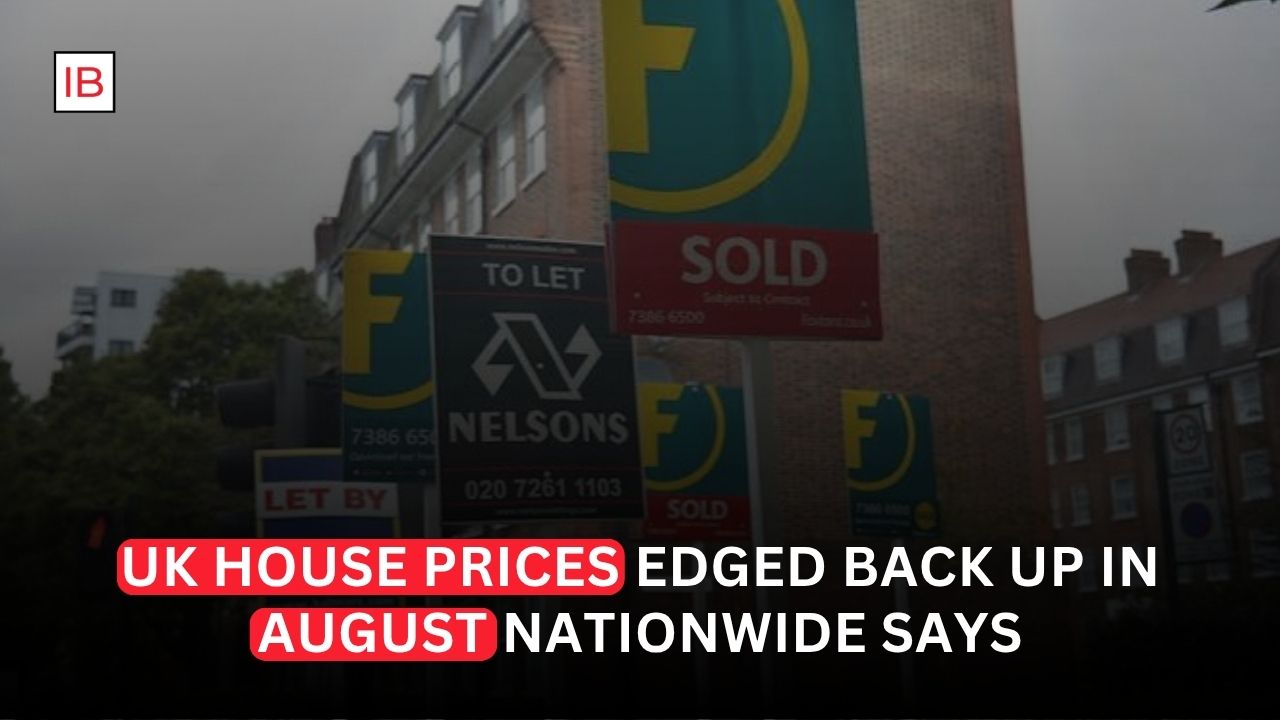
UK house prices edged higher in August, providing another sign that the housing market is stabilizing after a period of weak activity, although annual growth remained modest and affordability pressures continued to limit demand.
Nationwide Building Society said house prices increased 0.2% from July, following a 0.1% rise in the previous month. Prices were 1.6% higher than a year earlier, compared with annual growth of 1.8% in July. The monthly increase was slightly stronger than economists had expected, while the annual figure fell short of forecasts for 2% growth.
The figures point to a market that is neither collapsing nor returning to the rapid price growth seen during earlier periods of ultra-low borrowing costs. Instead, Britain’s housing sector appears to be moving sideways, with buyers and sellers adjusting to a higher-cost environment.
Price Growth Remains Modest
The 1.6% annual increase is relatively small compared with the double-digit gains recorded during parts of the pandemic-era housing boom.
That slowdown reflects the impact of mortgage costs, affordability constraints and cautious consumer sentiment.
While borrowing conditions have improved from their worst levels, many households are still facing substantially higher financing costs than they were accustomed to before the Bank of England began raising interest rates.
As a result, buyers have become more sensitive to property prices and monthly mortgage payments.
Mortgage Costs Remain Important
Interest rates remain one of the biggest influences on Britain’s housing market.
Even when official rates begin moving lower, mortgage rates do not necessarily fall immediately or uniformly.
Fixed-rate mortgage pricing depends on expectations for future interest rates, government bond yields and competition between lenders.
That means households can still face relatively expensive borrowing even when monetary policy is becoming less restrictive.
Higher mortgage payments reduce the amount buyers can afford to borrow.
That ultimately limits how much they are willing to pay for a home.
Buyers Are Still Cautious
The latest figures suggest that demand has not disappeared, but buyers remain selective.
Recent housing-market data have shown relatively weak transaction activity during the summer.
Zoopla reported that the number of UK homes finding buyers in July was 9% lower than a year earlier, despite an unusually large supply of properties available for sale.
That combination is important.
More homes on the market normally give buyers greater choice.
But if transactions remain weak, sellers may have to become more flexible on price.
Autumn Could Bring More Activity
The summer housing market has been unusually quiet.
High mortgage rates, hot weather and other distractions have contributed to weaker buyer activity.
But there are signs that the market could become more active as autumn approaches.
Buyer searches were recently reported to be 7% higher than a year earlier, suggesting that potential purchasers may be returning to the market.
If that interest translates into completed transactions, housing activity could improve during the final months of the year.
That would provide a clearer indication of whether the market is beginning a sustainable recovery.
Supply Gives Buyers More Choice
One of the more important developments in the current market is the availability of properties.
Unlike during the pandemic housing boom, when buyers often faced intense competition for a limited number of homes, today’s buyers have more options.
That reduces the urgency to make offers quickly.
It also limits the ability of sellers to push prices substantially higher.
For homeowners who need to sell, realistic pricing has therefore become increasingly important.
Regional Differences Remain Significant
The national figure also hides major differences between regions.
Housing conditions in southern England remain considerably weaker than in some northern parts of the country.
High property prices in London and the South East make buyers particularly sensitive to mortgage costs.
Meanwhile, areas with lower average prices can remain more accessible to households facing the same borrowing conditions.
That regional divide has become one of the defining features of Britain’s post-pandemic housing market.
London Faces Greater Pressure
London remains one of the most challenging markets.
High prices mean that even relatively small changes in mortgage rates can have a large impact on affordability.
The capital has also faced weaker demand from buyers who can work remotely or are willing to relocate to less expensive areas.
Zoopla’s latest figures showed London prices falling 1% annually, while the South East was also experiencing a decline.
That contrasts with stronger performance in several regions outside southern England.
The North Continues to Perform Better
More affordable parts of Britain have generally shown greater resilience.
Lower property prices mean that mortgage payments represent a smaller absolute amount, allowing buyers to remain active even when interest rates are elevated.
This has helped maintain stronger price growth in parts of northern England and other regions where affordability is less stretched.
The result is a housing market increasingly divided between expensive southern markets and more resilient areas elsewhere.
Inflation Is Another Problem
Household budgets are also being squeezed by higher prices elsewhere in the economy.
UK shop-price inflation accelerated to 1.5% in August from 0.9% in July, according to data from the British Retail Consortium and NIQ.
Higher energy and food costs reduce the amount of income households have available for housing.
Even if mortgage rates stabilize, persistent living-cost pressures can prevent consumers from becoming significantly more confident.
That could keep housing demand subdued.
Energy Costs Could Complicate the Outlook
Energy prices have become another source of uncertainty.
Higher global energy costs can feed into household bills and broader inflation.
If inflation remains elevated, the Bank of England could have less room to reduce interest rates.
That would keep mortgage costs higher for longer.
The housing market is therefore indirectly exposed to developments far beyond the property sector.
The Bank of England Matters
Monetary policy remains central to the outlook.
Lower interest rates would gradually improve mortgage affordability and could encourage more buyers to enter the market.
But policymakers must balance housing affordability against broader inflation pressures.
If energy prices and other costs continue pushing inflation higher, the Bank of England may move more cautiously.
That would delay the full benefit of lower borrowing costs for homeowners.
House Prices Are Not Collapsing
The latest Nationwide data do not indicate a major housing downturn.
A 0.2% monthly increase means prices are still moving upward.
The 1.6% annual increase also confirms that the market remains broadly stable rather than experiencing a widespread decline.
But stability should not be confused with strength.
The weak annual growth rate shows that the housing market has lost much of its previous momentum.
Affordability Remains the Main Constraint
The fundamental issue is affordability.
House prices remain high relative to incomes in many parts of Britain.
Even when prices stop rising rapidly, buyers still need to finance large mortgages.
This limits the number of households capable of purchasing property at current prices.
It also means that sustained house-price growth will ultimately depend on income growth, lower mortgage costs or a combination of both.
First-Time Buyers Face a Difficult Choice
First-time buyers remain particularly exposed.
They generally have less accumulated housing wealth and therefore rely more heavily on mortgages.
A small increase in mortgage rates can significantly change monthly payments.
At the same time, saving for a deposit becomes harder when rents and living costs are high.
That creates a difficult combination of high upfront costs and expensive borrowing.
Sellers Must Adjust Expectations
The current environment is also challenging for sellers.
During the pandemic boom, homeowners could often expect multiple competing offers.
That is no longer the norm across much of Britain.
With buyers more cautious and supply relatively plentiful, sellers may need to price properties realistically.
Overpricing can result in homes remaining on the market for longer.
That can eventually force sellers to reduce asking prices.
National Parks Show the Wider Affordability Problem
Recent Nationwide research illustrates just how large Britain’s regional housing differences can be.
Homes inside UK national parks command an average 24% premium compared with properties outside them, while homes within five kilometers of a national park carry a 6% premium.
The New Forest is particularly expensive, with average property prices around £563,000.
The data demonstrate that demand for desirable locations can remain strong even when the broader housing market is subdued.
Transaction Volumes Matter More Than Headlines
House prices receive most of the attention, but transaction volumes may provide a better indication of market health.
If prices rise because only a small number of homes are changing hands, the headline increase may not represent broad-based strength.
A genuine recovery would ideally involve more mortgage approvals, completed sales and stronger buyer activity.
That is why the next few months will be important.
The Autumn Market Is the Next Test
September traditionally marks the beginning of a more active period for Britain’s housing market.
If buyers return after the quiet summer, transactions could increase.
That could provide sellers with greater confidence and potentially support modest price growth.
But if higher mortgage costs and weak household finances continue discouraging buyers, activity could remain subdued.
The difference will likely depend heavily on interest-rate expectations.
Investors Are Watching Mortgage Demand
Mortgage lending provides another important signal.
A sustained increase in mortgage approvals would indicate that households are becoming more willing to commit to purchases.
If approvals remain weak, house prices may struggle to accelerate even if the broader economy avoids recession.
The housing market ultimately depends on actual purchasing power.
The Economy Is Critical
House prices are closely connected to employment and wage growth.
A strong labor market gives households confidence that they can maintain mortgage payments.
Rising wages can also gradually improve affordability.
Conversely, a deterioration in employment would create significant downside risks.
Britain’s housing market therefore cannot be separated from the broader economic outlook.
A Soft Landing Is Possible
The latest data are consistent with a relatively mild housing-market adjustment.
Prices are rising slowly rather than collapsing.
Transactions are weak but could improve.
Mortgage costs remain elevated but are no longer rising at the pace seen during the initial monetary tightening cycle.
That combination could allow the market to stabilize without a major nationwide correction.
But Recovery Will Probably Be Slow
A rapid return to the housing boom of previous years looks unlikely.
Affordability constraints remain substantial, while households are dealing with higher living costs.
Even if interest rates decline, mortgage borrowers will gradually refinance rather than immediately experience a dramatic reduction in monthly payments.
That means housing-market improvement is likely to be gradual.
Conclusion
UK house prices increased 0.2% in August, according to Nationwide, taking annual growth to 1.6%.
The figures provide a mixed picture of Britain’s housing market.
On one hand, prices are still rising.
On the other, annual growth has slowed and buyer activity remains relatively weak.
The market is therefore better described as stable but subdued than as a strong recovery.
Mortgage costs remain the central constraint.
Although borrowing conditions have become less severe than during the peak of the rate-hiking cycle, households still face much higher financing costs than before the pandemic.
That has reduced purchasing power and made buyers more cautious.
Supply has also changed the balance of power.
There are more homes available for buyers than during the pandemic boom, giving purchasers greater choice and reducing the urgency to bid aggressively.
Recent data showed that the number of homes finding buyers in July was 9% below the previous year despite relatively high supply.
That suggests sellers cannot assume that rising prices will automatically attract buyers.
The regional picture is also important.
Southern England remains under pressure because of its high property prices and greater sensitivity to mortgage costs.
London prices were recently reported to be 1% lower than a year earlier, while the South East was also experiencing annual declines.
Less expensive regions have generally shown greater resilience.
The next major test will come during the autumn selling season.
There are early indications that buyer interest may be improving, with searches up 7% year on year.
If that translates into more transactions, the housing market could gain momentum.
But higher household costs remain a threat.
UK shop-price inflation accelerated to 1.5% in August, with higher energy and food costs putting additional pressure on household budgets.
Persistent inflation could also limit the Bank of England’s ability to reduce interest rates quickly.
For now, the most likely picture is one of gradual stabilization rather than another housing boom.
Prices are edging higher, but affordability remains stretched, transaction volumes are relatively weak and buyers continue to exercise caution.
The important question is not whether UK house prices are rising.
They are.
The question is whether the modest August increase represents the beginning of a sustained recovery or simply a temporary pause in a market that remains constrained by expensive mortgages and weak affordability.
The autumn data should provide a much clearer answer.