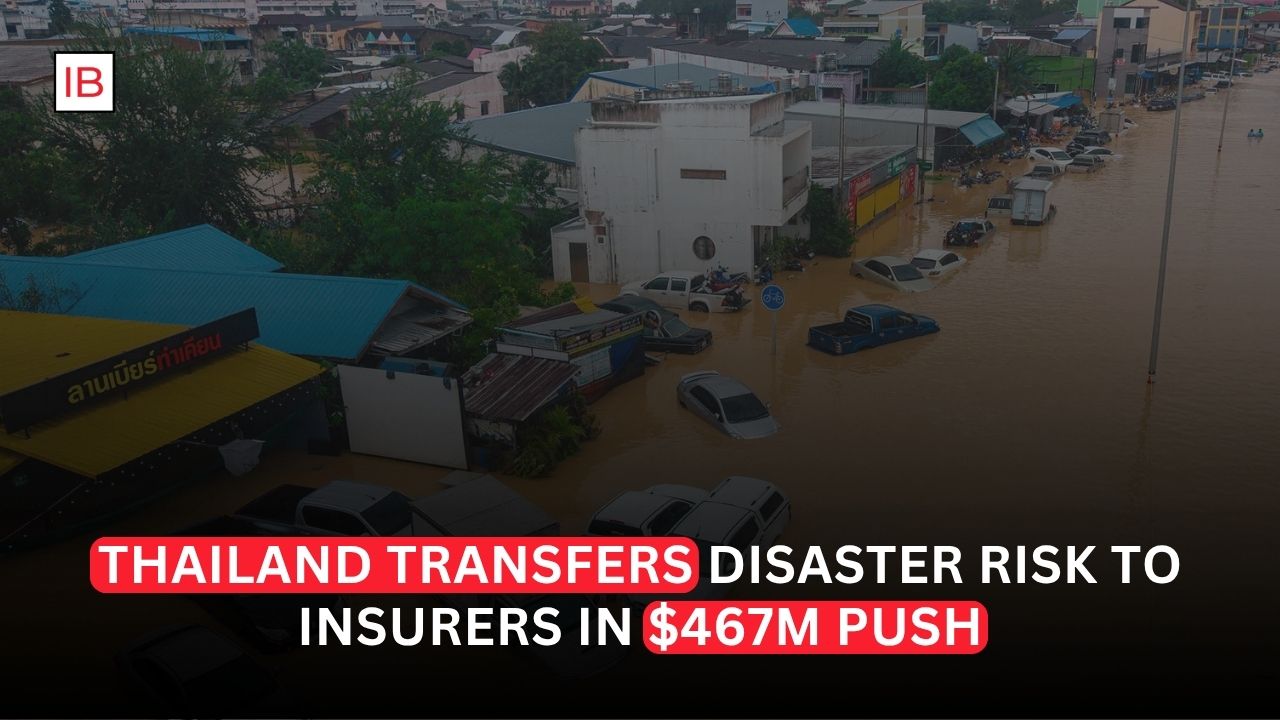
Thailand is preparing to transfer a larger share of the financial risk from natural disasters to private insurers under a $467 million plan designed to strengthen the country’s ability to deal with floods, storms and other climate-related emergencies.
The initiative reflects a growing problem across Asia: governments are facing increasingly expensive disasters while traditional public budgets are struggling to absorb the costs. By using insurance and other risk-transfer mechanisms, Thailand hopes to make disaster financing more predictable while reducing pressure on government finances.
The plan comes as climate-related risks become more difficult to ignore. Thailand has experienced severe flooding, storms and other disasters that can cause billions of dollars in economic losses. The government is therefore looking for ways to ensure that money is available quickly when major events occur rather than relying entirely on emergency budget allocations after a disaster.
Thailand Wants Insurers to Carry More Risk
The core idea behind the plan is relatively straightforward.
Instead of having the government bear most of the financial burden after a disaster, private insurers and international reinsurance markets would absorb a larger portion of potential losses.
The government would still provide support and maintain responsibility for emergency response.
But insurance would provide an additional financial layer.
That distinction matters because disaster recovery can place enormous pressure on public finances.
When governments have to rebuild infrastructure, compensate affected households and support businesses simultaneously, the fiscal impact can become substantial.
Insurance can help distribute those costs across a wider financial system.
The Plan Is Worth $467 Million
Thailand’s proposed program involves about $467 million in coverage and related disaster-risk financing.
The scale reflects the government’s attempt to move beyond conventional emergency relief.
Instead of waiting until a disaster occurs and then finding money to pay for recovery, authorities can arrange financing in advance.
That creates greater certainty.
If a predefined disaster event occurs, insurance or catastrophe-risk instruments can provide funds relatively quickly.
This approach is becoming increasingly common among countries exposed to climate risks.
Natural Disasters Are Becoming More Expensive
Thailand is highly exposed to natural disasters.
Flooding is one of the country’s most serious risks, particularly because large urban and industrial areas are located in flood-prone regions.
The devastating floods of 2011 demonstrated how quickly natural disasters can become economic crises.
The disaster disrupted factories, supply chains and businesses across Thailand and had consequences for global manufacturing.
Since then, authorities and companies have invested more heavily in flood defenses and disaster preparedness.
But physical protection alone cannot eliminate the financial risk.
Insurance provides another layer of protection.
Floods Are a Major Economic Threat
Flooding represents one of the biggest challenges for Thailand’s economy.
The country’s geography, monsoon climate and extensive river systems make many areas vulnerable to heavy rainfall and rising water levels.
Urban development can increase the problem.
As cities expand, more land becomes covered by roads, buildings and other impermeable surfaces.
That can make it harder for rainwater to drain naturally.
A severe flood can therefore cause damage to homes, businesses, roads and public infrastructure simultaneously.
Climate Change Adds Uncertainty
Climate change makes disaster planning more difficult.
It does not mean that every individual flood or storm is directly caused by climate change.
But changing weather patterns can alter the frequency, intensity or geographic distribution of extreme events.
That makes historical averages less reliable when governments estimate future losses.
Insurance markets face the same problem.
If disaster risks become harder to predict, premiums can rise and insurers may become less willing to provide coverage.
Thailand’s plan is partly an attempt to address that changing risk environment before private insurance becomes prohibitively expensive.
Why Risk Transfer Matters
Risk transfer means moving potential losses from one party to another.
In this case, Thailand is trying to shift part of the disaster burden from taxpayers toward insurers and reinsurers.
The government pays premiums or other costs in exchange for protection.
If a qualifying disaster occurs, the insurer pays according to the terms of the contract.
This does not eliminate economic losses.
It changes who bears them.
That can make government finances more resilient.
Public Budgets Are Under Pressure
Governments around the world are dealing with competing demands on public spending.
Thailand is no exception.
Authorities need to finance infrastructure, healthcare, education, social programs and economic development.
A major natural disaster can suddenly require billions of dollars in additional spending.
Without pre-arranged insurance, governments may have to borrow, cut other spending or divert funds from existing programs.
Risk-transfer mechanisms can reduce that uncertainty.
Insurance Can Provide Faster Funding
One advantage of insurance-based disaster financing is speed.
Traditional government assistance can take time because funds must be approved, allocated and distributed through bureaucratic processes.
Some forms of disaster insurance, particularly parametric insurance, can pay much faster.
Parametric policies are triggered when predefined conditions are met, such as a certain level of rainfall, wind speed or earthquake intensity.
The insurer does not necessarily need to assess every individual loss before making payment.
That can provide governments with rapid liquidity after a disaster.
Parametric Insurance Is Growing
Parametric insurance has become increasingly important in emerging markets facing climate risks.
Instead of calculating the exact value of every damaged building or business, the policy uses measurable physical indicators.
If the agreed threshold is reached, the payout is triggered.
This can dramatically shorten the time between a disaster and the arrival of funds.
The trade-off is that payouts may not perfectly match actual losses.
A disaster could trigger a payment even if damage is limited, or produce significant damage without meeting the policy’s specific threshold.
Designing the triggers correctly is therefore critical.
Reinsurers Play a Major Role
Private insurers do not necessarily carry the entire risk themselves.
They can transfer part of their exposure to global reinsurers.
Reinsurance allows insurers to spread catastrophic risks across international markets.
For a country like Thailand, this can provide access to a much larger pool of capital than the domestic insurance sector could provide alone.
Global reinsurers already have extensive experience pricing natural-disaster risks.
But they are also becoming more cautious as climate-related losses increase.
Insurance Costs Could Rise
The biggest weakness in the strategy is cost.
Insurance only works if coverage remains affordable.
As climate risks increase, insurers may raise premiums or reduce the amount of coverage they are willing to provide.
That can make risk transfer increasingly expensive for governments.
Thailand therefore has to balance two objectives.
It wants to transfer more disaster risk without creating an insurance bill that becomes unsustainable.
The Private Sector Also Benefits
The program is not only about government finances.
Businesses can also benefit from a stronger disaster-risk financing system.
Thailand is an important manufacturing and export hub, with large industrial estates and complex supply chains.
Floods and storms can interrupt production and transportation.
Insurance can help companies recover faster after a disaster.
That can reduce the broader economic impact.
Supply Chains Are Vulnerable
The 2011 floods demonstrated the vulnerability of global supply chains to disruptions in Thailand.
Factories producing automobiles, electronics and industrial components were affected.
The consequences spread beyond Thailand because international companies depended on components manufactured there.
A stronger disaster-financing framework could therefore have benefits beyond the country’s borders.
Faster recovery means less disruption to global production networks.
Infrastructure Is Especially Important
Public infrastructure represents another major source of disaster losses.
Roads, bridges, railways, drainage systems and public buildings can require extensive repairs after floods or storms.
Governments often have to finance those repairs directly.
Insurance and risk-transfer mechanisms can provide additional funding.
That becomes increasingly valuable as infrastructure investment grows.
Cities Face Growing Exposure
Urbanization is increasing Thailand’s exposure to concentrated losses.
More people and economic activity are being concentrated in cities.
When a disaster hits a densely populated urban area, the financial consequences can be much larger than in sparsely populated regions.
Urban flood management is therefore becoming a central part of disaster planning.
Insurance can complement physical infrastructure such as drainage systems and flood barriers.
Insurance Is Not a Substitute for Prevention
There is an important limitation.
Insurance cannot replace disaster prevention.
If the government relies too heavily on insurance, it could reduce incentives to invest in flood defenses, resilient infrastructure and better land-use planning.
The best approach combines risk reduction with risk transfer.
Physical measures reduce the probability and severity of losses.
Insurance provides financial protection when those measures are insufficient.
Moral Hazard Is a Risk
Another concern is moral hazard.
If governments or businesses know that insurers will cover losses, they may have less incentive to reduce exposure.
That can lead to underinvestment in resilience.
Insurance contracts therefore often include conditions or pricing mechanisms designed to encourage better risk management.
Thailand will need to ensure that its new framework does not simply socialize prevention while privatizing losses.
Small Businesses Need Protection
Large companies are generally better equipped to purchase insurance.
Small and medium-sized businesses can be more vulnerable.
They may struggle to afford premiums or understand complex insurance products.
Yet small businesses can suffer disproportionately after floods because they often have limited cash reserves.
A national disaster-risk strategy will need to consider how smaller firms can access coverage.
Households Are Also Exposed
The same issue applies to households.
Low-income families may be least able to afford insurance but most vulnerable to disasters.
If insurance becomes the primary mechanism for recovery, people without coverage could be left behind.
Government assistance will therefore remain necessary.
The challenge is creating a system in which insurance complements public support rather than replacing it entirely.
Thailand Is Following a Wider Trend
Thailand’s plan is part of a broader international movement toward disaster-risk financing.
Governments from developing countries to advanced economies are experimenting with catastrophe bonds, parametric insurance and other financial instruments.
The motivation is increasingly similar everywhere.
Climate-related disasters are expensive, unpredictable and difficult to finance through annual budgets alone.
Pre-arranged financial protection can provide greater stability.
Catastrophe Bonds Could Become More Important
One potential tool is the catastrophe bond market.
Catastrophe bonds allow investors to earn returns in exchange for taking on defined disaster risks.
If a qualifying disaster occurs, some or all of the investors’ principal can be used to fund recovery.
If the event does not occur, investors receive their expected return.
This creates a direct connection between capital markets and disaster financing.
Investors Are Taking More Climate Risk
For investors, catastrophe-related instruments offer a way to diversify portfolios.
Natural disasters are generally not strongly correlated with traditional financial-market movements.
That makes catastrophe risk potentially attractive to investors seeking alternative sources of return.
But investors must accept the possibility of substantial losses if a major disaster triggers the bond.
Global Reinsurance Capacity Is Limited
The availability of international reinsurance is not unlimited.
After years of major catastrophe losses, reinsurers have become more disciplined about pricing risk.
That means countries seeking large amounts of coverage may face higher premiums.
Thailand’s ability to secure affordable coverage will depend partly on how global reinsurance markets view Southeast Asian disaster risks.
Better Data Could Lower Costs
Accurate data can make insurance more affordable.
Insurers need reliable information about rainfall, flooding, property values, infrastructure and historical losses.
Better data allow companies to price risk more precisely.
Thailand’s growing investment in climate and disaster monitoring could therefore have financial benefits beyond emergency response.
Technology Can Improve Risk Assessment
Satellite imagery, weather forecasting and artificial intelligence can improve disaster-risk modeling.
Insurers can use these tools to identify vulnerable areas and estimate potential losses.
Governments can also use them to determine where infrastructure investments would have the greatest effect.
The combination of technology and financial risk transfer could become increasingly important.
The Fiscal Benefit Could Be Significant
The biggest potential advantage for Thailand is greater budget stability.
A major disaster can create sudden and unpredictable government expenses.
Pre-arranged insurance allows some of those costs to be planned in advance.
That can reduce the need for emergency borrowing.
It also allows governments to focus more quickly on reconstruction and public services.
But Coverage Gaps Matter
Insurance programs can create a false sense of security if coverage is incomplete.
Not every disaster will necessarily qualify for a payout.
Some policies exclude certain risks or have limits on total compensation.
The government must therefore understand exactly what risks have been transferred and which remain on its own balance sheet.
The Government Still Bears the Ultimate Risk
Even with a $467 million insurance program, Thailand will remain financially exposed to major disasters.
Insurance can cover only a defined portion of losses.
A catastrophic event could exceed policy limits.
The government would still need to provide emergency services and support uninsured households and businesses.
Risk transfer should therefore be viewed as one part of a broader financial strategy.
The Real Test Will Come During a Disaster
The effectiveness of the plan cannot be measured simply by the amount of insurance purchased.
The real test will come when a major disaster occurs.
The government will need to receive funds quickly, distribute them effectively and ensure that claims are honored according to the agreed terms.
If the system works, the benefits may become obvious only after a crisis.
If it fails, the weaknesses will become immediately visible.
Thailand Is Preparing for a More Expensive Future
The broader message is that natural disasters are increasingly being treated as financial risks rather than purely environmental events.
Floods and storms damage physical assets.
But they also disrupt economic activity, reduce government revenues and increase public spending.
That makes disaster resilience a financial-policy issue.
Thailand’s decision to involve insurers more deeply reflects that shift.
Conclusion
Thailand’s $467 million disaster-risk plan represents a significant effort to move part of the financial burden of natural disasters away from the government and toward private insurers and international risk markets.
The logic is straightforward.
Instead of relying entirely on emergency government spending after a flood, storm or other catastrophe, Thailand can arrange financial protection in advance.
That can provide faster access to cash, reduce pressure on public finances and help businesses and communities recover more quickly.
The need is becoming more urgent as Thailand faces substantial exposure to flooding and other extreme weather events.
The country’s experience with the devastating 2011 floods demonstrated how a natural disaster can quickly become an economic crisis, disrupting factories, supply chains and infrastructure.
Climate change adds another layer of uncertainty.
Even if individual disasters cannot automatically be attributed to climate change, changing weather patterns can make historical assumptions about future risks less reliable.
That creates problems for both governments and insurers.
Thailand’s approach therefore makes sense as a form of financial diversification, but it has clear limitations.
Insurance does not reduce physical damage.
It only determines who pays for part of that damage.
The government must still invest in flood defenses, drainage systems, resilient infrastructure and effective emergency response.
There is also a serious affordability problem.
As insurers face increasing catastrophe losses globally, premiums can rise and coverage can become harder to obtain.
Thailand will need to make sure that the cost of transferring risk does not become so high that the program itself creates a fiscal burden.
The distribution of coverage is another concern.
Large corporations can generally access sophisticated insurance products, while smaller businesses and low-income households may struggle to afford them.
If government support is reduced too aggressively, the people least able to protect themselves could become more vulnerable.
The best outcome would therefore be a layered system.
Physical investment should reduce the likelihood of disaster losses.
Insurance should transfer part of the remaining financial risk.
Government reserves and emergency spending should cover losses that exceed insurance limits or fall outside policy terms.
That combination would give Thailand greater resilience without pretending that insurance can solve the underlying climate and infrastructure problems.
For investors and insurers, Thailand’s plan also illustrates a growing global market for disaster-risk financing.
As governments face more expensive extreme-weather events, insurance, reinsurance and catastrophe-linked securities are likely to become increasingly important.
Thailand is effectively trying to turn disaster risk into a manageable financial exposure.
Whether the $467 million program ultimately delivers value will depend on its pricing, coverage, speed of payouts and ability to reach the businesses and communities that need protection.
The real test will come when the next major disaster strikes.