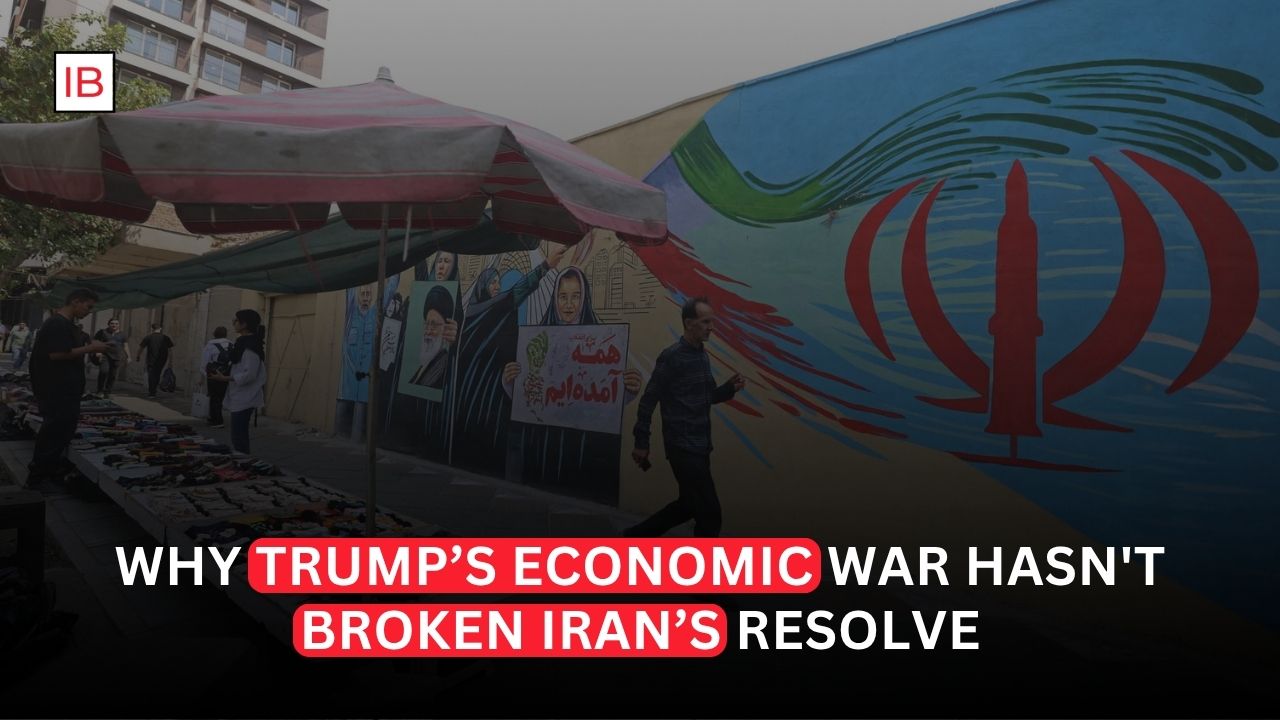
Iran’s economy is facing an extraordinary combination of military pressure, sanctions and disruption to trade, yet it has continued functioning despite expectations that the country’s economic system could buckle under the strain.
The resilience does not mean Iran is thriving. Inflation, shortages, damaged infrastructure and declining purchasing power are placing enormous pressure on households. But decades of sanctions have also forced businesses, consumers and the government to develop mechanisms for operating outside conventional global financial and trade networks.
That experience is now helping Iran absorb another major shock.
An Economy Built Around Sanctions
Iran has lived under extensive US sanctions for decades.
Restrictions have limited access to international banking, foreign investment, technology and major export markets.
Instead of eliminating economic activity, however, sanctions have pushed much of it into alternative channels.
Iranian companies have developed relationships with intermediaries, neighboring countries and informal financial networks.
The result is an economy that is less integrated with Western markets than it once was.
That makes sanctions painful, but it also means their ability to completely isolate Iran is limited.
Oil Remains the Critical Lifeline
Oil continues to provide one of Iran’s most important sources of foreign currency.
Despite US restrictions, Iranian crude has continued reaching international buyers through complex trading networks.
Shipments can involve intermediaries, changes in ownership, ship-to-ship transfers and other methods designed to obscure the origin of the cargo.
China has remained particularly important as a destination for Iranian oil.
The continued flow of petroleum revenue provides Tehran with money that can be used to fund imports and government spending.
China Is Central to Iran’s Trade
Iran’s economic relationship with China has become increasingly important as Western sanctions have tightened.
Chinese companies can provide markets for Iranian commodities while Chinese goods provide Iran with products that would otherwise be difficult to obtain.
This relationship does not completely replace Western investment or technology.
But it gives Iran an economic outlet.
As long as Tehran can continue selling commodities and receiving usable foreign currency or goods in return, a complete economic shutdown becomes much harder to achieve.
Informal Finance Keeps Money Moving
Traditional banking channels are one of the areas where sanctions have had the greatest impact.
Iranian banks have limited access to the global financial system, making international payments difficult.
Businesses have therefore relied on informal arrangements, intermediaries and alternative currencies.
These systems are less efficient and more expensive than conventional banking.
But they can keep commerce operating.
The existence of these networks also means that additional sanctions do not necessarily produce proportional economic damage.
The Rial Has Absorbed the Shock
Iran’s currency has experienced enormous depreciation over the years.
The falling rial has reduced household purchasing power and increased the cost of imported goods.
But the exchange rate also performs another function.
A weaker currency makes Iranian exports cheaper in foreign-currency terms and encourages businesses to seek revenue outside the domestic market.
For households, however, the consequences are much harsher.
Imported food, medicine, machinery and consumer products become more expensive when the rial falls.
Inflation Is the Biggest Domestic Problem
High inflation remains one of Iran’s most damaging economic pressures.
Food and housing costs have risen rapidly, while wages have struggled to keep pace.
That has reduced real incomes and weakened living standards.
The government has attempted to cushion households through subsidies and other support programs.
But those measures are expensive and difficult to sustain indefinitely.
Inflation also creates a second problem: businesses have difficulty planning.
When prices change rapidly, companies struggle to determine costs, set prices and make long-term investment decisions.
The War Creates New Costs
Military conflict introduces another layer of economic damage.
Infrastructure can be destroyed.
Transport networks can be disrupted.
Factories can lose access to electricity, raw materials or workers.
The government must also redirect resources toward defense and emergency spending.
That means money that might otherwise support economic development is consumed by the immediate requirements of war.
Blockades Increase Pressure
Restrictions on shipping and trade can be particularly damaging for an economy that depends on imports.
Iran needs foreign machinery, industrial components, technology and consumer goods.
If ships face greater risks or restrictions, freight costs increase.
Insurance can become more expensive or unavailable.
Importers then have to use longer routes and additional intermediaries.
Those costs eventually reach consumers.
Iran Has Experience With Economic Isolation
One reason the economy has not collapsed is that Iran has experienced sanctions for so long.
Companies have learned how to operate in an environment where international payments are difficult and foreign investment is limited.
Government institutions have also built systems around managing scarce foreign currency.
This is very different from an economy suddenly cut off from global markets.
Iran has already adapted many parts of its economic system to permanent external pressure.
Domestic Production Has Increased
Sanctions have also encouraged Iran to produce more goods domestically.
The government has promoted local manufacturing in sectors ranging from automobiles and machinery to pharmaceuticals and food.
Domestic production is not always competitive with imported alternatives.
Quality can vary, and manufacturers often struggle to obtain advanced components.
But producing something domestically can still be preferable to being unable to import it.
Smuggling Is Part of the Economic System
Cross-border trade and smuggling networks have become an important feature of Iran’s sanctions economy.
Goods can enter through neighboring countries and informal border routes.
This is costly and creates opportunities for corruption.
But it also provides consumers and businesses with access to products that formal trade channels cannot supply.
The same networks can operate in reverse, helping Iranian exports reach foreign markets.
Neighboring Countries Are Important
Iran’s geography gives it an advantage.
The country borders several states and sits near major regional trade routes.
Turkey, Iraq, the Gulf states, Central Asia and the Caucasus provide potential commercial links.
Even when formal trade is restricted, geographic proximity makes economic interaction difficult to eliminate completely.
Small businesses can exploit differences in regulations and prices across borders.
Energy Gives Iran Leverage
Iran has enormous oil and natural-gas resources.
Its energy reserves provide long-term economic potential even when sanctions limit investment.
The problem is that producing those resources efficiently requires technology and capital.
Sanctions restrict access to both.
Iran can continue producing energy, but its industry often operates below its potential.
That represents a major opportunity cost.
The Government Controls a Large Part of the Economy
Iran’s state-linked institutions play a major role in economic activity.
Government companies, foundations and other organizations control significant assets.
This gives the state mechanisms for directing resources during crises.
It can prioritize essential industries, allocate foreign currency and provide support to strategically important companies.
But heavy state involvement also reduces competition and can discourage private investment.
War Could Change the Equation
The current resilience should not be mistaken for unlimited capacity.
A prolonged conflict could produce much greater damage.
The economy can adapt to sanctions.
It is harder to adapt to sustained destruction of infrastructure, energy facilities, transport networks and industrial capacity.
The distinction is important.
Sanctions create inefficiency.
Physical destruction can eliminate productive capacity altogether.
Foreign Currency Is the Constraint
Ultimately, Iran’s ability to endure depends heavily on its access to foreign currency.
The country needs dollars, yuan and other usable currencies to pay for imports.
Oil exports provide one major source.
Non-oil exports provide another.
If those revenues fall sharply, Iran’s ability to import essential goods would weaken quickly.
That could create shortages and accelerate inflation.
The Private Sector Bears Much of the Cost
Iranian private businesses have to operate in an extremely difficult environment.
They face unstable exchange rates, expensive financing, import restrictions and unpredictable government policies.
Yet many businesses continue operating because there are few alternatives.
Entrepreneurs have developed sophisticated workarounds for sanctions.
Those adaptations keep economic activity alive, but they also make the economy less efficient.
Young Iranians Face a Difficult Future
The long-term economic consequences are especially serious for younger generations.
High inflation makes saving difficult.
Limited foreign investment restricts the creation of high-productivity jobs.
Restrictions on international business reduce opportunities for technology transfer.
Many educated Iranians have sought opportunities abroad.
That brain drain reduces the country’s future growth potential.
Sanctions Have Not Achieved Economic Collapse
The experience of Iran demonstrates a broader limitation of sanctions.
Economic pressure can weaken a country without necessarily forcing political capitulation.
If a government has access to natural resources, neighboring trade partners and alternative financial networks, it can often survive for much longer than expected.
The cost, however, is borne heavily by ordinary people.
The US Faces a Difficult Policy Choice
Washington’s objective is to pressure Tehran without allowing Iran to build an increasingly resilient sanctions economy.
That is difficult.
Tighter enforcement can reduce Iran’s oil revenues, but it can also push more trade into opaque channels.
Secondary sanctions can deter companies from dealing with Iran, but determined intermediaries may continue to find ways around restrictions.
The policy therefore becomes a continuous contest between enforcement and adaptation.
The Global Economy Still Matters
Iran is not completely isolated.
Its economic links with China, regional neighbors and commodity markets remain significant.
As long as Iran can participate in parts of the global economy, it can generate income.
The country does not need full integration to survive.
It needs only enough access to markets to keep essential trade functioning.
The Resilience Has a Price
Iran’s ability to endure pressure should not be confused with economic health.
A country can continue functioning while its citizens become poorer.
Businesses can keep trading while investment collapses.
Government revenues can survive while infrastructure deteriorates.
This is the central contradiction in Iran’s economy.
Its resilience demonstrates that sanctions have not produced collapse.
But the same resilience is built on increasingly costly adaptations.
Conclusion
Iran’s economy has demonstrated an ability to withstand pressure that would probably have overwhelmed a more internationally integrated system.
Decades of sanctions have forced Iranian companies, banks and government institutions to develop alternative ways of trading, financing imports and generating foreign currency.
Oil remains central to that survival, with China providing an important outlet for Iranian crude.
Regional trade routes, informal financial networks and domestic production provide additional support.
But resilience does not mean prosperity.
The rial has lost enormous value, inflation has eroded household purchasing power and businesses face serious obstacles obtaining technology and foreign investment.
The economic costs are particularly visible among ordinary consumers, who face rising prices and declining real incomes.
The new challenge is the war itself.
Sanctions can be absorbed through workarounds and alternative trade networks.
Physical destruction is different.
If conflict damages energy infrastructure, factories, transport networks or electricity systems, Iran cannot simply bypass those losses through informal finance.
That is why the duration and intensity of the conflict could become more important than the sanctions themselves.
Iran also remains dependent on foreign-currency earnings.
As long as oil and other exports generate enough revenue to pay for essential imports, Tehran can keep the economy functioning.
If those revenues collapse, shortages and inflation could intensify rapidly.
The experience of the past decade nevertheless demonstrates that economic isolation has limits.
Iran has built an economy designed to survive under pressure rather than one designed for maximum efficiency.
That distinction explains both its resilience and its weakness.
The country has developed enough economic flexibility to avoid collapse, but the price has been lower investment, weaker productivity, persistent inflation and reduced living standards.
For the Trump administration, that creates a difficult strategic problem.
Increasing pressure may hurt Iran’s economy, but it may not produce the rapid political or economic breakdown that sanctions are sometimes expected to deliver.
Iran has spent years learning how to survive isolation.
The question now is whether those adaptations are strong enough to withstand the additional shock of prolonged war and disruption to its trade and energy infrastructure.