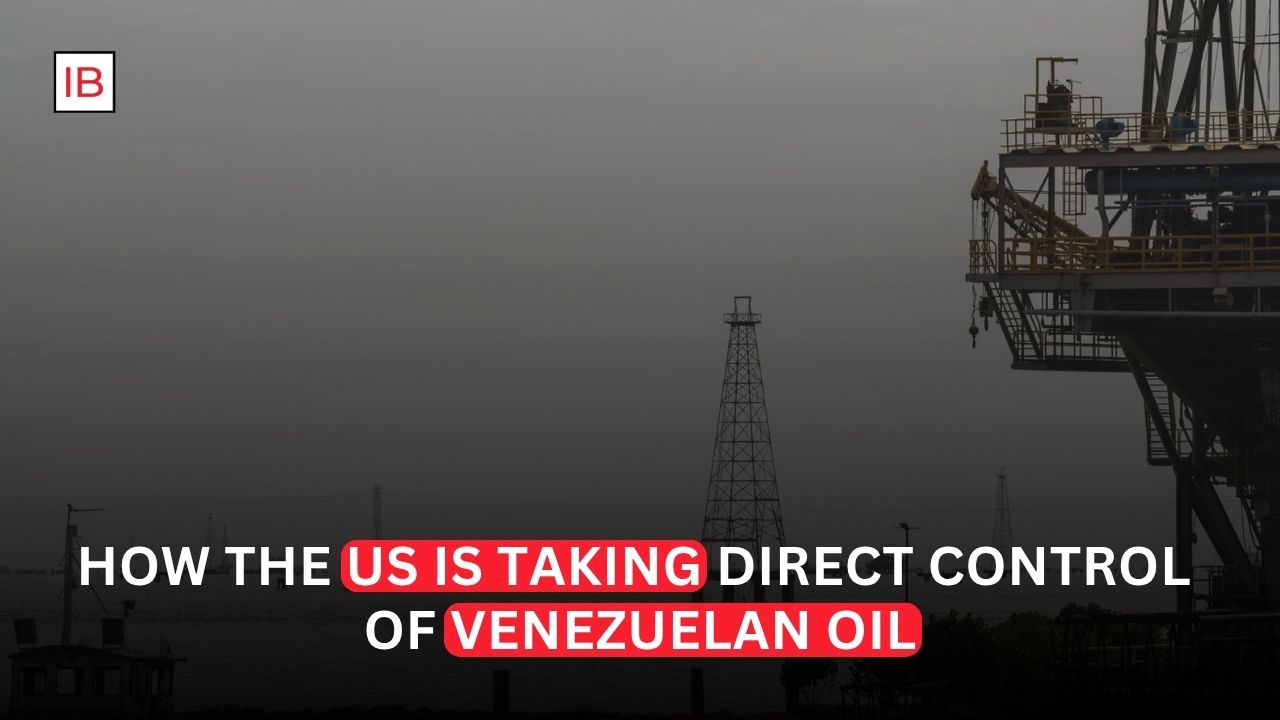
President Donald Trump’s new oil agreement with Venezuela gives the United States an unusually powerful role in managing and benefiting from one of the world’s largest petroleum reserves. The deal, announced by the administration as a major step toward American energy dominance, gives US interests significant control over more than 65 billion barrels of Venezuela’s proven reserves and could reshape the country’s oil industry for decades.
Under the agreement, Venezuela’s interim authorities have granted North American Blue Energy Partners, or NABEP, 100-year concessions covering 17 oil fields. The fields hold approximately 65 billion barrels of proven reserves, and several were previously operated or controlled by Chinese and Russian companies. The White House says the arrangement gives the US government governance rights, economic ownership and guaranteed access to oil at low cost.
The structure is unusual because the US government is not simply encouraging American oil companies to invest in Venezuela. Instead, Washington is gaining direct influence through a new private Venezuelan oil company. The Pentagon’s Office of Strategic Capital is expected to hold a 35% stake in the venture, while the United States is guaranteed 20% of its oil output at cost. The administration says the arrangement comes without a direct cost to US taxpayers.
Trump has presented the agreement as a way to secure American energy supplies, increase Venezuelan production and eventually lower fuel prices for US consumers. Venezuela has the world’s largest proven oil reserves, but years of underinvestment, mismanagement, sanctions and deteriorating infrastructure have left production far below its historical peak. Current output is roughly 1.1 million to 1.2 million barrels a day, compared with more than 3 million barrels a day during the country’s strongest production periods.
The administration believes new investment can reverse that decline. US Energy Secretary Chris Wright said on Wednesday that Venezuela’s crude production could more than double in the coming years as international oil companies return to the country. Chevron, Eni, ONGC and other companies are expected to participate in new energy projects, potentially bringing billions of dollars into Venezuela’s damaged oil infrastructure.
For Washington, the agreement also has a geopolitical dimension. American control over Venezuelan oil reduces the influence previously enjoyed by China and Russia in parts of the industry. It could strengthen US access to heavy crude that is particularly relevant for American refineries configured to process Venezuelan-quality oil. Trump has also indicated that Venezuelan crude could help replenish the US Strategic Petroleum Reserve.
The deal, however, carries significant political and legal risks. Venezuela’s oil industry has historically been controlled by the state, and critics question whether the long-term concessions are compatible with Venezuelan law. The arrangement has also drawn scrutiny because NABEP is controlled by Venezuelan businessman Alejandro Betancourt, whose business history has attracted controversy.
Another concern is whether the agreement could actually deliver lower US gasoline prices quickly. Venezuela’s production infrastructure requires enormous investment, while its crude is heavy and often requires specialized refining capacity. Analysts therefore expect any substantial increase in production to take years rather than immediately affecting American fuel markets.
The arrangement could also create uncertainty for future Venezuelan governments. A 100-year concession represents an exceptionally long commitment, and future administrations could challenge agreements negotiated during the country’s current political transition. Opposition groups have already questioned whether the deal gives Washington too much influence over Venezuela’s natural resources.
For Venezuela, the potential benefits are substantial. The government expects the agreement to attract around $100 billion in private investment, create jobs and generate significant tax revenue. Increased production could provide the country with desperately needed foreign exchange and help rebuild infrastructure damaged during years of economic crisis.
Ultimately, Trump’s Venezuela oil agreement is more than a conventional energy investment. It gives the US a direct strategic role in a huge portion of Venezuela’s petroleum resources while attempting to replace Chinese and Russian influence with American capital and oversight. Its success will depend on whether investment can restore production without triggering legal disputes, political resistance or a backlash against perceived foreign control.