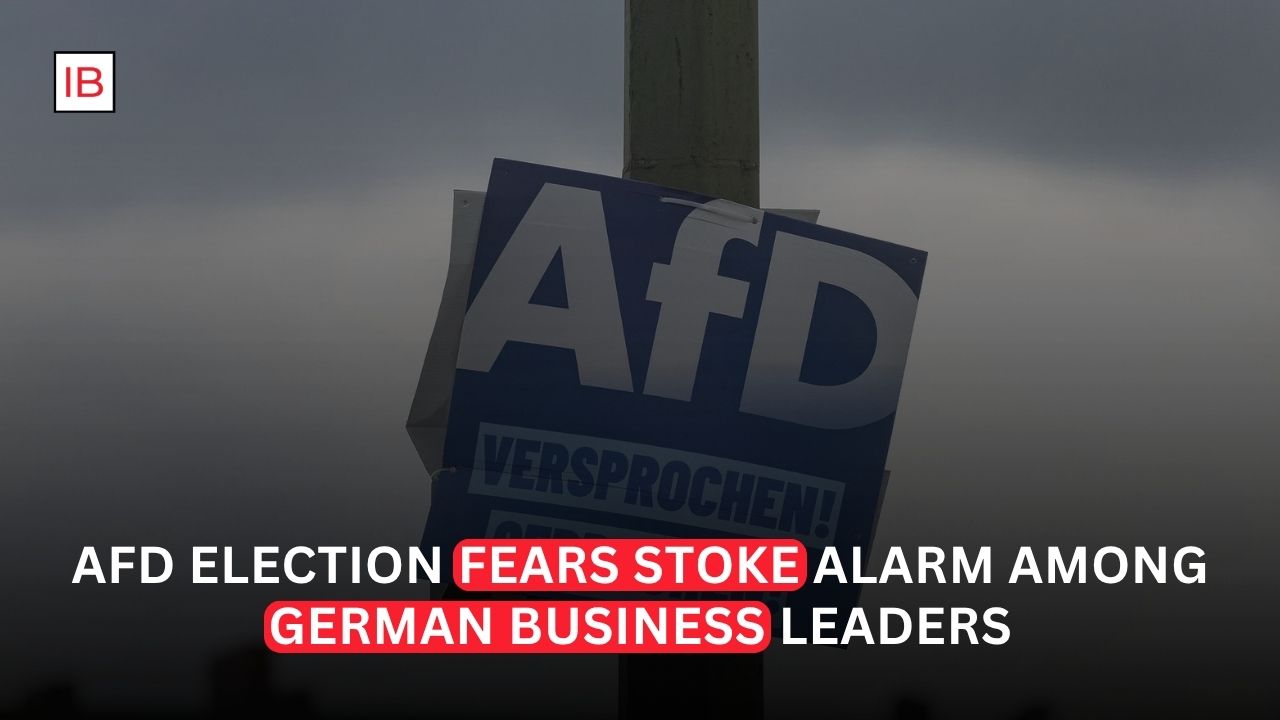
Germany’s business community is growing increasingly nervous about the political rise of the far-right Alternative for Germany, or AfD, as the party heads into a potentially historic state election in Saxony-Anhalt. Executives fear that an AfD victory could damage the region’s ability to attract investment, workers and companies at a time when Germany is already struggling with weak growth and structural economic problems.
The Sept. 6 election has drawn national attention because the AfD is leading by a wide margin in opinion polls. Recent surveys have placed the party above 40%, with the Christian Democratic Union, Chancellor Friedrich Merz’s party, trailing by roughly 20 percentage points. A strong enough AfD result could potentially give it an outright majority in the state parliament, allowing Germany’s far right to lead a state government for the first time in the postwar era.
For companies, the concern is not simply ideological. Saxony-Anhalt is already one of Germany’s economically weaker regions, with lower productivity and income than much of the western part of the country. Its population is also aging rapidly. The working-age population is projected to shrink substantially over the next decade, creating an increasingly urgent need for skilled workers and outside investment.
That demographic challenge puts the AfD’s restrictive approach to immigration under particular scrutiny. German companies across manufacturing, healthcare, logistics and services depend increasingly on workers from abroad. Business leaders worry that hostile rhetoric toward migrants could make eastern Germany less attractive to international workers and investors, deepening labor shortages instead of solving them.
The warning is not new. German business organizations have previously argued that the country needs immigration to offset demographic decline. Executives have also criticized AfD positions that they believe could undermine Germany’s integration into European markets and weaken its ability to compete internationally. Those concerns have become more immediate as the party’s electoral support has expanded beyond protest voting into a serious prospect of governing.
The AfD, meanwhile, presents itself as an economic alternative. Its campaign promises lower taxes, less bureaucracy, cheaper energy and policies designed to strengthen German industry. Party officials argue that conventional political parties have failed to address the frustrations caused by inflation, industrial decline and high energy costs.
Yet economists and business representatives question whether the party’s broader agenda would actually improve Germany’s competitiveness. Calls to reverse parts of the energy transition, restore closer economic links with Russia and sharply restrict immigration could create new risks for companies already adapting to geopolitical changes and a rapidly changing global energy market. The party’s state branch in Saxony-Anhalt has promoted a major reversal of current energy policies, including greater reliance on conventional power sources.
The political uncertainty comes at a difficult moment for Germany’s economy. The country has endured years of weak growth, while manufacturers face intense competition from China, high energy prices and rising costs. Business confidence has recently shown signs of improvement, but executives continue to demand faster reforms to taxation, regulation, infrastructure and labor markets.
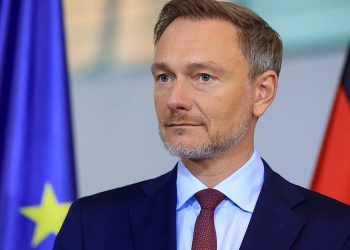
Merz has warned that an AfD-led government could make Saxony-Anhalt less attractive to foreign investors. His argument reflects a concern shared by many business executives: multinational companies making decisions about new factories or research facilities consider political stability, access to skilled labor and the broader investment environment alongside taxes and operating costs.
The potential election result therefore carries implications far beyond one eastern German state. If the AfD secures an outright majority, other parties would face renewed pressure to reconsider their strategy toward the far right. The result could also influence elections later in September in Berlin and Mecklenburg-Vorpommern, where the party is likewise performing strongly in polls.
For Germany’s business leaders, the central issue is whether the AfD’s popularity is a temporary expression of economic frustration or the beginning of a lasting political realignment. Either way, companies cannot ignore the trend. Germany needs investment, workers and technological competitiveness, and business leaders fear that political polarization could make all three harder to secure.
The Saxony-Anhalt vote will therefore be watched closely not only by politicians but also by corporate executives and international investors. A strong AfD performance could demonstrate that Germany’s economic debate is becoming inseparable from its political struggle over immigration, energy and national identity.