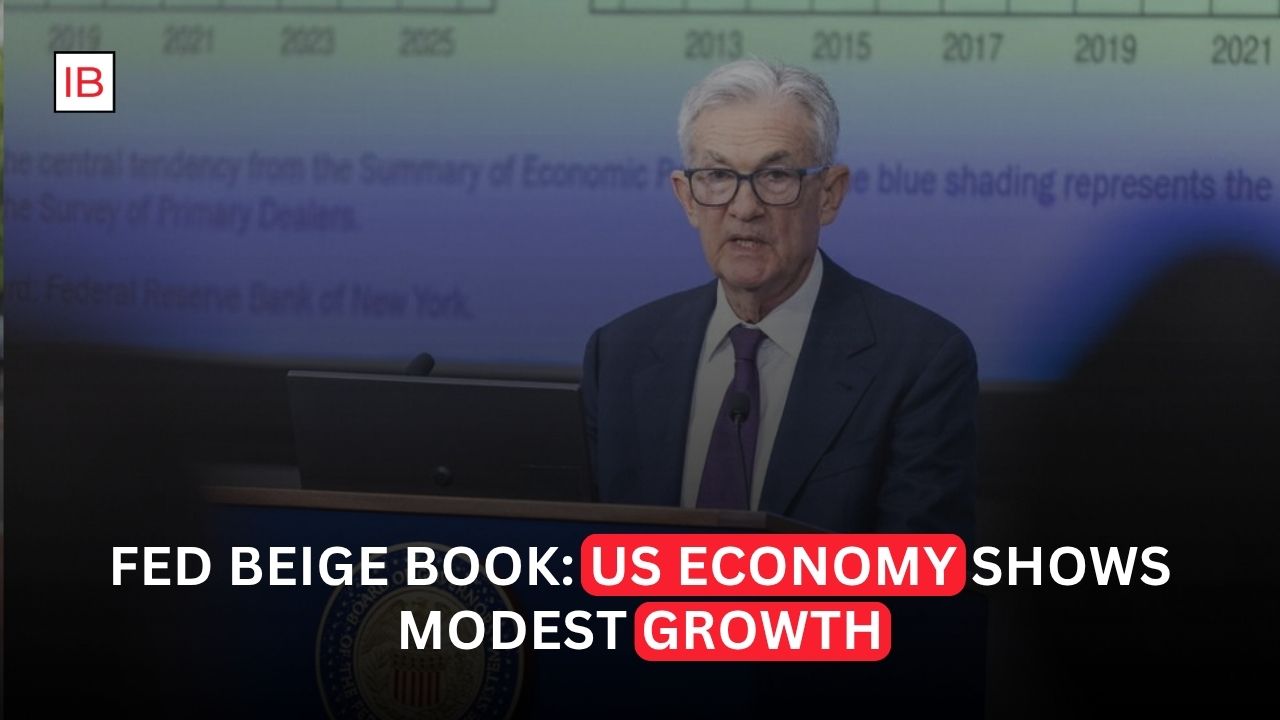
Growth Remains Uneven as Prices Continue to Rise. Economic activity across the United States increased modestly in recent weeks, according to the Federal Reserve’s latest Beige Book, with most of the central bank’s districts reporting growth despite continued concerns over inflation, energy costs and geopolitical uncertainty.
The report provides a snapshot of business conditions across the Federal Reserve’s 12 districts and is based on information gathered through August 24. The latest findings will be closely watched ahead of the Fed’s September policy meeting as officials weigh the outlook for inflation and interest rates.
Most Fed Districts Report Growth
Ten of the 12 Federal Reserve districts reported economic growth ranging from slight to moderate since early July, according to the report.
The remaining districts saw little change, suggesting that the US economy has continued to expand but at an uneven pace across different regions and industries. Business contacts also reported mixed expectations for the months ahead as uncertainty over energy prices, government policy and international conflicts continued to affect decision-making.
Employment Edges Higher
The Beige Book showed that employment increased slightly in recent weeks, although hiring conditions remained uneven across industries.
Some businesses reported difficulty finding workers with specialized skills, while others indicated that slower demand had reduced the need for additional hiring. The report suggests that the labor market is continuing to expand, but at a more measured pace than in stronger periods of economic growth.
Inflation Pressures Remain
Businesses across several regions continued to report higher costs, particularly for energy, transportation and raw materials.
Healthcare and insurance expenses also remained a concern for many companies. Prices rose at a moderate pace overall, although the rate of increase varied across different parts of the country.
Of the 12 Federal Reserve districts, three reported slower price increases, one reported faster inflation, while eight said there had been little change in the pace of price growth.
Energy Costs Add to Business Concerns
Higher energy prices have become an increasing source of uncertainty for businesses and consumers.
Companies in manufacturing and construction were among those reporting pressure from rising input costs, while transportation expenses also continued to affect operating budgets. The conflict in the Middle East and its impact on global energy markets have added another layer of uncertainty to the inflation outlook.
Business leaders said the combination of higher costs and uncertain economic conditions has made it more difficult to plan future investments and expansion.
Fed Faces Key Policy Decision
The latest Beige Book will be reviewed alongside upcoming employment and inflation data as Federal Reserve officials prepare for their September 15-16 meeting.
The central bank’s benchmark interest rate currently stands between 3.50% and 3.75%, with policymakers facing a difficult decision over whether further action is needed to control inflation without placing additional pressure on economic growth.
Markets have increasingly focused on the possibility of another rate increase as inflation concerns persist, particularly following higher energy prices and rising bond yields. However, weaker signs in the labor market could complicate the Fed’s decision.
Outlook Remains Mixed
For now, the Federal Reserve’s latest survey suggests that the US economy remains on a path of modest growth, but businesses continue to face pressure from higher costs and an uncertain global environment.
The report highlights the challenge facing policymakers: economic activity is still expanding, but inflation has not disappeared as a concern.
The coming weeks of employment and inflation data are likely to play a major role in determining how the Federal Reserve responds and whether policymakers decide that stronger action is needed to keep price pressures under control.