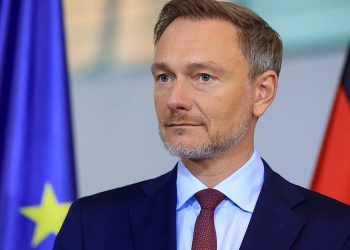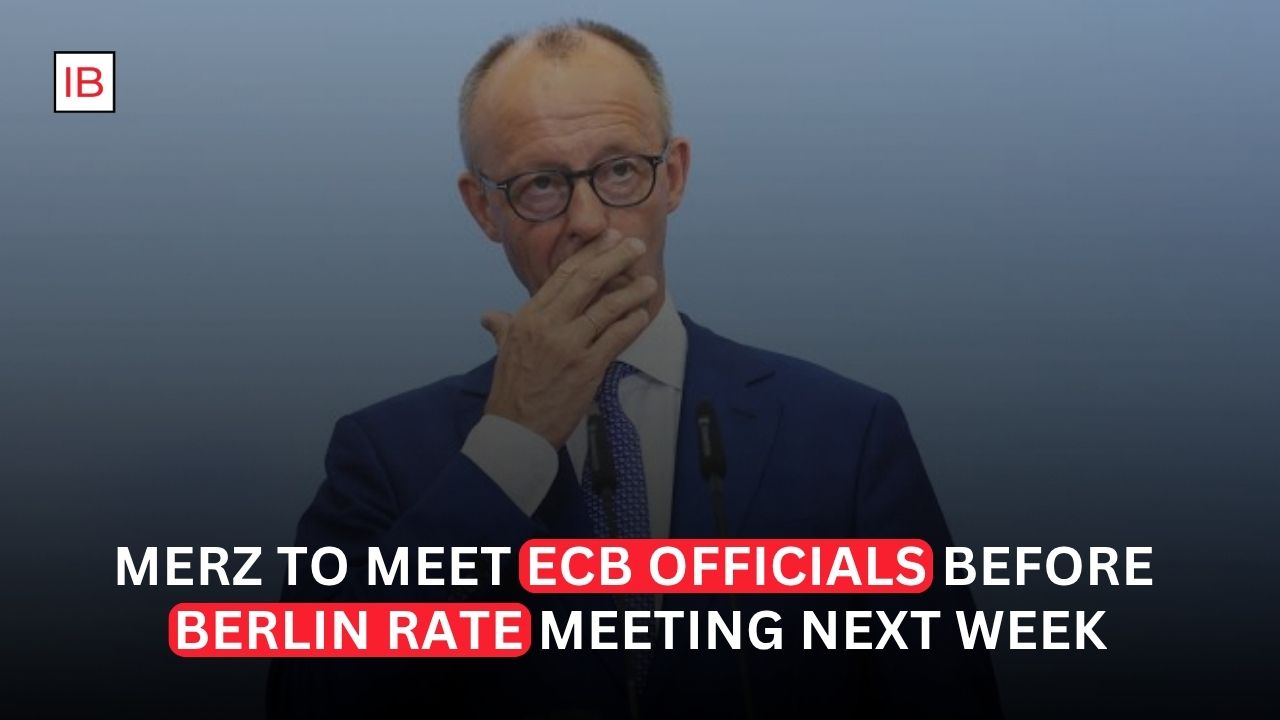
German Chancellor Friedrich Merz is expected to meet with European Central Bank officials ahead of next week’s closely watched monetary-policy meeting in Berlin, putting Germany’s economic outlook and the direction of interest rates firmly in focus.
The meetings come at a sensitive moment for Europe’s economy. Inflation across the euro area has accelerated, while energy costs remain elevated because of the continuing geopolitical crisis in the Middle East. At the same time, economic activity has proved more resilient than many analysts had anticipated, creating a difficult policy environment for European central bankers.
The European Central Bank is scheduled to hold its monetary-policy meeting in Berlin on September 9 and 10. The gathering is being hosted by Germany’s central bank, with the rate decision and press conference scheduled for the second day.
For Merz, discussions with ECB officials could provide an opportunity to exchange views on the economic challenges facing Germany, Europe’s largest economy, as policymakers consider whether borrowing costs need to rise again.
The central issue is inflation. Euro-area inflation increased to 3.3% in August, substantially above the ECB’s 2% target. Energy prices have been a major contributor to the increase, with the effects of the Middle East conflict feeding into fuel and other costs. Core inflation, which excludes food and energy, has been more subdued, falling slightly to 2.4%.
The inflation figures have strengthened expectations that policymakers could increase interest rates at next week’s meeting. The ECB previously raised its benchmark deposit rate to 2.25% in June before leaving rates unchanged at its July meeting. Officials have subsequently indicated that the pause should not necessarily be interpreted as the end of the tightening cycle.
A further increase of 0.25 percentage point would take the deposit rate to 2.50%. Such a move would represent another attempt to prevent higher energy costs from becoming embedded in broader inflation and wage expectations.
The economic backdrop, however, makes the decision less straightforward. Recent data have suggested that the euro-area economy is performing better than expected despite higher borrowing costs. Germany has also received a more optimistic assessment of its growth prospects. The German Institute for Economic Research recently raised its forecast for German economic growth in 2026 to 1.2%, more than double its earlier estimate of 0.5%. The institute attributed the improvement partly to stronger exports and public investment.
That resilience could give policymakers more room to prioritize inflation control. However, higher interest rates also increase financing costs for households, companies and governments. For Germany, where industrial activity and business investment remain important to the wider economy, the impact of tighter monetary policy will be closely watched.
Merz’s discussions with ECB officials therefore carry significance beyond the immediate question of interest rates. Germany has been trying to revive economic growth through infrastructure and defense investment, supported by major public spending plans. A stronger recovery could help Berlin manage higher borrowing costs, but prolonged monetary tightening could also weigh on private-sector investment and consumer demand.
Investors will be looking for clues about how policymakers view the balance between inflation and growth. Markets have increasingly priced in the possibility of another rate increase as inflation has moved further above target. Some policymakers have also argued that the central bank should remain prepared to raise rates further if inflationary pressures intensify.
The outcome of next week’s meeting could therefore influence borrowing costs, bond markets, the euro and expectations for economic policy across the region. A rate increase would signal that controlling inflation remains the ECB’s immediate priority, even as governments attempt to strengthen economic growth.
For Merz, the meetings provide a timely opportunity to discuss Germany’s economic priorities with European monetary policymakers. With inflation elevated, energy prices volatile and growth showing unexpected resilience, the discussions come at a moment when decisions taken in Berlin could have consequences well beyond Germany’s borders.
The September meeting is likely to establish the tone for the ECB’s policy direction during the final months of 2026. Investors and businesses will be watching closely for whether policymakers view the next rate increase as a limited response to current inflation pressures or the beginning of a longer period of tighter monetary policy.