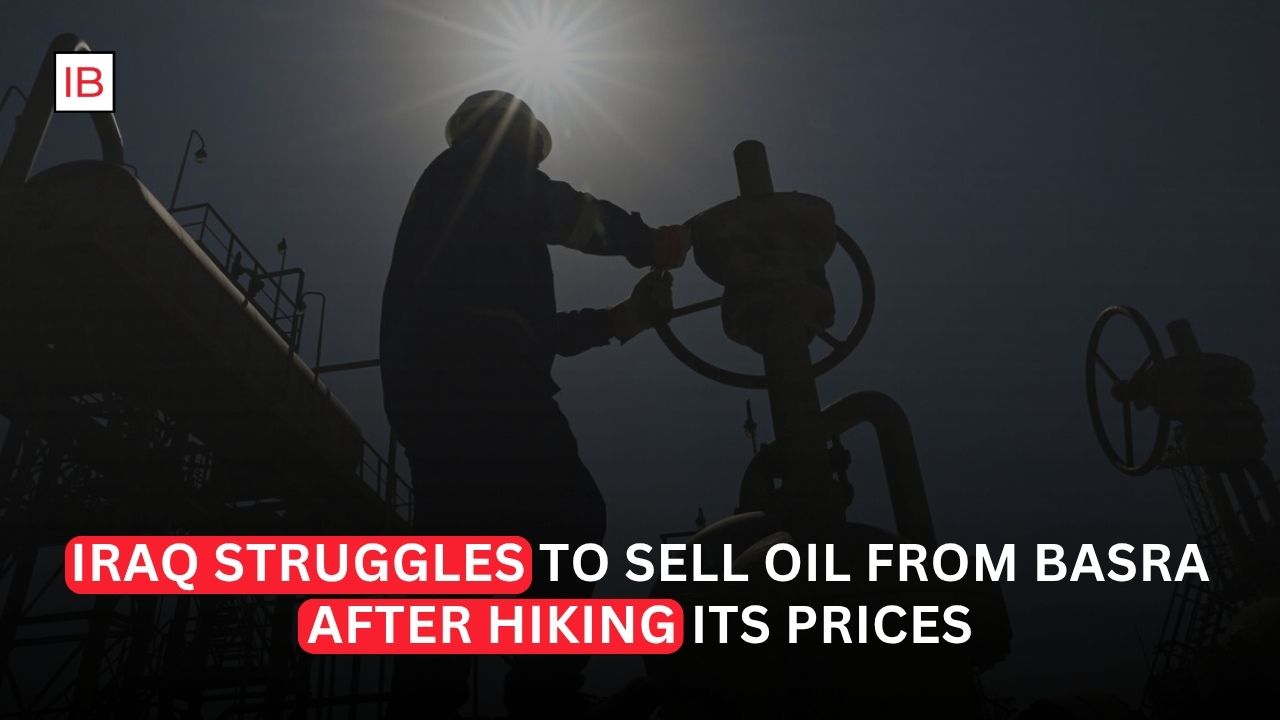
Iraq is struggling to attract buyers for its Basra crude after raising official selling prices, highlighting the difficult trade-off facing Baghdad as it tries to restore oil revenue while shipping through the Strait of Hormuz remains vulnerable to disruption.
The state-owned Iraq Oil Marketing Company, known as SOMO, raised its September official selling price for Basra Medium crude to Asian customers to a discount of $4 a barrel against the Oman-Dubai average, compared with a $6.50 discount in August. Basra Medium for Europe was priced at a $4.85 discount to Dated Brent.
The move represented a significant change from the unusually aggressive discounts Iraq had offered during the worst of the shipping disruption. In August, SOMO offered discounts of roughly $25 to $30 a barrel on some Basra cargoes in an effort to persuade traders and refiners to accept the additional risks and costs associated with moving Iraqi crude. Those discounts helped revive exports, but they also demonstrated how difficult it had become for Iraq to sell oil at normal market terms.
Iraq’s export problems are closely tied to the Strait of Hormuz, through which a substantial portion of its traditional seaborne crude exports must pass. The waterway has remained severely disrupted since the conflict involving Iran, Israel and the United States escalated earlier this year. Although some Iraqi tankers have been permitted to transit, shipping companies and buyers continue to face higher insurance costs, security risks and uncertainty over whether vessels will be able to complete their voyages.
The result has been a fragmented export system. Iraq has sought to use alternative routes and has explored ship-to-ship transfers outside the Persian Gulf, including arrangements near Oman. SOMO has also offered cargoes that can be collected beyond the Strait, reducing some of the risks for buyers.
The strategy helped Iraq sharply increase exports in August. Shipments rose to roughly 2.34 million barrels a day from about 1.35 million barrels a day in July, according to Reuters. Major buyers including PetroChina, TotalEnergies, Vitol, Trafigura and Mercuria took advantage of the discounts, while Chinese and Indian refiners returned to the market. But August’s exports were still well below Iraq’s pre-conflict level of more than 3.3 million barrels a day.
That recovery exposed the central problem facing Baghdad. Deep discounts can attract buyers, but they reduce the value of every barrel sold. Raising the official price improves the theoretical revenue per barrel, yet it risks driving buyers toward competing grades if the additional cost is not justified by quality or freight economics.
The challenge has become more complicated because global oil prices have risen sharply in recent days. Brent crude approached $100 a barrel on Monday, reaching about $97.47 as the US-Iran conflict intensified and attacks on tankers disrupted shipping through Hormuz. Traffic through the strategic waterway has fallen to its lowest level since May, increasing the premium attached to reliable barrels that can reach refiners without major logistical complications.
Basra crude itself has recovered substantially from its August lows. Basra Medium climbed above $85 a barrel in early September after falling below $60 during the first part of August, according to Iraqi Oil Ministry data. On Sept. 4, the grade reached $85.97.
For Iraq, however, a higher headline oil price does not automatically translate into stronger government finances. The country remains heavily dependent on crude exports to fund its budget, making the volume and netback from each shipment critical. Higher freight, insurance and handling costs can absorb much of the benefit of stronger global prices.
There is also a strategic question over whether Iraq can maintain production while its export infrastructure remains constrained. Producing oil that cannot be moved efficiently creates storage and operational problems, while cutting output reduces desperately needed government revenue.
The government therefore faces pressure to keep crude flowing even if that means accepting lower net prices. August demonstrated that substantial discounts can bring buyers back, but it also showed how much negotiating power can shift toward refiners and traders when transportation risks rise.
For international oil markets, Iraq’s difficulties are another indication of how the disruption around Hormuz has changed the economics of Middle Eastern crude. Supply may still exist underground and production capacity may remain available, but getting barrels from the wellhead to international customers has become the critical bottleneck.
Whether Iraq can sustain exports without returning to the steep discounts of August will depend largely on the security of shipping routes. If Hormuz traffic normalizes, Baghdad could regain more pricing power and move Basra crude through conventional channels. If disruptions persist, buyers are likely to demand compensation for the additional risks, leaving Iraq caught between maximizing the price per barrel and maximizing the number of barrels it can actually sell.