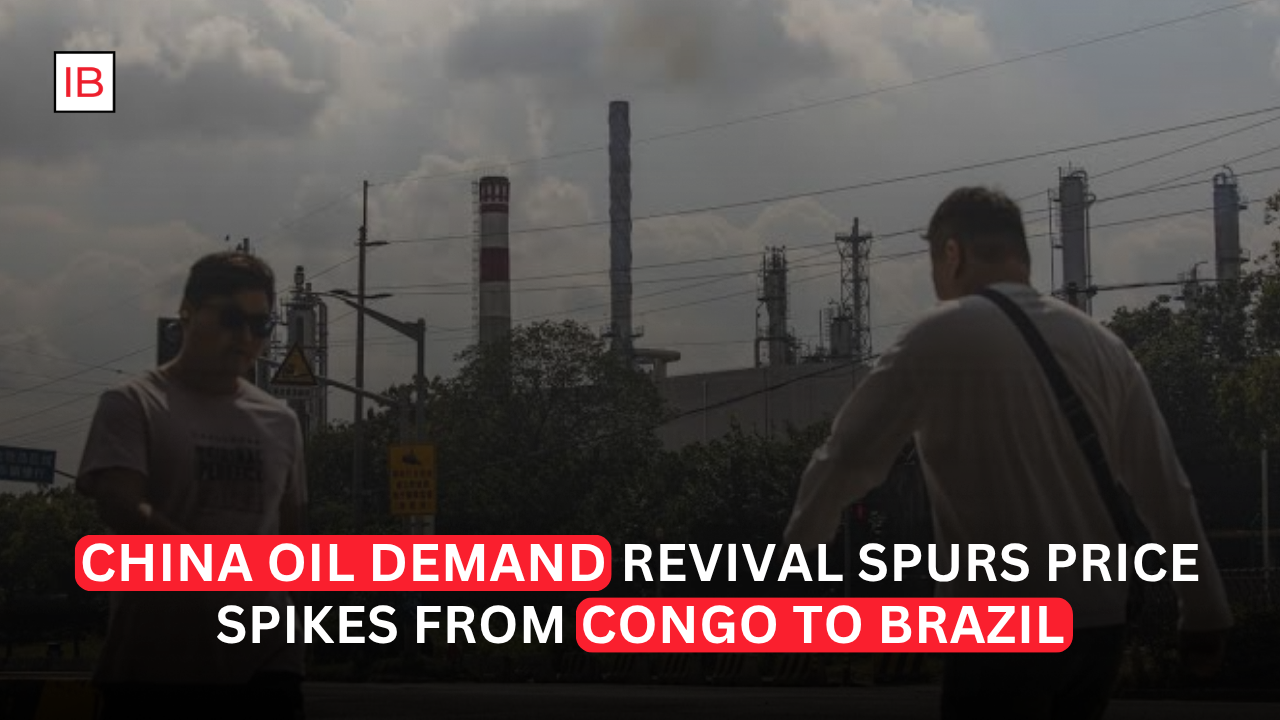
A shift in China’s oil-buying patterns is beginning to reshape crude markets far beyond Asia, with producers and traders from Africa to South America watching closely for signs that the world’s largest oil importer could return to the market more aggressively.
China’s crude demand has been one of the biggest uncertainties for the global oil market in 2026. Imports fell sharply during the disruption caused by the Iran war and restrictions around the Strait of Hormuz, while Chinese refiners drew on inventories and adjusted their purchases according to price and availability. Recent buying activity, however, has begun to create tighter conditions for some grades, producing price spikes in physical markets even as overall Chinese consumption remains under pressure.
The distinction is important. A broad-based recovery in Chinese oil demand has not yet been established. Reuters reported Monday that China’s seaborne crude imports rose modestly to about 7.14 million barrels a day in August from 6.93 million barrels a day in July, but remained roughly 40% below pre-Iran-conflict levels. At the same time, higher refined-fuel exports have encouraged some refiners to increase crude purchases, suggesting that individual buying programs can have an outsized effect on regional crude prices.
That effect is particularly visible in the Atlantic Basin, where Chinese refiners have historically been important buyers of crude from Brazil and West Africa. Brazilian crude has faced a difficult market in recent months as production has increased while Chinese spot demand weakened. S&P Global reported in July that delivered Tupi crude had fallen to a discount of $2.19 a barrel against Asian Dated Brent, its lowest level in more than six years. Chinese buyers had reduced purchases while favoring Middle Eastern supplies and other alternatives.
That weakness creates the potential for a sharp reversal whenever Chinese buying returns. Brazil has become an increasingly important supplier to China, with the country’s growing offshore production providing large volumes of medium-sweet crude. But because many Brazilian barrels travel long distances to reach Asian refineries, even relatively small changes in Chinese purchasing can alter freight economics, cargo availability and premiums.
The same dynamic applies to West African producers. Republic of Congo’s Djeno crude has historically attracted Chinese refiners because of its quality and suitability for Asian processing. Changes in Chinese procurement can therefore quickly affect the value of Congolese and neighboring West African grades. Earlier periods of weaker Chinese demand pushed Djeno differentials significantly lower, illustrating how dependent Atlantic Basin producers can be on the buying decisions of Asian refiners.
The current market is also being shaped by a much broader supply shock. Oil prices climbed sharply Monday as military tensions between the United States and Iran intensified, with Brent crude moving above $97 a barrel and WTI approaching $93. Reduced shipping through the Strait of Hormuz has restricted flows of Middle Eastern oil and raised concerns about further supply disruptions.
That backdrop makes Chinese purchasing even more important. If refiners increase imports while Middle Eastern supplies remain constrained, competition for Atlantic Basin crude could intensify rapidly. Brazil, Congo and other exporters could benefit from higher premiums as Asian buyers look for alternatives to disrupted Gulf supplies.
China has already demonstrated that it can redirect its procurement when market conditions change. Reuters reported that Sinopec has been increasing purchases of Russian crude, taking advantage of relatively attractive prices and strong domestic refining margins. The buying has tightened availability of some Russian grades and forced smaller Chinese refiners to consider more expensive alternatives from Brazil, Canada and Iraq.
Yet structural changes complicate the outlook. China’s oil consumption is increasingly being restrained by electric vehicles, electrification of heavy transport and weaker demand in some industrial sectors. CREA estimates that Chinese oil consumption fell 9% year over year in the second quarter, while the rapid growth of electric trucks and passenger EVs displaced substantial quantities of petroleum use.
The International Energy Agency has also warned that global oil demand could weaken in 2026, adding uncertainty over whether any Chinese recovery can generate a sustained global demand boom. Meanwhile, rising production outside OPEC+ and the possibility of restored Middle Eastern supply could eventually ease the market.
For now, however, traders are focused on the physical market. China does not need to return completely to its previous import levels to influence prices. A handful of large refinery purchases can tighten particular crude grades, raise premiums and redirect cargoes across continents.
That is why producers from Congo to Brazil are watching Beijing’s next moves so closely. If Chinese buying accelerates while geopolitical supply constraints persist, physical crude prices could rise well ahead of any clear recovery in China’s total oil consumption. Conversely, if refiners continue to rely on inventories, cheaper Russian barrels and alternative energy sources, the recent price spikes may prove temporary.
The central question for the oil market is therefore not simply whether China’s oil demand is recovering, but which barrels Chinese refiners choose to buy, when they buy them and how aggressively they compete for supply. Those decisions could determine pricing power for producers thousands of miles from China and set the tone for crude markets through the rest of 2026.