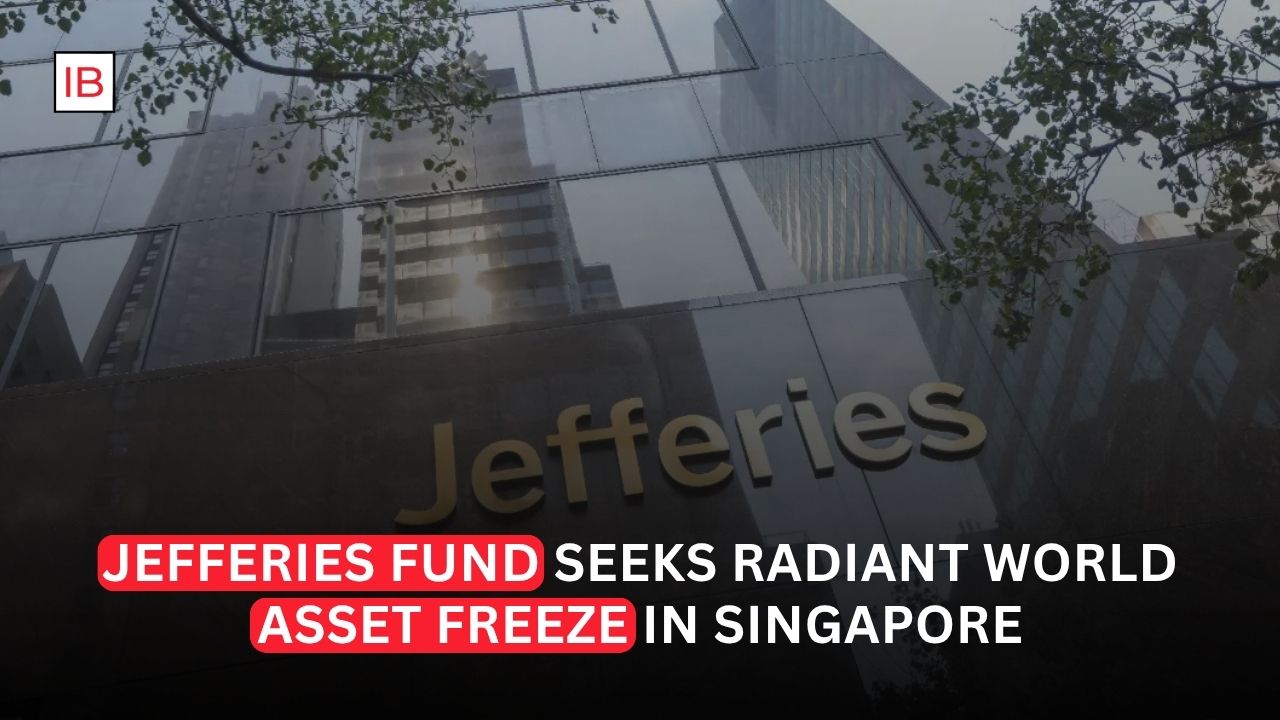
A trade-finance fund partly owned by Jefferies Financial Group has asked a Singapore court to freeze the assets of iron ore trader Radiant World and its founder, escalating a widening legal and financial crisis surrounding the commodities company. The application by LAM Trade Finance Group II was filed on Monday, according to Singapore Supreme Court records, and follows a similar freezing order obtained in London last week.
The Singapore filing adds another layer of pressure on Radiant World as banks, commodity traders and other counterparties increasingly restrict their dealings with the company. The trader has come under scrutiny over concerns that invoices and other documents provided to banks in connection with iron ore transactions may not have been valid. Radiant World has strongly denied wrongdoing, and the allegations have not resulted in a public finding of fraud against the company.
LAM Trade Finance Group II is linked to Jefferies through the bank’s asset-management operations, with Jefferies holding a minority stake in the fund. The fund previously secured a worldwide freezing order from London’s High Court against Radiant World, founder Pinkesh Nahar, Sapphire Minmetals and its chairman Rakesh Sethi. The London order was reported to cover as much as $499 million, highlighting the scale of the fund’s exposure.
The Singapore case is scheduled for a hearing on Wednesday. The application also names Sapphire Minmetals and Sethi, although Sethi has disputed claims that Sapphire and Radiant World are part of the same corporate group. Glencore Chief Executive Officer Gary Nagle has previously described the two businesses as connected, while the companies have maintained that they are separate.
The legal escalation follows a broader deterioration in Radiant World’s access to financing and commodity markets. Deutsche Bank and KBC Group have frozen some of the company’s Singapore accounts, while other lenders have suspended or restricted credit lines. Major miners including Rio Tinto and Vale have also stopped entering new transactions with the trader, according to earlier reports.
Other financial institutions have taken legal action as concerns over Radiant World’s financing arrangements spread. Mizuho Bank and trade-finance company Incomlend have pursued cases in Singapore, while Singapore police are investigating the company following multiple reports. Authorities have not publicly disclosed the details of that investigation, and an investigation itself does not establish wrongdoing.
The dispute is particularly significant for Jefferies because the Radiant World exposure comes after the bank’s asset-management business suffered major losses connected to the collapse of auto-parts supplier First Brands Group. Reports now put the Jefferies-linked fund’s exposure to Radiant World and related parties at nearly $500 million, substantially above the roughly $300 million exposure previously reported through the Point Bonita fund.
For Radiant World, the Singapore filing threatens to further constrain access to cash and working capital at a time when its relationships with banks and commodity counterparties are already under severe strain. Iron ore trading depends heavily on short-term financing, credit facilities and confidence among counterparties, meaning legal restrictions can quickly affect the ability to finance and settle physical cargoes even before allegations are resolved.
The case also illustrates the wider risks facing trade-finance funds that finance commodity transactions through invoices and other documentation. If lenders question the validity of underlying paperwork, they can face losses even when physical commodities or commercial relationships exist. That makes the ability to independently verify transactions central to the risk-management process.
The Singapore court proceedings will therefore be closely watched not only for their impact on Radiant World but also for what they reveal about the scale of Jefferies-linked exposure and the disputed transactions behind it. For now, the competing claims remain unresolved: creditors are seeking to protect potentially significant assets, while Radiant World and related parties have denied wrongdoing as legal and regulatory scrutiny continues.