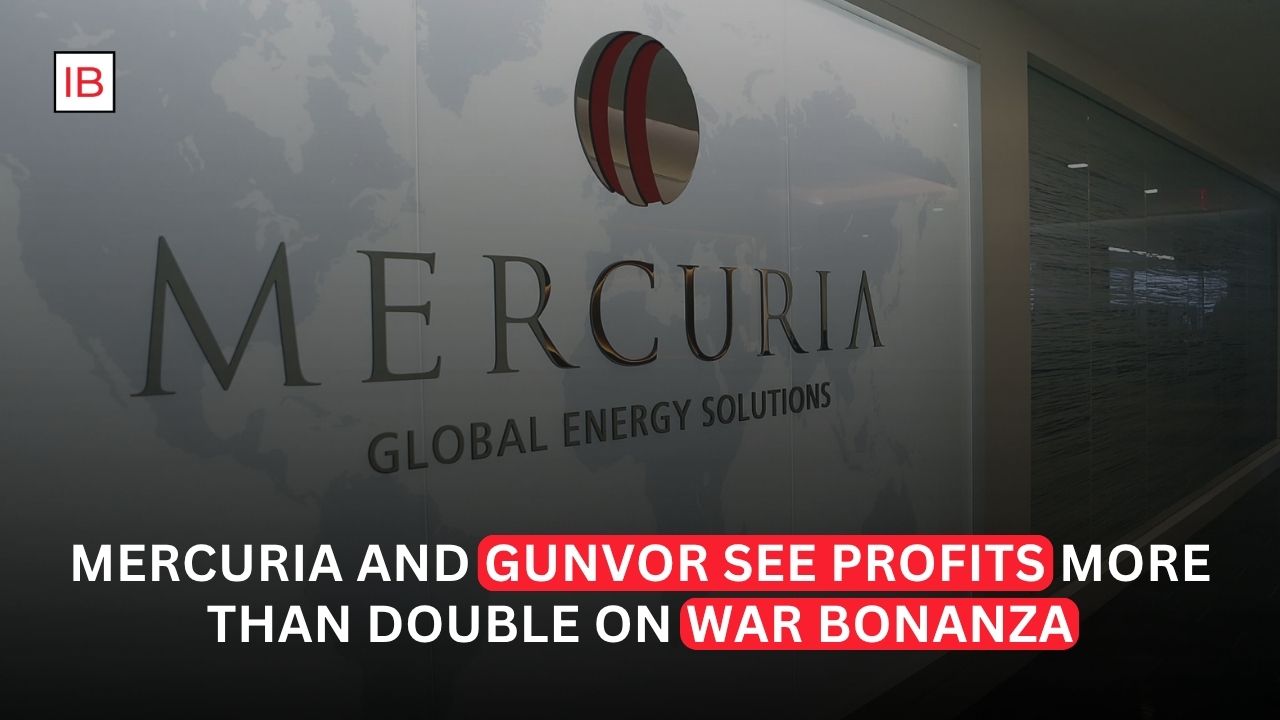
Mercuria and Gunvor are emerging as major beneficiaries of the extraordinary volatility created by war and disruption in global energy markets, with the Geneva-based commodity traders posting or anticipating sharply stronger earnings as oil, gas and power prices swing violently. The surge underscores how geopolitical crises can create enormous commercial opportunities for firms that specialize in moving commodities between regions, managing inventories and exploiting price differences.
The latest turmoil has been particularly intense following the escalation of the US-Iran conflict and disruption around the Strait of Hormuz, one of the world’s most important routes for oil and liquefied natural gas. Brent crude was trading around $97 a barrel on Monday, up about 35% from late February, as markets reacted to attacks, threats to shipping and uncertainty over future supplies. The volatility has also pushed up diesel and other refined-product prices, increasing the value of flexible trading strategies.
For commodity traders, rapidly changing prices can be more important than simply whether prices rise or fall. Trading houses such as Mercuria and Gunvor make money by identifying differences between markets, securing cargoes, storing commodities, arranging transportation and using financial contracts to hedge exposures. When markets become unusually fragmented, those opportunities can multiply because the physical movement of energy becomes more complicated and price spreads widen.
Gunvor’s recent results illustrate the dramatic change. The company reported $1.63 billion in gross profit for 2025, while its energy division — covering natural gas, liquefied natural gas and power — was its strongest-performing business. The company has also indicated that its first-quarter 2026 earnings were roughly equivalent to its entire 2025 gross profit, highlighting the extraordinary improvement in trading conditions during the early stages of the war-driven market disruption.
That performance comes despite a much weaker statutory net-profit figure for Gunvor in 2025. The company reported net income of just $104 million, down sharply from the previous year, partly reflecting costs and changes associated with its management buyout. The distinction is important because gross trading profit and net income measure very different things. The company’s underlying trading activity can therefore be exceptionally strong even when reported net earnings are affected by financing, corporate and restructuring expenses.
Mercuria has likewise entered 2026 with a strong earnings base. The company generated about $1.3 billion in profit in 2025, one of its best-ever annual performances, after major energy and commodity positions paid off. Earlier reporting had indicated that Mercuria expected earnings to stabilize at an annualized rate of roughly $1.5 billion to $2 billion, far above the levels the company achieved before the period of extreme commodity-market volatility that began with the pandemic and Russia’s invasion of Ukraine.
The current war has created another layer of opportunity. Oil flows have been disrupted, shipping routes have become more expensive and risky, and buyers have been forced to source barrels from alternative suppliers. Traders with access to storage, vessels, financing and established relationships can potentially profit from these dislocations by moving supplies toward markets where shortages have pushed prices higher.
Switzerland is already expecting to benefit from the resulting windfall. Geneva is one of the world’s most important commodity-trading centers, hosting major firms whose earnings and tax contributions rise when energy markets become more volatile. Swiss authorities have projected a significant increase in tax revenue linked to the exceptional profits generated by oil trading during the Iran conflict.
The boom also highlights a paradox for commodity traders. Their business model is designed to capitalize on market inefficiencies, but the most lucrative periods often occur when the underlying commodities markets are under the greatest stress. Wars, sanctions, supply interruptions and sudden changes in demand can create the price gaps that traders are best equipped to exploit. The same conditions, however, increase operational, credit, regulatory and reputational risks.
The experience of recent years has already encouraged large trading houses to diversify beyond traditional oil trading. Mercuria and Gunvor have expanded their activities into metals, power and other commodities, seeking to use their capital, logistics networks and market expertise across a broader range of supply chains. Their ability to generate substantial returns during periods of disruption has also allowed them to invest in physical assets and expand their trading infrastructure.
Whether today’s windfall becomes a sustained earnings boom will depend on how long extreme volatility lasts. If shipping through Hormuz normalizes and oil supplies stabilize, trading margins could narrow rapidly. But if the conflict continues to disrupt energy flows, traders with strong balance sheets and extensive physical networks could remain among the biggest corporate beneficiaries of the turmoil.
For Mercuria and Gunvor, the current environment demonstrates the central economic reality of commodity trading: instability itself can be an asset. While producers and consumers absorb the costs of higher prices and disrupted supply chains, trading houses can profit from the complexity created between them. As the Iran conflict continues to reshape global energy flows, that complexity is generating a new wave of extraordinary earnings for some of the world’s biggest private commodity merchants.