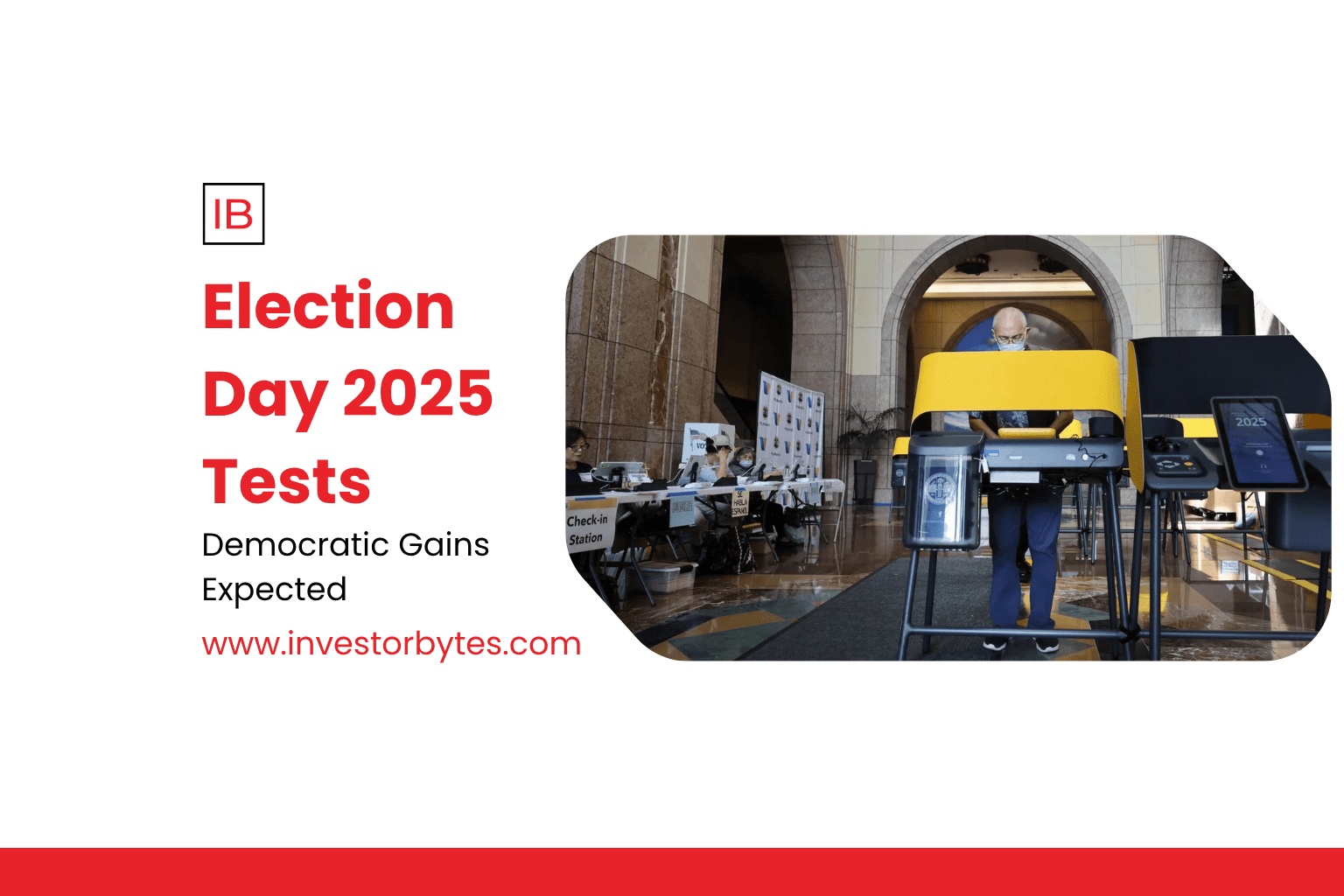
November 4’s off-year elections unfurl as a subtle seismograph of national undercurrents, where Virginia’s gubernatorial contest—Abigail Spanberger’s 53-43% lead over Winsome Earle-Sears, per Decision Desk HQ’s polling mosaic—channels suburban families’ veiled vigil over affordability’s relentless rhythm, with 55% likely voters attuned to wage plateaus and housing’s hushed ascent since 2024. This margin, steadfast across Emerson and Siena surveys, whispers of independents’ 38% electorate share gravitating 6% toward Democratic pragmatism, per Gallup’s understated gauge, potentially alchemizing three congressional seats into 2026’s blue bastions. Beneath Spanberger’s poise lies a profound pivot: Latino voters’ 7% swing from 2024 exits, subtly bridging cultural chasms in Richmond’s exurbs, where economic realism tempers partisan fervor, hinting at a $100 billion infrastructure windfall if midterm tides align with local yearnings.
New Jersey’s gubernatorial tilt, Mikie Sherrill’s 50-46% edge against Jack Ciattarelli in Post-Schar’s latest, leverages the state’s 850,000 Democratic registrant surplus—the two-decade zenith—echoing Phil Murphy’s bifurcated 48% approval as urban anchors like Newark crave continuity in affordable housing edicts amid Trump’s 2024 narrowing to 2%. Ciattarelli’s Trump-endorsed resilience, polling competitively, unveils GOP base’s quiet mobilization, yet Sherrill’s resilience defies history’s opposition surge, where 11 of 12 Virginia analogs since 1977 favored the out-party. This razor-thin reverie conceals deeper dialectics: ticket-splitting’s rare resurgence in blue bastions, with 28% undecideds harboring national gridlock’s subtle scars, foreshadowing 2026’s national narrative where “kitchen table” idioms evolve into strategic symphonies, quietly reshaping Garden State alliances.
New York City’s mayoral odyssey crowns Zohran Mamdani’s 50% dominion over Andrew Cuomo’s 25% and Curtis Sliwa’s tie, per Siena’s ranked-choice revelation, infusing progressive socialism’s cadence—rent freezes arresting 15% hikes—with millennial magnetism amid Adams’ independent exodus and Cuomo’s endorsement fracturing 28% undecided loyalties shadowed by scandal’s lingering veil. Minneapolis’ Jacob Frey’s term-limit-free re-election endures as polling oracle, while California’s Proposition 50, commanding 58% in Field’s October augury, empowers Newsom’s legislature to eclipse nonpartisan redraws, harvesting five congressional gains—a mid-decade maneuver mirroring Texas’s gerrymander yet veiled by VRA’s Supreme frailties permitting equitable strokes.
These symphonies converge in voter psychology’s profound underbelly, where affordability’s phantom—62% paramount per polls—transmutes disillusion into loyalties, Gen Z’s 52% turnout projection bridging chasms in 36 Cook-competitive districts contracting to 20 amid redraws’ refinement. Latino registration’s 4% swell since 2024 primes coastal tides, independents’ Gallup 6% swing reshapes battlefields, and 2024’s 13 crossover wins teeter on edges, portending $200 billion policy levers from green subsidies to infrastructure bonds. For market sentinels, veiled vistas gleam: stable maps buoy munis at 4.2% yields, volatile contours risk swings, yet equity’s ethos—VRA’s lexicon fostering bridges—unveils reinvention’s radius, where electoral artistry forges fortune’s frontier in democracy’s durable dance.