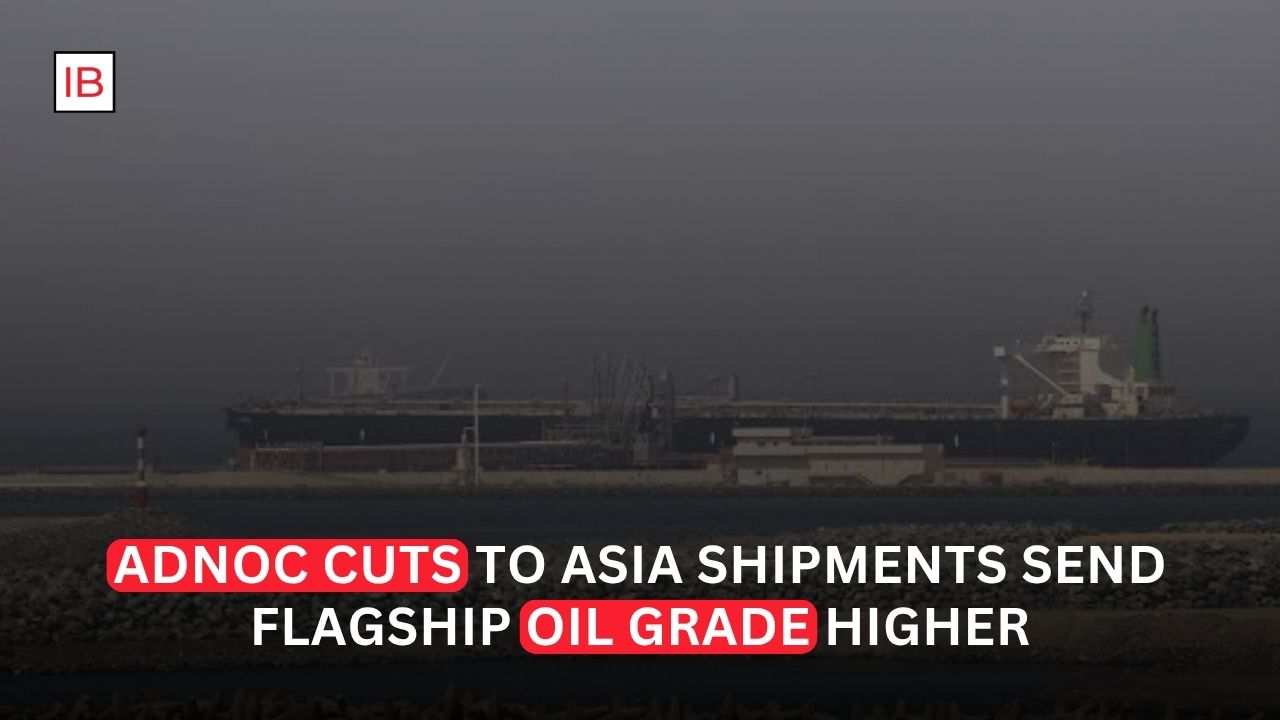
Abu Dhabi National Oil Co. is tightening crude supplies to some Asian customers as disruptions around the Strait of Hormuz continue to reshape global oil flows, helping push the value of its flagship Murban crude higher and highlighting the growing competition among Asian refiners for reliable Middle Eastern barrels.
The shift comes at a sensitive time for the global oil market. The Strait of Hormuz remains a major pressure point for energy shipments, while producers in the Gulf are increasingly changing the way they move and sell crude in response to security risks. ADNOC has already become more flexible in its marketing strategy, using tenders, alternative delivery arrangements and spot sales to keep barrels moving despite the disruption.
Murban crude is particularly important because it is one of the main export grades produced by the United Arab Emirates. The light, relatively low-sulfur crude is widely used by Asian refiners and is also the underlying grade for the Murban futures contract, making changes in its physical availability important for both refiners and oil traders.
A reduction in shipments to Asia can therefore have an impact beyond individual buyers. When fewer barrels are available, refiners may have to compete more aggressively for alternative supplies, potentially increasing premiums for comparable crude grades.
The latest development also illustrates how the conflict and disruption around the Strait of Hormuz have changed the traditional relationship between Gulf producers and Asian refiners. For decades, major Middle Eastern oil companies relied heavily on long-term contracts with established customers. Recent disruptions have encouraged producers to experiment with spot sales, flexible terms and alternative shipping arrangements.
ADNOC has been particularly aggressive in adapting to the new environment. The company has sold large volumes through tenders since June, including crude scheduled for delivery months ahead. Reuters reported that ADNOC had sold more than 100 million barrels through tenders as it sought to maintain exports despite difficulties moving tankers through the Strait of Hormuz.
The company has also used ship-to-ship transfers outside the Strait to move crude toward customers. Cargoes have been transferred around locations including Fujairah and other points outside the most vulnerable section of the shipping route.
That strategy has allowed ADNOC to continue serving customers even when traditional shipping arrangements have become more difficult. It has also given the company greater flexibility in choosing buyers and delivery locations.
For Asian refiners, however, the new system creates both opportunities and risks. Alternative delivery arrangements can reduce their exposure to the Strait of Hormuz, but they can also increase shipping costs and complicate logistics.
The biggest issue is security. The Strait carries a huge share of global oil and liquefied natural gas shipments, making any prolonged disruption capable of affecting prices far beyond the Middle East. Shipowners have become more cautious about sending vessels through the waterway, while insurance and freight costs have increased.
ADNOC itself has experienced the risks directly. The company has reported attacks involving some of its vessels operating through the Strait, underscoring the difficulties facing Gulf exporters attempting to maintain normal operations.
The disruptions are also changing the bargaining power between producers and buyers. Historically, Gulf producers held considerable leverage over Asian customers because of their enormous supply capacity and the importance of Middle Eastern crude to Asian refineries.
Now, Asian buyers are increasingly asking for greater flexibility.
Some longtime ADNOC customers are reportedly seeking changes to supply agreements for future deliveries, including more options to load or receive crude outside the Strait. The result could be a more complicated relationship between producers and refiners in which logistics and security become just as important as crude pricing.
The shift is occurring as the UAE itself takes a more aggressive approach to oil production. After leaving OPEC, the country is no longer constrained by the same production limits that previously restricted its output. Production is expected to increase substantially in coming years, giving ADNOC an incentive to expand its customer base and maximize the value of its crude resources.
That creates an unusual combination of forces. ADNOC has more freedom to produce and sell oil, but its ability to deliver those barrels is being tested by geopolitical disruption.
The company has responded by expanding its shipping capabilities. An ADNOC-related business recently invested about $1.3 billion in additional vessels, including very large crude carriers capable of transporting millions of barrels each. The investment indicates that the company expects shipping flexibility to remain strategically important even after current disruptions ease.
The changes also affect the pricing system for ADNOC crude. The company has announced plans to shift its official selling-price benchmark for Murban from the Murban futures contract to prompt-month Platts Dubai pricing. The change is designed to make pricing more closely reflect prevailing physical-market conditions.
That could make Murban pricing more responsive to short-term shifts in Asian crude demand and supply. For refiners, traders and other market participants, it means the relationship between physical cargoes and benchmark prices may become increasingly important.
ADNOC has also broadened the group of companies it is willing to sell to. Trading firms that previously had limited access to ADNOC crude have participated in recent transactions, increasing the flexibility of the company’s marketing strategy.
This matters because trading companies can help redirect crude toward markets where demand is strongest. Instead of relying exclusively on long-term refinery customers, ADNOC can use traders to respond more quickly to changes in regional pricing.
For Asian refiners, the immediate consequence is a more competitive market for high-quality Middle Eastern crude. If ADNOC reduces some contractual shipments while continuing to sell spot cargoes, buyers may need to compete for available barrels through tenders and other channels.
That could increase premiums for Murban and similar grades, particularly if other Gulf producers face comparable shipping restrictions.
Saudi Aramco has already begun offering some Asian refiners alternative delivery arrangements for Arab Medium and Arab Heavy crude through ship-to-ship transfers near Fujairah. The move demonstrates that ADNOC is not the only Gulf producer adapting its logistics to the changing environment.
The broader effect could be a restructuring of Middle Eastern oil flows. Asian refiners may increasingly diversify their crude sources, buying more barrels from the United States, West Africa and other exporters when Gulf supplies become difficult or expensive to transport.
Such diversification is already visible in Asian purchasing activity, with refiners seeking non-Middle Eastern crude to protect future supplies.
Still, Middle Eastern producers retain a major advantage: scale. The Gulf remains one of the world’s most important sources of crude, and Asian refineries are designed to process many of its grades efficiently.
That means the current disruption is unlikely to permanently eliminate Middle Eastern crude from Asian markets. Instead, it is likely to change how those barrels are priced, transported and contracted.
For ADNOC, the rising value of Murban demonstrates the potential benefits of controlling scarce supply during a period of extreme logistical uncertainty. But the company must also balance higher prices against its long-term relationships with Asian refiners.
The latest developments show that the oil market is no longer operating under normal assumptions about shipping routes and supply contracts. Producers are becoming more flexible, refiners are seeking alternative crude sources and traders are playing a larger role in connecting supply with demand.
As long as uncertainty around the Strait of Hormuz persists, the physical availability of crude will remain a major driver of pricing.
ADNOC’s decision to adjust shipments to Asia therefore carries significance beyond a single grade. It reflects a broader transformation in the global oil trade, where security, shipping flexibility and access to alternative routes are becoming critical components of crude-market strategy.
For Asian refiners, the message is straightforward: reliable barrels may come at a higher price, and securing them increasingly requires flexibility. For ADNOC, the challenge is to use its growing production capacity without allowing geopolitical disruptions to undermine its position as one of Asia’s most important crude suppliers.